How to protect ourselves from UV radiation in the summer season
The author outlines comprehensive sun protection strategies beyond applying SPF cream. Key measures include avoiding midday exposure (10:00–16:00), understanding UVA and UVB radiation differences, selecting products with SPF 30–50 and UVA protection, wearing UPF-rated clothing and accessories, seeking shade, and maintaining hydration. The piece explains UV filter types, proper sunscreen selection, and emphasizes that effective photoprotection is a habit combining multiple protective measures for safe outdoor enjoyment.

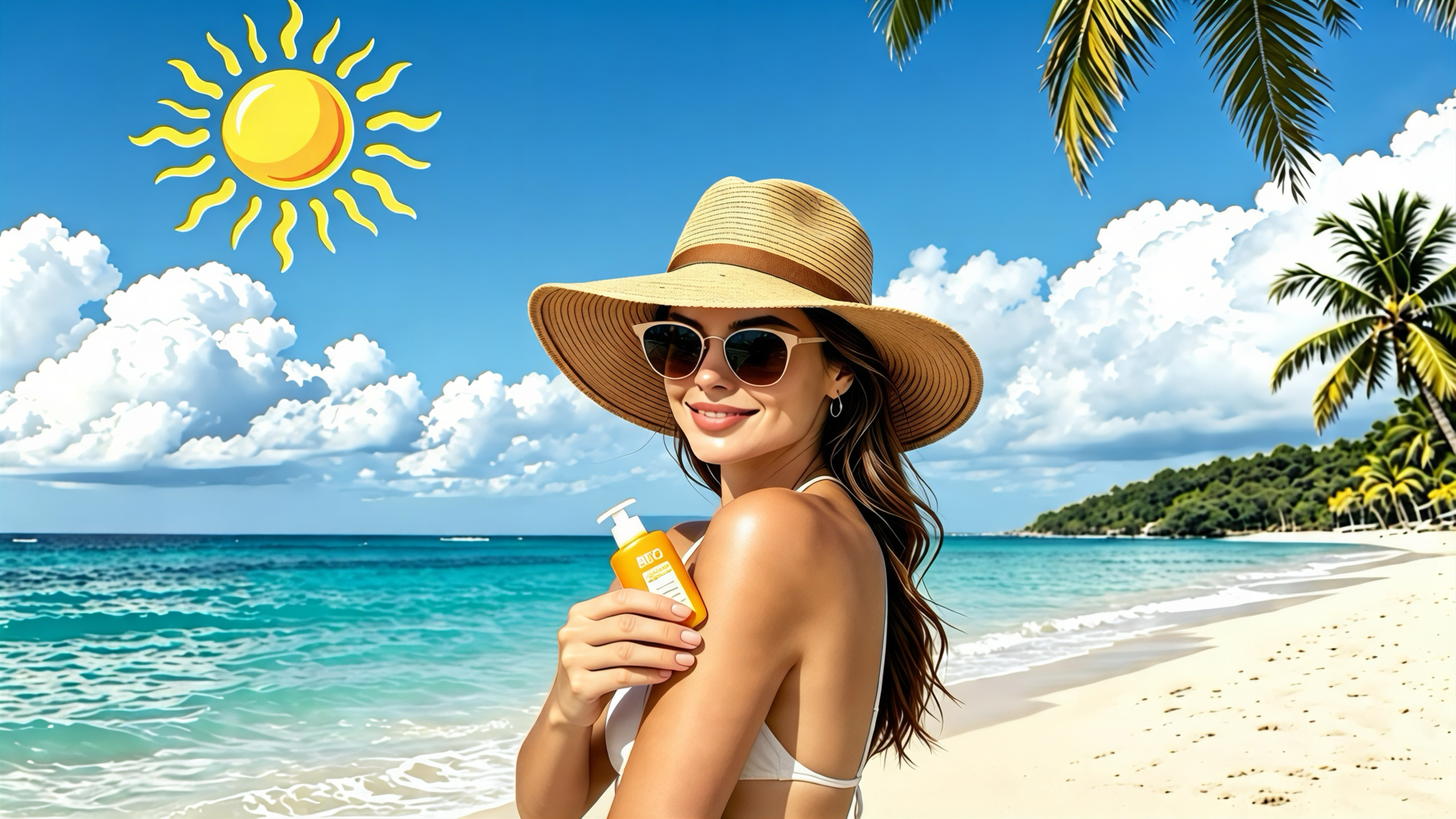
Sun protection in the summer season: essential rules for safe exposure
Summer invites us to spend more time outdoors, whether we are on vacation, at the beach, in the mountains, or simply enjoying a sunny day. The sun plays an important role in our lives, but excessive exposure to solar radiation can have unwanted effects on the skin and on the body.
Therefore, photoprotection should not mean just applying a cream with SPF. Sun protection involves a set of simple measures: choosing the right hours for exposure, using photoprotection products, wearing appropriate clothing and accessories, seeking shade, and maintaining proper hydration.
One of the simplest methods to reduce exposure to ultraviolet radiation is avoiding, as much as possible, the strong sun in the middle of the day. In general, the interval 10:00–16:00 is considered the period when UV radiation can be most intense.
However, the intensity of radiation is not the same every day and can vary depending on season, latitude, altitude, atmospheric conditions, and the position of the Sun. Therefore, it is useful to check the UV index before spending longer periods outdoors. The higher the UV index, the more important it is to use protective measures.
What are UVA and UVB radiation?
When we talk about sun protection, the most important radiation for the skin is ultraviolet, especially UVA and UVB.
UVB, the main culprits for sunburn
UVB radiation has wavelengths ranging approximately between 280 and 315 nm. It acts mainly at the level of the epidermis and is one of the main causes of erythema and sunburn. UVB also participates in the process of vitamin D synthesis at the skin level. However, excessive exposure can produce cellular DNA damage and, in the long term, can contribute to increasing the risk of skin cancer.
UVA, the radiation that penetrates deeper into the skin
UVA radiation has wavelengths of approximately 315–400 nm and represents the largest part of ultraviolet radiation that reaches the Earth's surface. Unlike UVB, UVA penetrates deeper into the skin, down to the level of the dermis, and is present throughout the year. A portion of this radiation can pass through clouds and glass. Repeated exposure to UVA is associated with photoaging of the skin, oxidative stress, cellular changes, and the appearance or accentuation of pigmentation disorders. Also, UVA can contribute to cellular DNA damage. Therefore, an effective sun protection product should not offer protection only against UVB, but also against UVA.
But what about infrared radiation and visible light?
The sun does not emit only ultraviolet radiation. Infrared radiation and radiation from the visible spectrum also reach the skin level. Infrared radiation is associated primarily with the thermal effect and contributes to the heating of the skin and the body. On very hot days, prolonged exposure to heat can favor dehydration and overheating of the body. Visible light can also have effects on the skin. Of particular interest is blue light, which is part of the visible spectrum of sunlight. In certain people, it can stimulate melanin production and can contribute to the accentuation of hyperpigmentation. Blue light is also emitted by the screens of phones, tablets, and computers. Usually, however, the intensity of blue light coming from screens is much lower than that of sunlight.
How do we correctly choose sunscreen?
When we choose a photoprotection product, one of the first things we notice is the SPF, Sun Protection Factor. For daily use and, especially, for periods of sun exposure, products with SPF 30 or SPF 50 are generally recommended, the choice depending on phototype, intensity of exposure, and the particularities of each person. An SPF 30 indicates high protection against UVB and, under standard testing conditions, allows the passage of a small fraction of UVB radiation. In simplified terms, an SPF 30 is associated with a filtration of approximately 97% of UVB radiation. It is important, however, not to interpret SPF as a "permission" to stay longer in the sun. No sun protection product blocks 100% of UV radiation.
Protection against UVA is specified on labels through different marking systems, depending on the market and the standards used:

"UVA" in a circle, marking used in the European Union for products that meet the requirements regarding UVA protection in relation to UVB protection;
"Broad Spectrum", indicates protection against UVA and UVB, wording found especially on the American market;
UVA-PF / PPD, indicators used to evaluate the level of protection against UVA;
PA+, PA++, PA+++, PA++++, classification system for UVA protection found especially in products from Asian countries.
The higher the number of "+", the higher the level of UVA protection within this system.
If the product is labeled "water resistant", this means that it retains an important part of its protective capacity after contact with water, according to testing conditions. It does not mean, however, that the protection remains unchanged after swimming, perspiration, or wiping the skin with a towel. Therefore, the product must be reapplied according to the instructions on the package and after situations in which the protection can be removed.
Mineral filter, organic, or combination of filters?
In sun protection products, organic and inorganic/mineral UV filters are used. These can absorb, reflect, and/or disperse UV radiation, depending on their type and characteristics. In modern products, the use of filter combinations is frequent. A product can contain several organic filters or can combine organic filters with mineral filters. The advantage of these combinations is the possibility of obtaining broader protection against UVA and UVB, as well as good stability and a pleasant texture for the user.
In the European Union, UV filters used in cosmetic products are regulated through the Cosmetic Regulation, through Annex VI of Regulation (EC) No. 1223/2009.
For the consumer, more important than choosing the "chemical" versus "mineral" label is that the product offers adequate UVA and UVB protection, is suitable for the skin type, and is used correctly and frequently enough.
Effective sun protection involves several measures, and clothing is one of the simplest and most effective. On days with a high UV index, it is recommended, when possible, to wear clothes that cover as large a surface of the skin as possible, for some clothing items there is a specific sun protection indicator, called UPF (Ultraviolet Protection Factor).
UPF shows how much UV radiation passes through the material and is a different indicator from SPF, which is used for sun protection products applied to the skin. For example, a material with UPF 50 allows the passage of a very small fraction of the UV radiation that reaches its surface. When we choose clothes for the beach, sports, or activities carried out for a long time outdoors, items with UPF can be a very good option.
An important role is also played by hats with wide brims; sunglasses that offer UV protection; staying in the shade, especially during periods with intense radiation; avoiding prolonged direct exposure. Shade reduces exposure, but does not eliminate it completely, because UV radiation can reach us also through reflection from surfaces such as water, sand, or other materials.
Hydration is equally important on hot days
Protection against the sun does not refer only to the skin. High temperatures and physical activity carried out outdoors can favor fluid loss. Therefore, it is important to drink water regularly, especially during heat waves and when we do sports or other physical activities outdoors. In addition, it is good to be attentive to signs that may indicate dehydration or overheating and to reduce effort when temperatures are very high.
Photoprotection is a habit, not a single product
We do not have to give up outdoor activities to protect our skin. What is important is to learn to enjoy the sun in moderation and to transform photoprotection into a habit.
In short, on sunny days:
- check the UV index;
- avoid, as much as possible, direct exposure during periods when radiation is intense;
- use a product with SPF 30–50 and UVA protection;
- reapply the product according to instructions, especially after swimming, perspiration, or wiping the skin;
- wear clothes, a hat, and sunglasses;
- seek shade when the UV index is high;
- consume sufficient water.
A beautiful summer does not mean as much sun as possible, but as many pleasant moments spent safely as possible. Correct photoprotection can reduce the risk of sunburn and can contribute to protecting the skin against the unwanted effects of excessive exposure to solar radiation, both in the short term and in the long term.
Comentarii
Fii primul care comentează.