The beast in uniform
Eight officers from Bucharest Police Precinct 16 were convicted for detaining and torturing two young men in 2020 after being criticized for not wearing masks. The Bucharest Court of Appeal reduced their sentences, with four officers receiving prison terms and four others suspended sentences. The case highlights police misconduct and judicial mitigation due to statute of limitations and other factors.

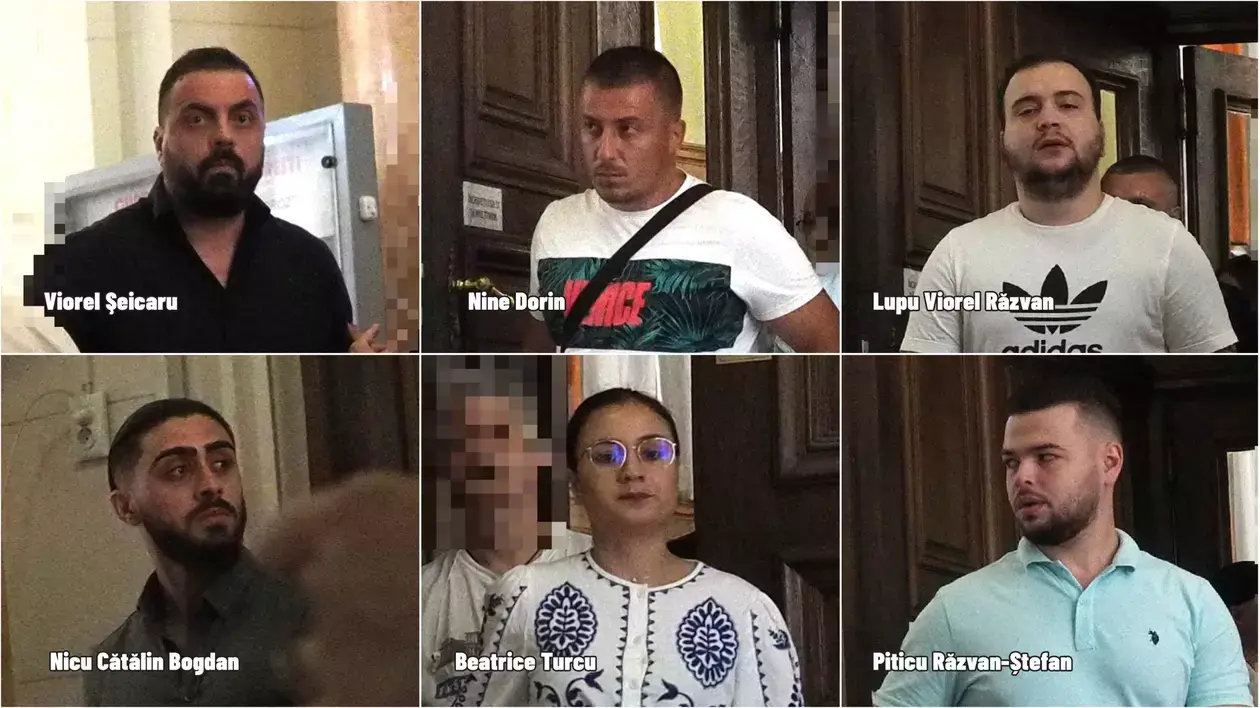
Foto: Facebook
Viorel Constantin Șeicaru, once the union leader of the Bucharest police, received a final sentence of five years and eight months in prison for illegal detention and torture. The case, now closed after four years of litigation, involved eight officers from Police Precinct 16 who assaulted two young men on the night of August 31, 2020, after being criticized for not wearing masks during the pandemic. The Bucharest Court of Appeal reduced the initial sentences handed down by the Bucharest Tribunal, citing the statute of limitations for some charges and mitigating circumstances for certain defendants. Four officers will serve prison time; the other four received suspended sentences with probation.
The incident took place on Calea Șerban Vodă, a main road in the capital, in the early hours of September 1, 2020. According to the indictment, the two young men told the officers they were breaking the law by not wearing masks. The police responded by restraining the pair without identifying themselves or requesting identification, handcuffed them, and transported them in a police vehicle. Investigators found that one of the young men was punched repeatedly, then taken to a vacant lot near Drumul Dealul Armanului, where he was beaten again and humiliated, one officer allegedly urinated on him. These details are not drawn from a 19th-century novel but from a criminal file in a European capital in 2020, supported by testimony and physical evidence.
The trial dragged on for nearly four years. At first instance, the Bucharest Tribunal sentenced Șeicaru to nine years and four months in prison. The Court of Appeal later lowered the sentences: for illegal detention, from five years to three years and six months; for torture, from six years to three years and six months; for incitement to illegal detention, from four years to three years. The court cited the expiration of the statute of limitations for the charge of abusive conduct and terminated proceedings on that count. Decision no. 1417/A of September 29, 2026, published on the court portal, details that the reductions were based on legal rules for concurrent offenses and the presence of mitigating factors.
Șeicaru is barred from holding public office or any position involving state authority for three years after serving his sentence. This restriction applies to all convicted officers, with durations set individually. The court explained that, as team coordinator, Șeicaru “should have and could have prevented the criminal acts by correctly applying the law.”
The sentences for the other officers were also reduced. Lupu Viorel Răzvan received two years and six months in prison, down from four years, for illegal detention and torture, with no suspension. Nine Dorin was sentenced to three years and ten months, to be served, after an initial six years and six months. Radu Mihai Patrik Alexandru got two years, five months, and ten days, but will not go to prison; the court suspended his sentence under supervision for three years, citing a judicial mitigating circumstance.


Stancu Elisabeta Valentina, charged as an accomplice to torture and illegal detention, was acquitted of intellectual forgery due to prescription and sentenced to two years and six months, down from six years. Beatrice Alexandra Buhă (formerly Turcu) also received two years, five months, and ten days, suspended. For Răzvan Ștefan Piticu, the sentence for illegal detention was reduced to two years, with the required period of community service halved to 60 days. Irina Elena Gogoașe saw her sentence cut to one year and six months, suspended, with a two-year probation period.
All officers given suspended sentences must perform unpaid community service, as required by the Criminal Code. The ban on holding public office remains in effect for them as well, though, without actual imprisonment, this administrative sanction does little to address the moral harm inflicted on the Romanian Police as an institution.
Judges justified the reductions by pointing to the statute of limitations for some charges and to mitigating circumstances found for certain defendants. Critics of the decision argue that reducing sentences and suspending punishment in cases of torture and illegal detention erodes public trust in the rule of law. Their position is difficult to dispute when the victims were not only unlawfully detained but also humiliated and beaten by state agents, in a context where the law was invoked to justify any restriction.
The strongest argument for leniency rests on strict adherence to criminal law: once a charge is prescribed, judges cannot ignore the legal deadline, even when the facts are morally outrageous. That does not excuse the slow pace of the justice system, which allowed charges to lapse, nor the lack of any institutional response from the Romanian Police. In four years, no official has publicly acknowledged a culture of abuse in certain precincts, nor announced any concrete preventive measures.
The Secția 16 file is not about “exceptions” or “bad apples.” It describes a system that, left unchecked, produces uniformed monsters. The conviction of a union leader is not a victory for reform, but proof that the police cannot reform itself. When the courts reduce sentences for torture and illegal detention, and institutional silence continues, the message is clear: the state prefers to protect its image rather than its citizens.
The civil aspect of the case, compensation for the two victims, remains to be decided after the Court of Appeal’s ruling. The moral damage, however, cannot be diminished by any sentence, not even one with suspension.
Comentarii
Fii primul care comentează.