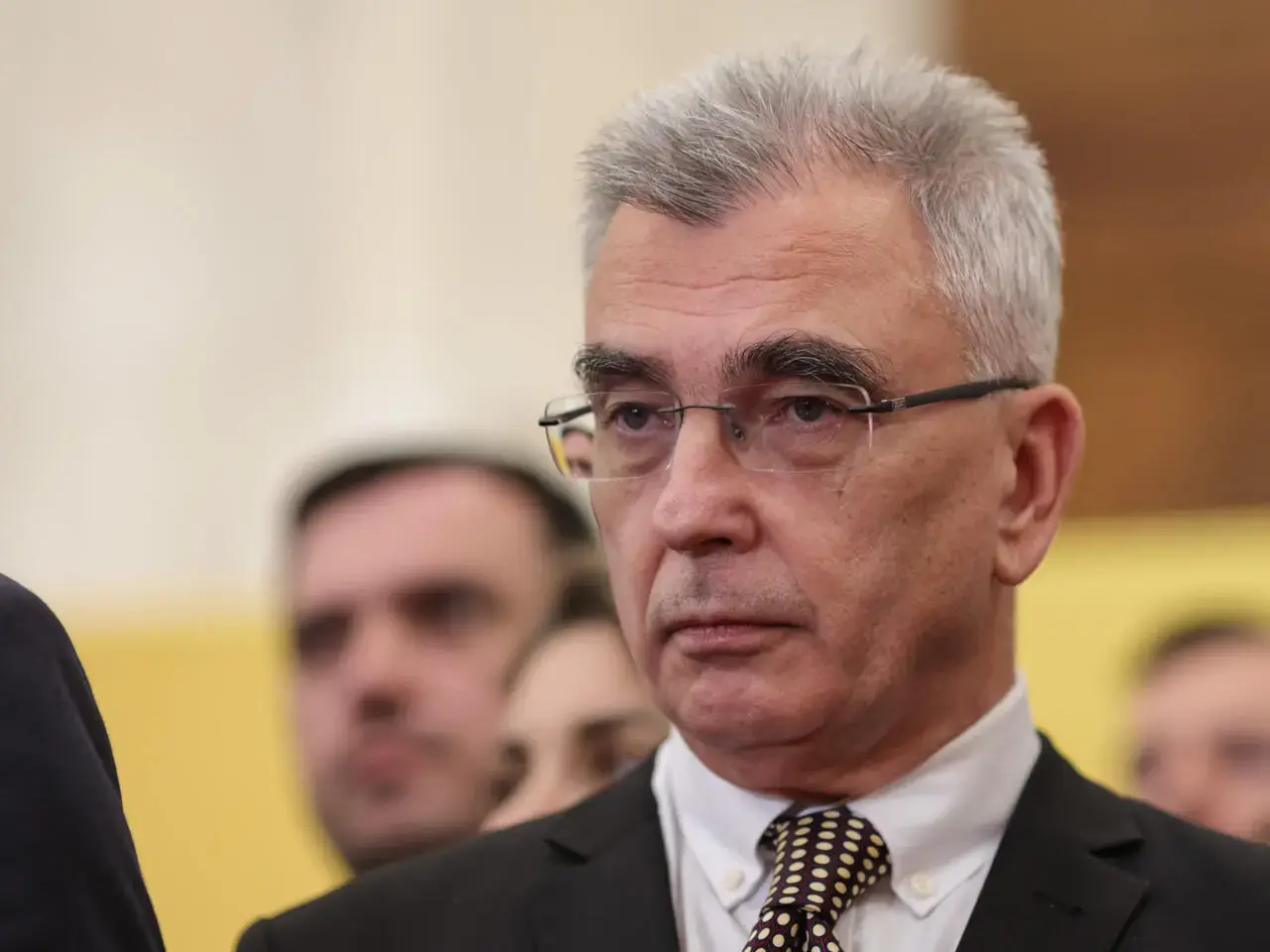
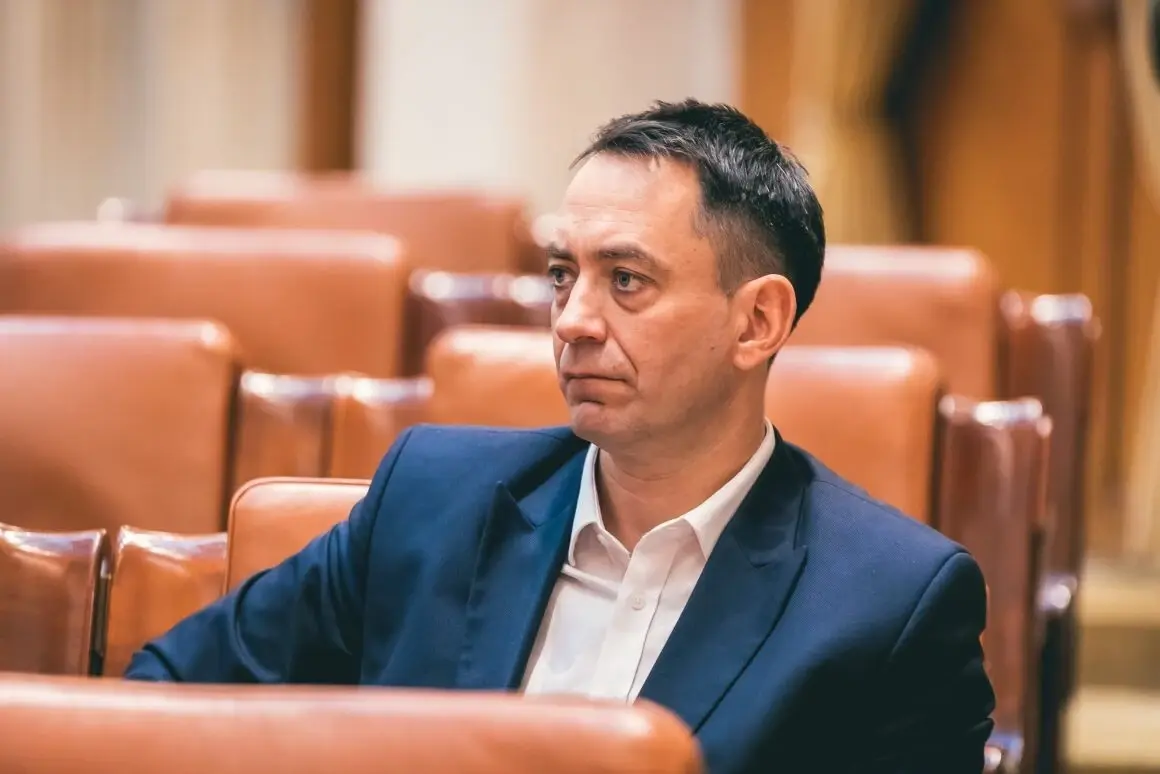
Who holds power in Romania? Tismăneanu's challenge to democratic oversight
Vladimir Tismăneanu, a US-based political scientist, challenges the effectiveness of democratic oversight in Romania, especially regarding the influence of intelligence services in government formation. He argues that the current crisis reflects institutional fragility and a coordinated weakening of democratic norms, with recent judicial decisions and political actions exemplifying this trend.

The analytical question at the heart of Romania's current political crisis is not who formally governs, but who truly wields decisive influence behind the scenes. Political scientist Vladimir Tismăneanu, a professor in the United States, posed this challenge directly in an interview for HotNews: "What is the political, democratic control over the intelligence services, when the head of a secret service participates in the formation of the government?"
The harder question is whether Romania's institutions are withstanding or succumbing to what Tismăneanu calls an "assault on the rule of law."
Tismăneanu situates the present turmoil as a moment of institutional fragility. He attributes the ongoing crisis to a deeper weakening of democratic structures, with the Social Democratic Party acting as the main vehicle for this shift. His assessment is blunt: the current situation is not simply a routine political dispute, but rather a coordinated effort undermining the very foundation of legal and democratic norms.
The evidence Tismăneanu marshals includes both recent judicial decisions and the actions of high-ranking officials. He points to the Bucharest Military Tribunal's decision to acquit former Gendarmerie leaders implicated in the violent crackdown on protestors on August 10, 2018. The acquittal, which followed years of public debate and outrage, left many feeling that the state had failed to protect its citizens' rights. Tismăneanu described personal distress at the outcome, noting that both he and friends in Romania had been "traumatized" by the events and their judicial aftermath.
President Nicușor Dan's role in this context is, for Tismăneanu, particularly troubling. Dan, elected on a platform promising liberalization and democratization, now appears to be acting in a manner that benefits PSD's agenda. Tismăneanu does not accuse the president of corruption, but rather of lacking a coherent plan. "When the head of state has no plan, the 'viruses' make the plan," he told HotNews.
The metaphor is pointed. The "virus" in question, Tismăneanu argues, is embodied not only by Lucian Pahonțu, the former head of the Protection and Guard Service, but more so by another former intelligence chief, Eduard Hellvig.
Tismăneanu's invocation of "Sindromul Hellvig" is a deliberate echo of Montesinos Syndrome, named after Vladimiro Montesinos, the shadowy intelligence chief who dominated Peru's authoritarian regime under Alberto Fujimori. Montesinos became notorious for orchestrating political manipulation, corruption, and human rights abuses from behind the scenes. When intelligence officials like Hellvig, former director of the Romanian Intelligence Service, participate in government formation, the checks and balances of democracy are at risk, according to Tismăneanu.
What this reading misses, some might argue, is the extent to which Romania's post-communist political system has always involved a complex interplay between elected officials and security institutions. Yet Tismăneanu insists that the current moment is different in both visibility and consequence.
He recounts his own experience as president of the Presidential Commission for the Analysis of the Communist Dictatorship in Romania in 2006. Though he did not work from Cotroceni Palace, he was assigned an official residence and phone. A seemingly trivial episode, having the phone checked in Sinaia, served as a reminder that nothing in the sphere of state security happens by accident or in chaos. Intelligence services remain deeply embedded in the machinery of governance, often beyond public scrutiny.
The harder question is whether the presence of figures like Hellvig and Pahonțu at the center of political negotiations reflects a breakdown of civilian oversight, or merely the persistence of informal networks that have always existed. Tismăneanu's answer is unambiguous. When the head of a secret service is involved in government formation, "you climb the walls," he said.
He draws a comparison with the United States, noting that the idea of the CIA or FBI director sitting in on cabinet formation would be unthinkable in a functioning democracy. Romania is drifting toward "Erdogan's Turkey" or "Fujimori's Peru", states where the line between security apparatus and political authority is blurred, and democratic accountability is eroded, Tismăneanu warned.
The stakes are not limited to internal governance. Tismăneanu cautions that Romania's current trajectory sends troubling signals to the European Union. He likens the country's path to that of a rebellious child, one who, after maturing, turns against the parent. The analogy highlights the risk of alienation from European norms and expectations. The decision by the Military Tribunal, the visible role of former intelligence chiefs, and the president's ambiguous stance all combine to paint a picture of institutional backsliding.
Tismăneanu's critique extends to the legal framework governing Romania's security sector. He expresses alarm at proposals to revise the National Security Laws, warning that such moves, in the present context, could further weaken democratic safeguards. The context for this concern is the ongoing debate in Romania over the appropriate limits of intelligence agency power, a debate reignited by recent political maneuvers and legislative initiatives.
The actors named, Pahonțu and Hellvig, are not new to controversy. Pahonțu, as head of SPP, was long rumored to be an influential figure in government circles, often described as a power broker in moments of political transition. Hellvig, who led SRI until recently, has likewise been associated with behind-the-scenes consultations during cabinet negotiations.
Tismăneanu's argument is not that these individuals are uniquely culpable, but that their involvement is symptomatic of a broader pattern: the entanglement of intelligence services with political decision-making at the highest levels.
PSD, in Tismăneanu's account, is the main beneficiary. The party is using the current institutional weaknesses to advance its own agenda, reversing the liberalizing and democratizing reforms that were promised in the last election, he claims. His assessment of President Dan is damning in its own way: not of malfeasance, but of passivity and lack of strategic direction. In such a vacuum, informal networks and security actors fill the space.
The consequences are felt not just in the corridors of power, but in the public's trust in institutions. The acquittal of the gendarmerie officials has been interpreted by many as a signal that accountability for abuses of power is elusive. Tismăneanu's personal reaction, trauma and dismay, mirrors the broader sense of disillusionment among segments of Romanian society.
A concession to the opposing case comes from those who argue that security services, by their nature, must be involved in ensuring continuity and stability during political transitions. Yet Tismăneanu's point is that the absence of transparent, democratic oversight transforms this necessity into a liability. The difference lies in whether such involvement is subject to public scrutiny and legal constraint, or whether it operates in the shadows.
The analysis cannot determine, with certainty, the full extent of coordination between intelligence actors and political leaders in the current crisis. Nor can it specify the precise mechanisms by which influence is exerted, given the opacity of such interactions. What is documented is the participation of figures like Hellvig and Pahonțu in high-level discussions and the timing of institutional decisions that appear to align with PSD's interests.
The sharper question is not merely who sits in the presidential palace, but who shapes the decisions that define Romania's direction. Tismăneanu's intervention suggests that Romania's democratic institutions face a genuine challenge: the concentration of security apparatus influence in government formation undermines the separation of powers that representative democracy requires.
Comentarii
Fii primul care comentează.