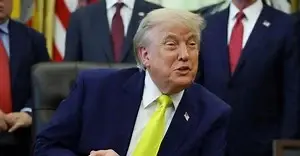
Democrats Seize US Congress as Trump’s Support Collapses
Driven by inflation, corruption allegations, and rising healthcare costs, American voters handed Democrats a decisive victory in the midterm elections, flipping even traditional Republican strongholds. Democrats now control both the Senate and House, curtailing President Trump’s domestic agenda, though their majorities are not veto-proof. The shift reflects widespread public dissatisfaction with economic and geopolitical turmoil.

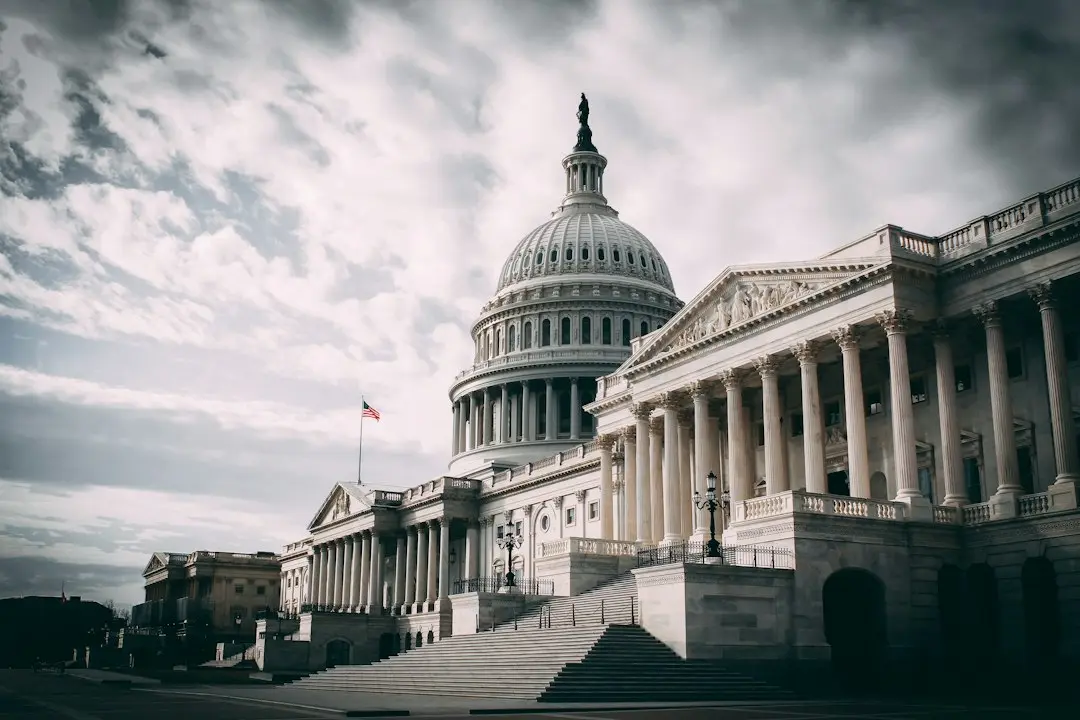
Foto: Harold Mendoza / Unsplash
Donald Trump’s sharp drop in approval ratings has paved the way for Democrats to seize control of both chambers of the United States Congress in the midterm elections. American voters, driven by inflation, corruption allegations, and soaring healthcare costs, delivered Republicans a historic defeat, even in long-standing strongholds such as Texas, South Carolina, and Kansas.
Preliminary results indicate that Democrats are set to secure at least 54 seats in the Senate. In the House of Representatives, their lead will comfortably surpass ten seats. This dramatic political shift did not stem from a surge of ideological enthusiasm. Instead, it was a reaction to a cascade of crises that defined the final months of Trump’s administration: record fuel prices, the ongoing war in Iran, and a string of domestic scandals. The MAGA voting bloc that returned Trump to the White House two years ago fractured under these pressures, a vulnerability the Democrats exploited.
Losing Congress immediately curtails the president’s domestic agenda. Democrats now have the authority to launch congressional investigations, block legislative initiatives, and set the political tempo in Washington. Yet, their majorities fall short of the threshold needed to override a presidential veto, leaving their legislative projects at risk of stalling without Republican cooperation.
The mechanism behind this shift is rooted in a spiral of distrust, fueled by economic and geopolitical turmoil. Petrol and diesel prices, at unprecedented highs, rapidly eroded support for Trump in the suburbs and in states reliant on transport industries. The protracted conflict in Iran added further strain, intensifying fears of an expensive military escalation. Meanwhile, corruption scandals and repeated attacks on the healthcare system mobilized Democratic voters and swayed some independents who had chosen Republicans in the previous cycle.
Internationally, the consequences of these elections are more nuanced. Democrats will have tools to investigate and obstruct certain initiatives, but the American president, by constitutional tradition, retains broad latitude in foreign policy. Chen Dongxiao, President of the Shanghai Institutes for International Studies, told The Paper that the impact on US-China relations would be “relatively limited,” since both parties share a broadly similar approach to Beijing. “The president already enjoys considerable freedom in foreign affairs, and Democrats are likely to focus on domestic issues,” Chen explained.
This continuity in China policy is evident in Congress’s plans for new technology restrictions. Stephen Okun, head of APAC Advisors in Singapore, told The Australian, “The new Congress will adopt tougher technology measures regardless of the election outcome, because there is bipartisan consensus.” Restrictions on exports of advanced technology to China will remain on the agenda, even if the rhetoric shifts.
There is, however, a risk that, freed from the constraints of a Republican majority, Trump could become more unpredictable in foreign affairs. Bloomberg Opinion observed that for leaders such as Xi Jinping or Japan’s Sanae Takaichi, the real danger is that Trump, deprived of domestic levers, might seek “victories” abroad. This could mean increased pressure on Japan to pay more for US troops, pushing South Korea into disadvantageous investment deals, or demanding Taiwan surrender semiconductor technology. Another summit with North Korea’s Kim Jong Un cannot be ruled out, especially if Trump seeks a quick diplomatic win.
One immediate consequence of the new majority was the president’s announcement to cut the annual $3.8 billion military aid package to Israel by year-end. Trump justified the move by arguing that Israel’s economy is now strong enough to manage without this support, and cited internal criticism, including attacks from Democrat Abdul El-Sayed, a Senate candidate in Michigan. The aid package had been approved by Barack Obama under an agreement running through 2028, making the decision all the more surprising.

Almost simultaneously, Trump posted on social media that “a deal with Iran could happen,” despite having threatened a major strike just days earlier. Tensions in the Middle East remain high. Even with Democrats in charge of Congress, their ability to prevent escalation is limited. Michael O’Hanlon, Director of Research at the Brookings Institution, told Deutsche Welle, “I don’t think Congress will have much power here,” though he acknowledged they could block funding for an escalation if a broad enough coalition formed.
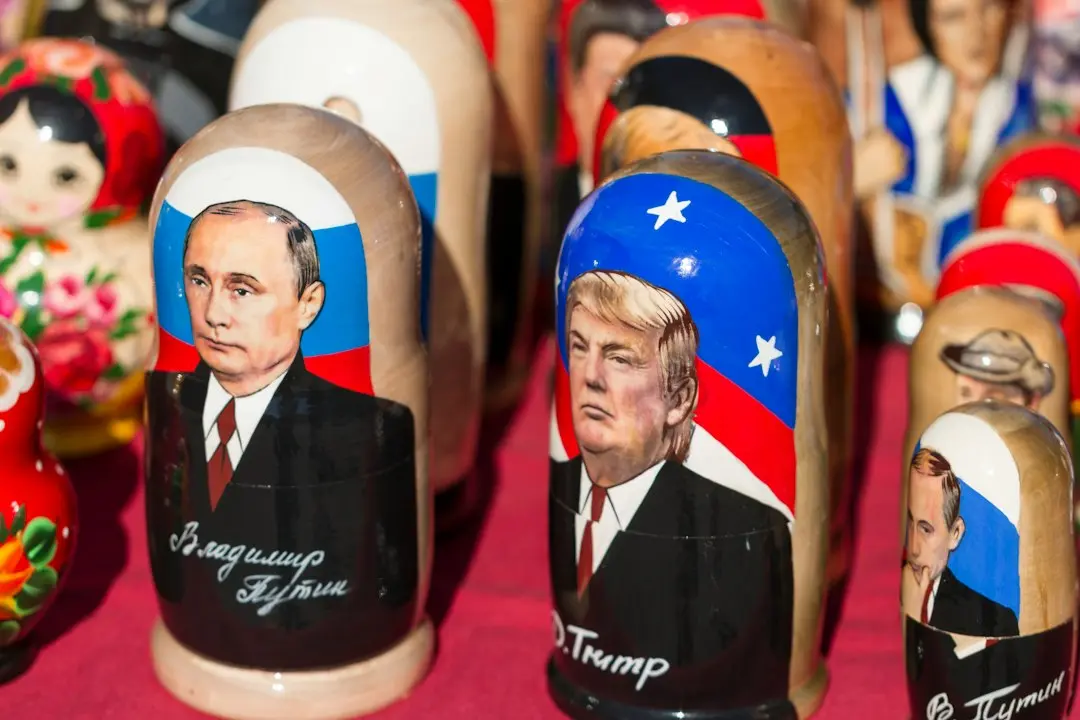
Relations with Russia are another live issue. Dmitry Peskov, spokesperson for Vladimir Putin, confirmed to the Financial Times that work is underway to arrange a trilateral meeting between Xi, Trump, and Putin at the APEC summit in Shenzhen, scheduled for 18-19 November. China’s foreign ministry said it is in contact with relevant parties, but gave no further details. The White House did not respond to Financial Times requests about the possibility. Trump floated the idea a month ago, initially focusing on denuclearization, then shifting to the Ukraine dossier. German Chancellor Friedrich Merz responded sharply, calling Putin’s invitation to the December G20 summit “completely unacceptable.”
On trade, Asian governments are responding with caution. Nikkei Asia reports that several countries are preparing for a new wave of protectionist measures, as the Trump administration could impose additional tariffs by executive order, regardless of Congress’s makeup. Hui Shan, Chief China Economist at Goldman Sachs, said, “A Democrat-controlled Congress could even introduce tougher measures against China,” which would further inflame trade tensions between Washington and Beijing.
Domestically, Democrats face the challenge of managing the expectations of a diverse and sometimes divided electorate. Controlling both chambers gives them the power to launch investigations into the Trump administration, including over the Iran war and the Israel aid cut. Still, without supermajorities, they must negotiate with Republicans on any major legislative initiative. Political gridlock now seems almost inevitable, raising the likelihood that the administration will turn to executive orders.
China’s reaction has been measured. At the post-election press conference, Foreign Ministry spokesperson Mao Ning said, “China is willing to continue cooperation with the US to maintain and implement the important consensus reached by the two heads of state.” The Trump-Xi meeting in Shenzhen will be their third this year, with another scheduled at the G20 summit in Florida in December. This bilateral dialogue remains necessary for stability between the two powers, regardless of the political complexion of the US Congress.
For Democrats, the midterm victory is a waypoint, not a destination. Without control of the White House, they can slow or block Trump’s agenda, but cannot impose a new direction without major compromises. Moreover, foreign policy issues, from China and Russia to Iran and Israel, remain largely at the president’s discretion. Past administrations show that, in such circumstances, the occupant of the White House tends to focus on international initiatives, where Congressional maneuvering matters less.
The most immediate impact is felt by Republicans, who lose not only institutional control but also internal cohesion. The MAGA bloc has splintered, and local leaders are beginning to distance themselves from the White House ahead of the next presidential election. For Democrats, the gain is tactical: they can initiate investigations and block initiatives, but cannot fundamentally redirect US policy without Republican support. Abroad, Trump remains unpredictable, with greater room to maneuver and a set of priorities that reach far beyond Washington.
Democratic control of Congress means the president must now contend with two fronts: legislative opposition at home and the temptation to leave his mark on the global stage. For both allies and rivals, the next two years promise less predictability and greater strain on the checks and balances of American democracy. The November vote may prove only the beginning of a new period of political instability, with real consequences for markets, allies, and strategic competitors.
Comentarii
Fii primul care comentează.