Adrian Veștea and the art of the open invitation
Adrian Veștea, Romania's designated Prime Minister, has publicly committed to inclusive dialogue with every political party represented in Parliament. His approach, emphasizing consensus and open invitations, stands out in a political field often marked by division. Even opposition leaders, such as George Simion of AUR, have responded to Veștea's call for broad discussions.
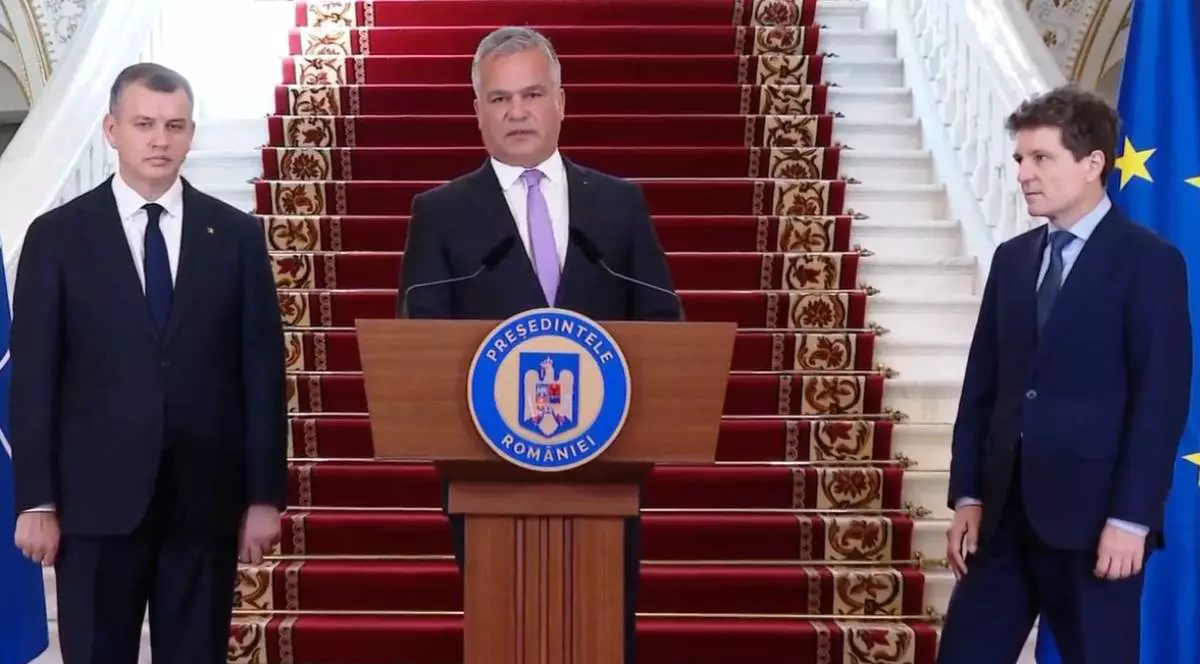
Credit where credit is due: Adrian Veștea, the designated Prime Minister, has demonstrated a devotion to inclusivity that would make even the United Nations blush with envy. In a country where politicians often pretend to have standards, Veștea has swept all before him, embracing the entire spectrum of Romanian political fauna with the loving arms of a shepherd in search of even the most recalcitrant sheep.
"I assume an open dialogue with any political formation voted by Romanians," Veștea posted on Facebook, apparently unaware that Romania's Parliament contains more ideological flavors than a gelateria in August.
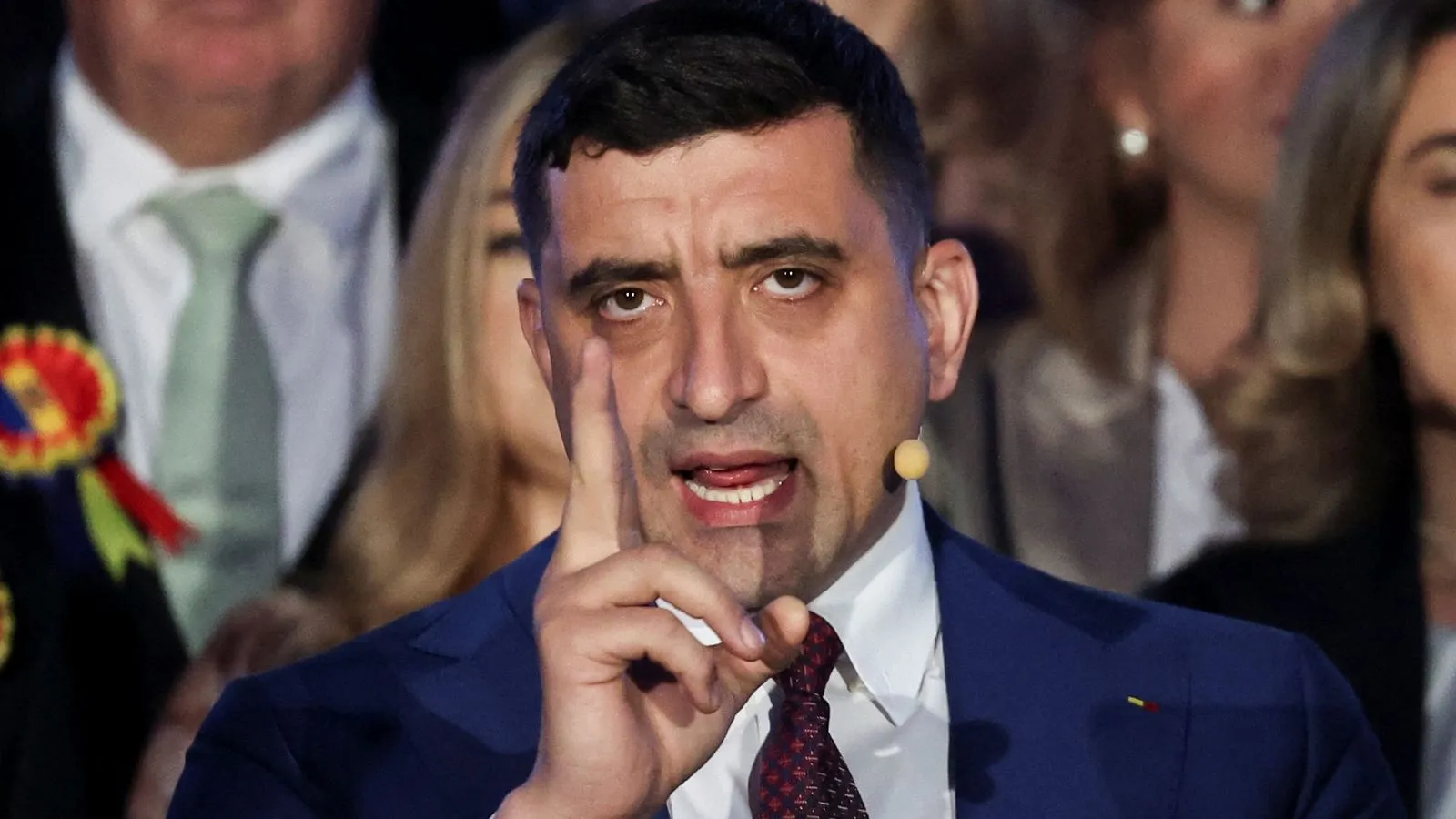
Veștea's noble quest for consensus, as he writes, is not mere window-dressing. He assures the public: "For Romania and solving an unprecedented crisis, I assume an open dialogue with any political formation voted by Romanians. It is I believe obligatory if we want to have, in the real sense of the word, a Government of Romania." Not since Diogenes wandered with his lantern in search of an honest man has a leader so publicly pledged himself to dialogue. Of course, Diogenes never had to negotiate with George Simion, president of AUR, whose approach to politics resembles a man trying to fix a leaking roof with gasoline.
Simion, no slouch in the theatre of politics, made his own overture. "I expect Mr. Veștea until this evening, at 8 pm, at the headquarters of our formation, to discuss what he wants to do for the country," Simion announced. The invitation was as subtle as a brass band in a monastery. His follow-up proved even more pointed: "And Nicușor Dan should say publicly if AUR votes are needed, and in a meeting, if AUR parliamentarians are still extremists."
A simple RSVP would not do.
The situation is as follows: Nicușor Dan, not exactly known for extravagant gestures, handed Veștea a mandate to form a majority, but with a caveat as sharp as a cheese wire. No extremists. The line, it was said, was drawn. Parliament, ever inventive, contains other extremist groups (SOS, or POT led by Anamaria Gavrilă), but their attempts at relevance are about as threatening as a paper tiger with a sprained paw.
The real concern, as everyone agrees in whispers, is AUR.
And so, faced with impossible arithmetic and the enticing aroma of power, Veștea has decided to cross the Rubicon with all the subtlety of a marching band. Not content with a simple handshake, he marches to the headquarters of AUR to kiss the ring of Simion, even though there's no assurance that AUR will support his government. The act itself is less about persuasion than about public penance.
Of course, this is not Veștea's first pirouette in the ballet of betrayal. He already conducted a clandestine meeting with the President, omitting to notify either his own party or Ilie Bolojan. That little episode, described by insiders as "that disgusting little conspiracy," marked his first leap across the Rubicon. Today, the party he once called home, PNL, has announced his imminent exclusion.
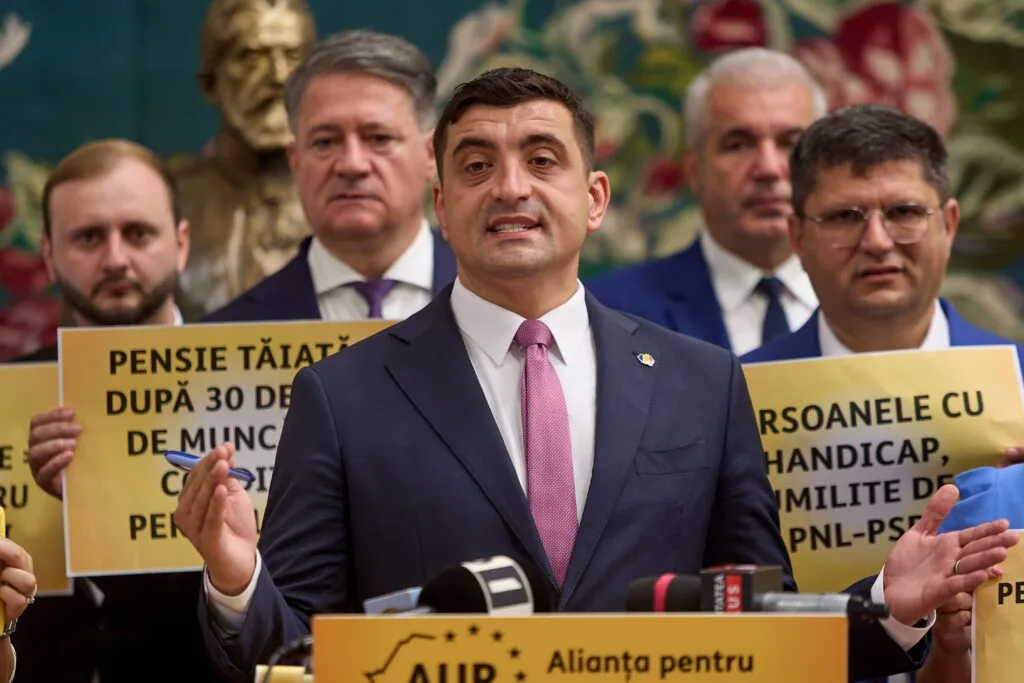
Veștea, undeterred, pushes ahead with the mandate, as if political survival is a game of chicken played while blindfolded and driving a Trabant.
There is a certain economy to Veștea's thinking. The only way, according to the arithmetic of betrayal, to avoid becoming the butt of every joke in Romania is to force through a government by any means necessary. Damages, consequences, political debris: mere collateral in the great pursuit of the prime minister's chair. If the price is to betray Nicușor Dan, who expressly forbade government by AUR votes, so be it.
One betrayal is history. Two is policy.
Some say (though the President's office has not confirmed) that Veștea might have the tacit blessing of Nicușor Dan to negotiate with AUR. But Dan's public line remains: no government with extremist votes. The clarity is, at best, atmospheric. Veștea, meanwhile, appears to have adopted the motto of certain medieval mercenaries: loyalty is for those who can afford it.
In the background, PNL's own band of self-declared traitors sees Veștea's desperation as their only hope. The calculation is artless: once the government is installed, entire party branches may defect to the new order, though Ilie Bolojan has worked to make such opportunism more difficult. Political survival for this camp is tied inextricably to the investiture of Veștea's government.
The logic is simple. Betray, survive, repeat.
Yet the most curious moment in this farce may be Veștea's own reflection. One wonders, perhaps not idly, how a man so committed to consensus, so practiced at crossing lines, manages to shave in the morning.
With what face? With which hand?
There is, however, a charitable suggestion for Mr. Veștea, should he wish to avoid the harsh judgment of history or, at the very least, the ceaseless laughter of his peers. He might commission a commemorative plaque for his office wall: "For services to dialogue, and the creative reinterpretation of loyalty."
Veștea's commitment to dialogue with all parliamentary parties—including AUR—will be tested by whether such openness produces substantive policy outcomes or merely theatrical gestures of inclusion.
Comentarii
Fii primul care comentează.