The honorary USR mayor
Mayor Matei of Turda has been declared incompatible by ANI for receiving a meager dividend from an association. This has sparked a heated debate highlighting the hypocrisy in political ethics, where minor transgressions are magnified while significant ones are ignored. The editorial critiques the National Integrity Agency's role, questioning its focus and effectiveness in safeguarding true integrity.

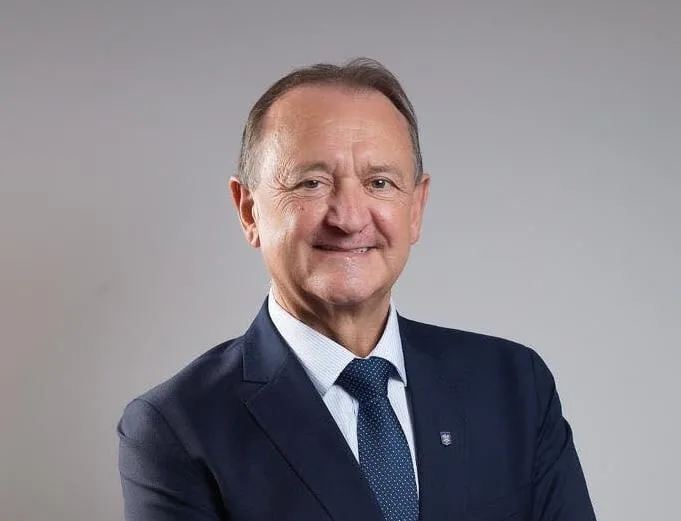
Few things unite Romanians like a good scandal, especially when it involves a mayor, some modest earnings, and the ever-watchful gaze of the National Integrity Agency. Turda, usually better known for its salt mines than its political soap operas, found itself at the centre of a minor thunderstorm after ANI declared the town's mayor, Cristian-Octavian Matei, incompatible with his office. The grounds? An annual trickle of 2,000 lei from an old association, more pocket change than political capital. Yet, in a country where public outrage depends more on which way the wind blows than on the magnitude of the alleged crime, the debate quickly turned theatrical.
In recent days, Turda has become the epicenter of a political storm. Mayor Cristian Matei finds himself in the crosshairs of the National Integrity Agency (ANI) due to a negligible sum of approximately 170 lei received monthly as a dividend from a private association. This meager amount has led to Matei being declared incompatible with his public office. Yet, the uproar it has caused is disproportionate to the alleged infraction.
Our publication reported on this yesterday, and the reaction has been nothing short of overwhelming. Local political factions, particularly the USR (Save Romania Union) and PSD (Social Democratic Party) members in Turda, have been vociferously critical. However, this editorial will not dwell on the theatrics. Instead, it offers a nod to Mayor Matei, who, through ANI's decision, has inadvertently been labeled an honorary USR mayor. It is a sardonic acknowledgment of the selective scrutiny that often plagues political environments.
The real punchline, though, is not the mayor's 170 lei a month. Rather, it is the silence around parliamentary allowances that dwarf such sums. Take, for instance, Ciprian Rigman of USR, who draws in 17,500 lei each month - no awkward questions, no investigation, just the reassuring hum of public funds changing hands. In a place where the rules seem to bend at the whims of political convenience, it's little wonder that Turda residents find themselves scratching their heads. Why the fuss over Matei's private earnings, while the parliamentary stipend parade continues unchecked?
The case of Mayor Matei is reminiscent of previous instances involving USR-affiliated mayors like Dominic Fritz and Clotilde Armand. Both faced similar scrutiny, yet their integrity remained intact, proof of the often arbitrary application of ANI's lens. The agency has been accused of turning a blind eye to the more egregious transgressions of Bucharest's parliamentarians while focusing on local officials for minor infractions. This inconsistency is troubling.
What is truly perplexing is not the specifics of Matei's case but the performative outrage from Turda's political community. The spectacle of indignation, selectively applied, erodes the credibility of those who claim to stand for integrity. If the outrage were genuine, it would be evenly distributed across all instances of impropriety, not selectively applied.
In today's political climate, ethics have become a currency increasingly devalued by hypocrisy. Each announcement by ANI regarding Matei's situation is met with exaggerated moral grandstanding by politicians who, in many cases, are themselves complicit in similar or worse infractions. The public square in Turda is abuzz with cries of "Down with Matei!" yet behind these cries lies a murky blend of sincerity and hypocrisy.
The numbers reveal the absurdity of the situation. Matei is scrutinized for approximately 2,000 lei annually, derived from passive earnings in a private association. This is not an act of employment or engagement in a business effort, but a mere financial return on association, a concept akin to receiving dividends from company shares without active involvement. Meanwhile, political figures like USR's Ciprian Rigman who draw 17,500 lei monthly from public coffers remain unchallenged. Rigman's financial opacity is emblematic of the unchecked privileges enjoyed by those in higher offices.
This selective fervor serves little purpose beyond political expediency. ANI, ostensibly the watchdog of integrity, appears more focused on minor players while major offenders glide past its scrutiny. The agency's selective enforcement is akin to hunting minnows while the whales of corruption consume vast public resources with impunity.

The legal definition of incompatibility is unambiguous: it arises when an individual engages in remunerated activities parallel to their public duties. In Matei's case, the issue is not one of active engagement but rather passive income, an important distinction often lost in the din of public outrage. Not every penny earned constitutes a breach of ethics, yet we inhabit an era where sensational headlines overshadow nuanced understanding, sacrificing reputations for fleeting social media validation.
The fundamental question is whether ANI functions as a true arbiter of integrity or a tool of political maneuvering. Ideally, it should be a cornerstone of the rule of law. However, when reports become spectacles centered on trivial amounts, while genuine cases of incompatibility involving substantial state contracts and shell companies remain unexamined, one must question the motives behind target selection.
Parliamentarians with dossiers as thick as dictionaries remain undisturbed. Major incompatibility cases involving state contracts and front companies are lost in bureaucratic labyrinths. Meanwhile, mayors like Matei, whose alleged financial gains amount to the cost of a basic internet subscription, make headlines. This resembles a popularity contest rather than the fair application of law.
Authentic integrity is not about amplifying minor incidents for political gain. It requires the courage to confront one's own privileges and to acknowledge abuses within one's own ranks. Yet, the political field is rife with double standards. Figures like Razvan Ciortea, who drives a BMW worth 100,000 euros with no justifiable means, remain unchallenged, despite looming convictions for abuse of office. His case does not provoke the same public outcry from political peers.
Ciprian Rigman's acquisition of a Volvo within six months of becoming a deputy is another case in point. His refusal to provide transparency regarding parliamentary allowances, including the 17,500 lei monthly stipend, highlight a broader issue of accountability. The silence from USR members in Turda is deafening, revealing a reluctance to scrutinize their own when it serves political convenience.
Matei's situation mirrors challenges previously faced by USR mayors Dominic Fritz and Clotilde Armand, who have also been targets of ANI's selective enforcement. The lack of response from USR members in Turda is telling. It highlights the tribal nature of political allegiance, where criticism is reserved for opponents, not allies.
In this editorial, I have previously voiced opposition to ANI's actions in cases involving USR mayors, arguing that the agency's inaction in the face of credible allegations against PSD parliamentarians is indefensible. The press has frequently highlighted these discrepancies.
The real test of political integrity lies not in the pursuit of minor offenders but in the willingness to hold all, regardless of rank, accountable for their actions. Until that becomes the norm, the spectacle will continue, and with it, the erosion of public trust in those who claim to serve the public interest.
The issue is not merely about the specifics of Matei's case but the broader implications of selective integrity enforcement. True integrity requires consistent standards applied universally, not selectively. The current approach risks perpetuating a political culture of double standards and undermines public trust in institutions meant to uphold ethical governance.
Comentarii
Fii primul care comentează.