Nicușor Dan's constitutional refuge and the crisis he shaped
Nicușor Dan's actions and statements reveal a deeper crisis at Cotroceni, where his oscillation between constitutional formality and political maneuvering has contributed to Romania's governmental stalemate. By nominating candidates unlikely to secure a majority, Dan has shaped the current impasse and indirectly empowered other political forces.

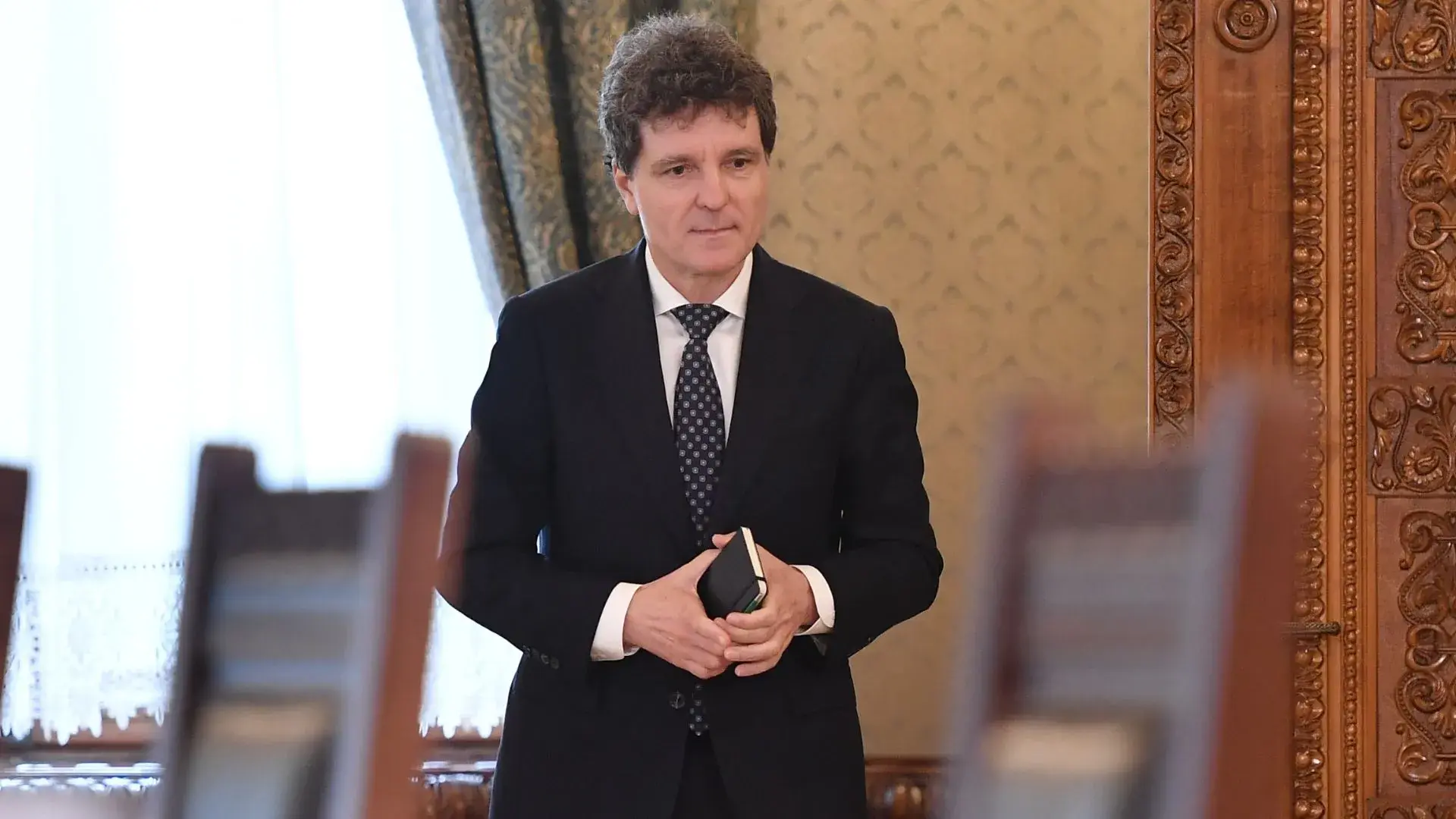
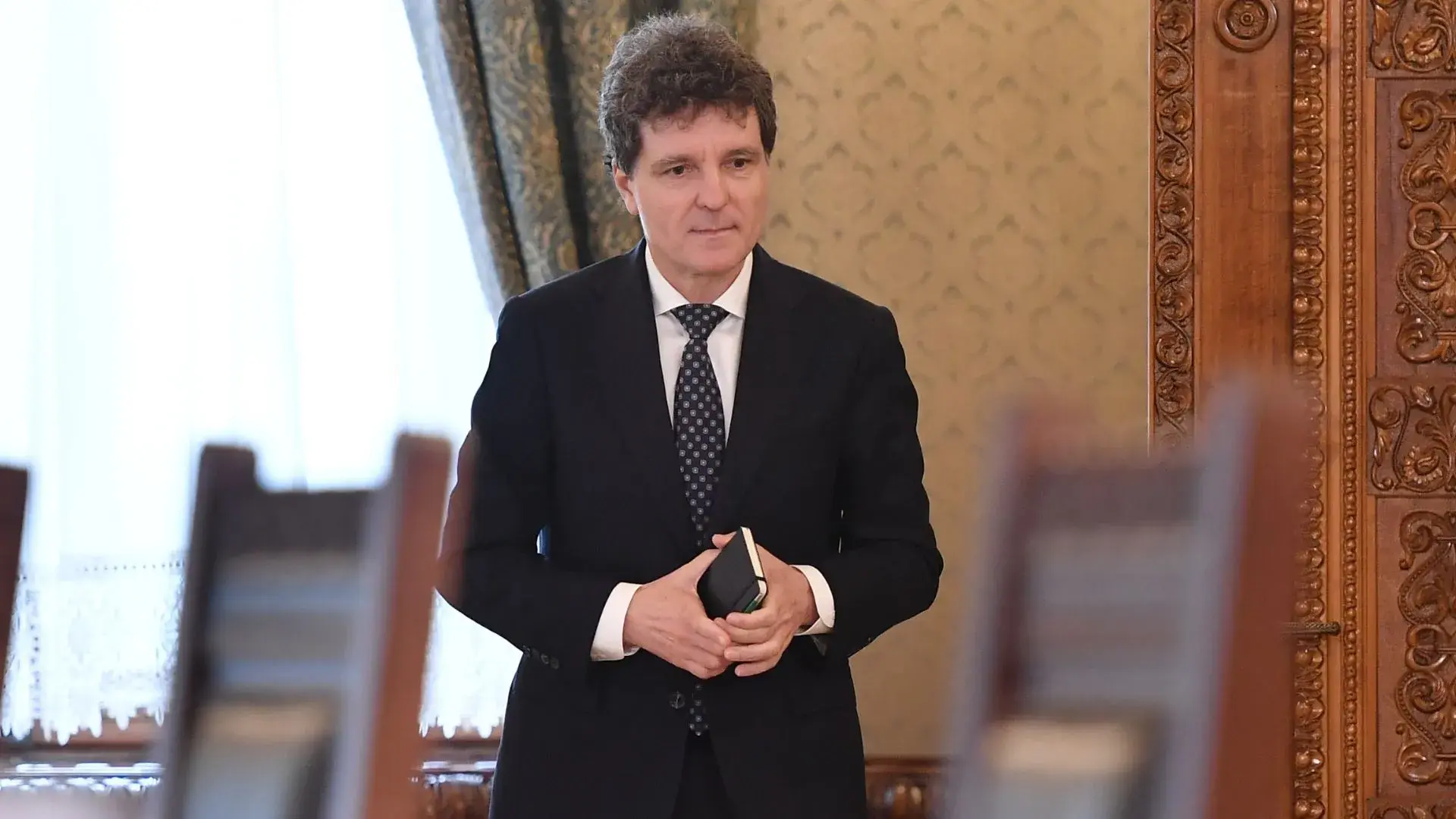
Nicușor Dan's interview, delivered after his sudden appearances in Cluj and a round of carefully staged photo opportunities, reveals more about the crisis at Cotroceni than any prior statement. For months, the president has projected ambiguity, oscillating between passive constitutional guardian and active political player. That conflict is now impossible to ignore.
The deadlock paralyzing Romania's government is not merely the product of party intransigence. It is also the product of a president unwilling to own the consequences of his own political maneuvers.
Dan insists that "we are all serious people" and that it is now up to the parties to form a majority after two months of stalemate. This framing, while procedurally correct, amounts to a retreat from the complex political game he has played by nominating first Eugen Tomac, then Adrian Veștea, for prime minister. To claim now that he is simply waiting at Cotroceni for results is to rewrite recent history.
Constitutionally, Dan is not wrong. The parties must ultimately deliver the votes for a new government. But the Constitution does not require the president to act as a bystander. By naming Tomac and Veștea, both doomed to fail for lack of clear majority support, he did not merely fulfill a formal obligation. He shaped the context. He set the stage for the current impasse and, by extension, for the rise of AUR as a potential kingmaker.
The nominations themselves were not neutral acts. Each was a signal, a calculation about how the political winds might shift. Yet Dan, lacking a party base of his own, found no one willing to follow his lead except a handful of opportunists. The Social Democrats did not align with him from conviction, but out of temporary necessity. No lasting alliance. Only expedience.
Dan's reputation as a mathematical prodigy has been much discussed, but the numbers have not favored him. When his calculations failed, he reverted to the language of the impartial referee. He now speaks of "responsibility" and urges the parties to resolve the crisis. The problem with this plea is that the deadlock did not descend from nowhere.
It was fueled by the ongoing feud between Ilie Bolojan and the PSD, a conflict Dan made no real effort to defuse in the name of national stability. It was aggravated by the very nominations he made, lacking any solid parliamentary backing at the outset.
Dan's own words betray the paradox. He claimed that "from public statements, a solution was emerging for a minority government supported by a pro-Western majority." In reality, this phrase describes the trap he set for himself: a fragile arrangement, dependent on the same parties whose discord he did little to mediate. A minority government, by definition, survives only by the tolerance of others. Stopgap, not foundation.
Yet Dan appeared to gamble on the hope that parties would ultimately support a government they would not join. Specifically, a PSD minority cabinet stands a better chance of constructing a working majority, through parliamentary defections and alliances, than any PNL-USR-UDMR formula. The coming autumn session in the Chamber of Deputies and Senate will test this theory.
One of the most telling moments in Dan's interview came when he was asked about Sorin Grindeanu. He did not offer a clear endorsement, nor did he rule one out. Instead, he remarked that, personal opinions aside, Romania is a democracy with divided powers. The implication is unmistakable: Dan is preparing the ground for a potential accommodation with Grindeanu or another PSD-backed solution, despite previous signals of reluctance. Not an explicit reversal, but a pivot, carefully managed to avoid alienating his remaining supporters.
The strongest objection to this reading is that the president is constrained by the Constitution, that he cannot impose a government where the votes do not exist. That is true. Dan's defenders will argue that, in the absence of a clear majority, any president would be forced to experiment with nominations, hoping to unlock a path forward.
Yet this defense collapses on closer inspection. The president did not passively watch as the crisis unfolded. He actively shaped the field by nominating candidates without secured support and by failing to intervene when negotiations veered toward the extremes.
Consider his handling of Bolojan. Dan implied, without stating outright, that Bolojan misled him about supporting Tomac's government. When pressed on whether Bolojan had signaled support and then changed his mind, Dan refused a direct answer. Instead, he relied on a carefully worded response: he had a "reasonable expectation" that the government would pass, based on discussions with certain leaders whose opinions later shifted. The subtext is clear enough. Dan accuses Bolojan of duplicity, without risking an explicit confrontation.
With Veștea, the story is similar. According to Dan, Veștea was not mandated to negotiate with AUR for votes, nor did he inform the president of his intentions. Dan claims to have been blindsided. Yet he did not move to withdraw his support for Veștea after this maneuver came to light. The constitutional role, Dan says, prevented him from intervening. Still, a public rebuke at that moment would have strengthened his standing among his own supporters, and arguably, the country at large.
Dan's attitude toward AUR is another study in hedging. When asked directly whether AUR is a pro-Western party, he hesitated before answering. The hesitation is not about a sudden change of heart. Rather, it reflects the transactional reality: AUR leader George Simion refused to back the Veștea government until Dan reconsidered his position on AUR, specifically by apologizing for previously labeling them anti-Western. The president, caught in a web of shifting alliances, could not afford to close any doors, however distasteful.
The episode involving a dinner with Rareș Bogdan and Pahonțu provides a glimpse into Dan's self-presentation. According to his account, the meeting was accidental, simply a matter of convenience after a session with Manfred Weber, with Bogdan attending as an MEP and Pahonțu present for security. They stopped at the first terrace along their route. No grand strategy, just happenstance. Or so he would have us believe.
Dan did at least break his silence on one point of principle. He criticized the so-called "blacklists" compiled by the Superior Council of Magistracy. That alone, after months of evasions, is a rare moment of clarity. But it comes late, and its significance is diminished by the surrounding ambiguity.
The consequences of this manufactured deadlock are not abstract. The absence of a functional government impedes budget planning, delays infrastructure projects, and sows uncertainty among investors. Public servants, local authorities, and ordinary citizens are left guessing. The longer the crisis drags on, the greater the temptation for actors like AUR to capitalize on discontent.
Dan's defenders are correct on one point: he is not the sole author of this crisis. The parties, too, have shirked responsibility, preferring tactical maneuvering to genuine compromise. Bolojan's shifting signals, the PSD's transactional approach, and AUR's opportunism each play a part. But the president's attempts to recast himself as a neutral arbiter ring hollow against the record of his own decisions.
Some would argue that Dan's caution is justified, given the fragility of the parliamentary arithmetic. After all, no president can conjure a majority from thin air. Yet the record shows that Dan's approach has been less about prudence and more about calculated risk, placing bets on scenarios where he had neither the use nor the allies to see them through.
The deadlock is not merely the result of failed negotiations or stubborn party leaders. It is the product of a presidency that oscillates between intervention and withdrawal, between signaling preferences and disclaiming responsibility. Dan's invocation of "serious people" and "responsibility" ultimately serves to obscure the fact that, when the decisive moment arrived, he chose ambiguity over leadership.
His own admission, "it is possible I have made mistakes" in relation to citizens and supporters, marks the first glimmer of self-doubt. Yet even this is hedged, wrapped in vague references to the gravity of suspension and the need not to trivialize such measures.
The political deadlock is as much a consequence of presidential equivocation as it is of parliamentary division. The costs will be borne by those who can least afford them.
Comentarii
Fii primul care comentează.