Retired General McCaffrey calls US military campaign against Iran 'strategic catastrophe'
General Barry McCaffrey, a retired four-star US Army general, criticized the US military campaign against Iran as a 'strategic catastrophe' due to the absence of allied backing, domestic opposition, and logistical vulnerabilities. He highlighted that Iranian strikes have compromised US bases and forced the Pentagon to alter supply routes, while public opinion polls show most Americans oppose the conflict.

Imagine generată cu inteligență artificială
Retired US General Barry McCaffrey declared the ongoing American military campaign against Iran a "strategic catastrophe" on Tuesday, citing the absence of allied support, mounting domestic opposition, and a logistical network he described as increasingly vulnerable to Iranian attack.
McCaffrey, a four-star general who served 32 years in the US Army before retiring in 1996, posted his assessment on X. "We are in the middle of a strategic catastrophe without allies or the support of the American people," he wrote.
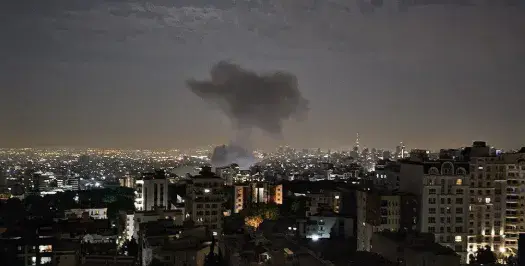
His remarks follow a series of Iranian strikes on US installations across the Persian Gulf. According to McCaffrey, ballistic missiles and drones have rendered American Army, Navy, and Air Force bases in the region "largely unusable." The attacks have forced the Pentagon to reconfigure supply lines and relocate portions of its air assets to western Saudi Arabia and southern Europe.
"The logistics are the problem," McCaffrey told his followers. He said resupply operations now depend on routes from Diego Garcia in the Indian Ocean and from the Philippines, both thousands of kilometers from the conflict zone. "Long and vulnerable," he added.
A mid-August poll conducted by Economist and YouGov found that 57 percent of Americans consider the war against Iran the wrong decision. Only 25 percent supported it. The survey, cited across multiple US media outlets, confirms the scale of public dissent McCaffrey referenced.
The United States currently maintains around 20 warships and two aircraft carriers in the region. McCaffrey described the naval force as "highly dangerous for Iran" but noted that ships operating far at sea are difficult for Tehran to locate and strike. On land, the picture is bleaker.
McCaffrey has previously warned that Washington risks losing access to up to 15 bases in the Gulf. That scenario would sharply curtail American military reach and responsiveness across the Middle East. The general said Army missile units are being reinforced at remaining positions, but the overall balance on land has shifted.
Diego Garcia, a remote atoll leased by the United States from Britain, has assumed new importance. The US Navy describes the base as a logistical hub for operations in the Indian Ocean and Persian Gulf. Finnish news portal Verkkouutiset reported in March that Tehran fired two medium-range missiles at the installation. Both missed. The Navy has not confirmed damage, but the incident drew attention to the base's vulnerability.


The absence of international partners has left the United States to bear the full burden of costs and risks. McCaffrey said America is fighting "without allies," a position that isolates Washington diplomatically and operationally.
The shift in supply routes marks a significant change in US strategy. The Navy's dependence on Diego Garcia and the Philippines for resupply complicates operational planning and increases response times. Air Force units relocated to western Saudi Arabia and southern Europe face similar coordination challenges.
McCaffrey graduated from West Point in 1964. Over three decades, he held command and staff positions across the Army, retiring as a four-star general. His public criticism carries weight in military and policy circles, where his experience in combat and strategic planning is widely recognized.
The Economist and YouGov poll is among the few recent surveys measuring American attitudes toward the Iran conflict. The 57 percent who view the war as a mistake far outnumber the 25 percent who consider it justified. That gap may influence future policy debates in Washington.
Iranian missile forces have demonstrated expanding reach. The March strike attempt on Diego Garcia, though unsuccessful, illustrated Tehran's willingness to target installations far beyond the Gulf. The Pentagon has reassessed defensive measures at Diego Garcia and other remote outposts in response.
The loss of access to Gulf region bases, whether temporary or permanent, forces the Pentagon to rely more heavily on distant installations. These bases have historically supported operations throughout the Middle East and beyond. Their diminished utility now shapes both the tempo and scope of American action.
McCaffrey's warning about logistics echoes a broader concern within the US military. Sustaining operations at extended distances, under threat from adversaries with precision strike capabilities, places new strains on supply chains and deployment patterns.
The US Navy continues to describe Diego Garcia as necessary for Indian Ocean and Persian Gulf operations. Its ongoing use highlight the importance of secure supply lines in modern conflict, even as adversaries develop new methods to threaten them.
Comentarii
Fii primul care comentează.