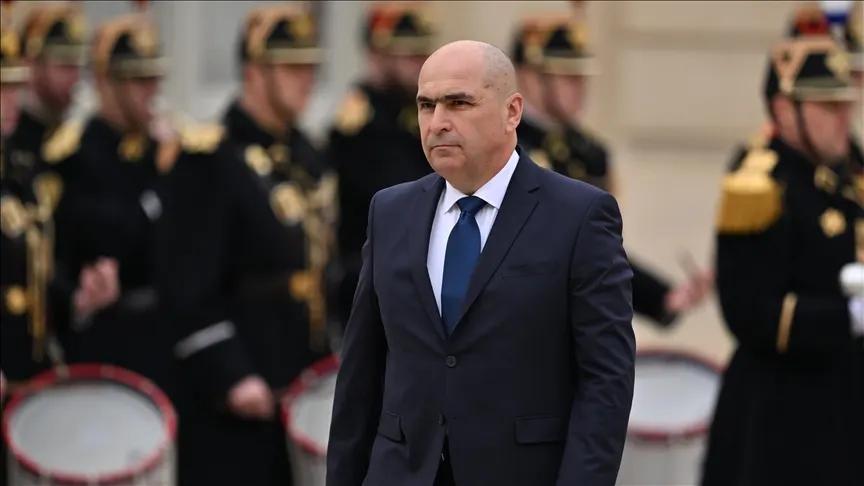
Veștea breaks with presidency, opens talks with extremist AUR for cabinet votes
Adrian Veștea, breaking from the stance of President Nicușor Dan and his own party, has opened talks with all parliamentary groups, including the controversial AUR, to secure enough votes for his cabinet. Despite a resignation ultimatum from PNL leadership, Veștea remains focused on building a majority amid Romania's ongoing political crisis.
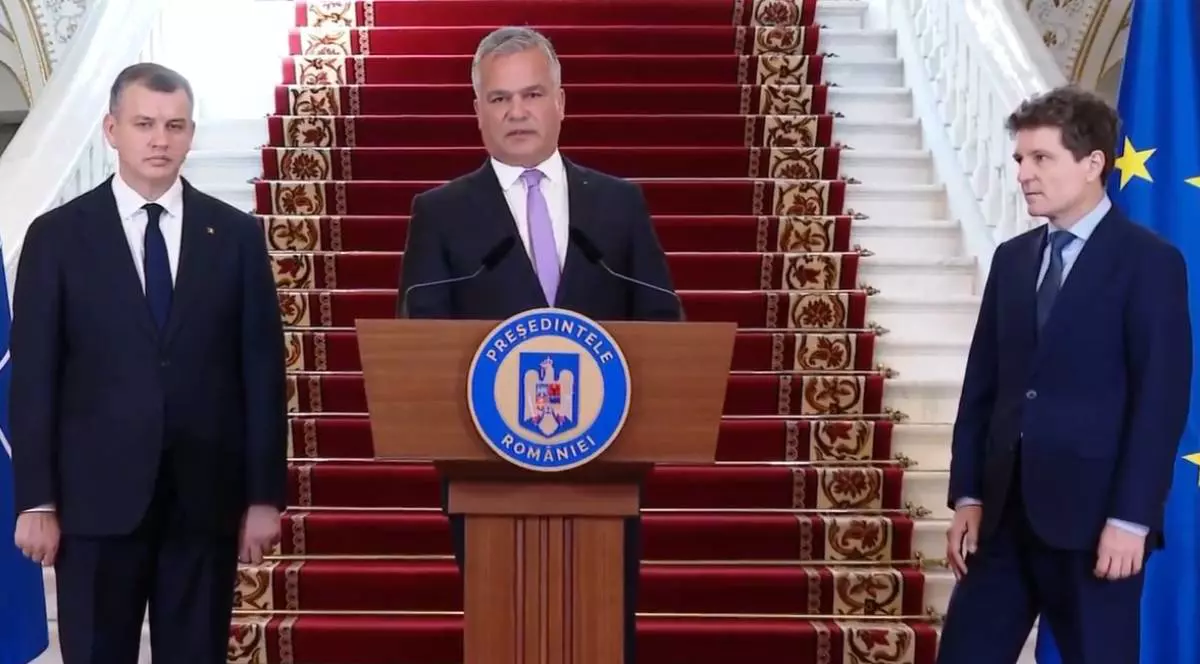
Adrian Veștea, Romania's designated prime minister, told Realitatea TV on Tuesday evening that he is willing to negotiate with any political faction in parliament to secure a majority for his cabinet, defying his own party's ultimatum and opening talks with rivals previously ruled out by the presidency.
"I have no reservations about talking to absolutely anyone, regardless of political orientation," Veștea said during the televised interview. The statement marks a sharp departure from earlier positions held by President Nicușor Dan, who had repeatedly excluded cooperation with extremist parties.
Veștea's outreach extends to parliamentarians from the Save Romania Union (USR) and the Alliance for the Union of Romanians (AUR), groups that have clashed publicly with the National Liberal Party (PNL) and the Social Democratic Party (PSD) over policy and ideology. "I understand there are also USR parliamentarians who will participate in this vote," Veștea told Realitatea TV. He added that support from AUR members would not trouble him, underlining his focus on assembling the 240 votes he claims are necessary for investiture.
The push comes amid a deepening political crisis. Late Monday, the PNL leadership delivered an ultimatum demanding Veștea resign his mandate by 10:00 the following morning or face expulsion from the party. Veștea ignored the deadline.
Negotiations have intensified in recent days, with Veștea and allies from PNL and PSD holding direct, one-on-one discussions with individual MPs across the political spectrum, according to Digi24. The strategy appears designed to circumvent formal party lines, as several major parties, including the Democratic Alliance of Hungarians in Romania (UDMR), PNL, and USR, have already announced they will not support the Veștea government.
The stakes extend beyond parliamentary arithmetic. Romania faces the prospect of losing billions of euros in European funding earmarked for infrastructure projects, hospitals, and transport networks if a stable government cannot be formed. The prolonged deadlock has already delayed key policy decisions and left the country's development agenda in limbo.
Marian Neacșu, of PSD, has joined Veștea in negotiations with MPs from the Uniți pentru România group, which includes former prime minister Victor Ponta. The involvement of PSD and PNL negotiators in talks with smaller groups and independents reflects the fragmented nature of the current parliament, where no single bloc holds a clear majority.
UDMR has announced it will not join the new government but has left open the possibility that its parliamentary groups could support the cabinet in the investiture vote. Csoma Botond, representing UDMR, said that Ilie Bolojan is no longer a viable candidate for premier and called for greater flexibility in negotiations. This stance has forced Veștea to look elsewhere for votes.
The political calculus has become increasingly complex. PNL has officially stated that Veștea will be expelled from the party if he does not resign his mandate, a move that would leave him without the backing of one of Romania's major parties. Meanwhile, discussions continue about the possibility of a minority government or a new coalition, with names such as Alexandru Nazare floated as potential alternatives for prime minister in a PNL-USR-UDMR configuration.
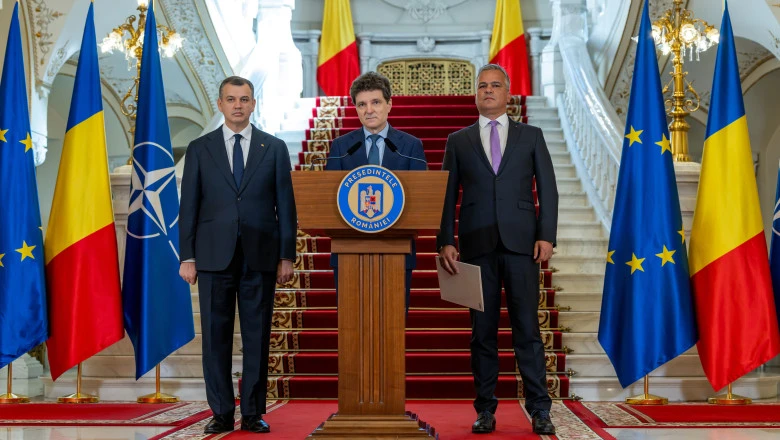
Within PNL, dissent is growing. Some party leaders, including Alina Gorghiu, have taken a hard line against Veștea, insisting that the party cannot support his efforts if he continues to pursue the mandate in defiance of party instructions. Others, such as Mihai Coteț, have expressed differing views, highlighting divisions within the party over how to handle the crisis.
PSD, for its part, has been drawn into the negotiations, with Sorin Grindeanu reportedly advising President Dan on political strategy. The involvement of senior PSD figures highlight the importance of the current government formation process and the lengths to which parties are willing to go to secure influence in the new cabinet.
Party sources, as cited in public reports, allege that negotiators have alternated between inducements and threats, invoking the authority of President Dan to sway reluctant MPs. These tactics, described by some as a mixture of incentives and pressure, reflect the high stakes and the fluidity of alliances in the current environment.
Opposition voices from USR and AUR have criticized the negotiations as opportunistic. Irineu Darău, a USR MP, has used social media to attack Veștea's efforts, characterizing the government formation process as a farce. For their part, AUR officials have denied reports that ten of their MPs are preparing to defect to the Uniți pentru România group, seeking to maintain party unity in the face of mounting pressure.
The role of smaller parties and independents has become increasingly prominent, as their votes may prove decisive in the final tally. Negotiations with groups such as Uniți pentru România reflect the reality that every vote counts in the current parliament. The possibility of last-minute deals and shifting allegiances remains high, as the deadline for the investiture vote approaches.
Veștea's insistence on pressing forward despite opposition from his own party has also raised questions about party discipline and the future of the PNL. The threat of expulsion looms over the designated premier, yet he continues to meet with MPs and party leaders in an effort to salvage his mandate.
The broader consequence of the impasse is a loss of public confidence in the political process. As the government formation drags on, ordinary Romanians face the prospect of delayed reforms and missed opportunities for investment. Billions of euros in European funding, intended for roads, hospitals, and railways, hang in the balance, as the parliamentary stalemate threatens to derail critical projects.
Despite the turmoil, Veștea has reiterated his intention to press ahead. After his meeting with President Dan at Cotroceni Palace, the designated premier told reporters that he remains committed to forming a government and serving the Romanian state. His allies within PNL and PSD continue to negotiate with MPs from all parties, hoping to secure the necessary votes before the deadline.
According to Digi24, Veștea is pursuing negotiations with multiple factions, including AUR, to secure the necessary parliamentary majority for his cabinet. The talks represent a significant shift from the presidency's earlier refusal to cooperate with extremist parties.
Comentarii
Fii primul care comentează.
AUR refuses support for Tomac government proposal
Nicușor Dan Names Eugen Tomac as Prime Minister Nominee
The Cotroceni putsch and the liberal line in the sand: How Ilie Bolojan blocked the rebirth of Romania’s toxic Grand Coalition