Sulyok signs constitutional amendment forcing his own removal
President Tamás Sulyok has signed a constitutional amendment mandating his own removal, closing a chapter on Viktor Orbán's political order. The amendment, driven by Prime Minister Péter Magyar, highlights ongoing tensions over rule of law and the legacy of Orbán's governance. Sulyok cited his duty and conscience in his decision, criticizing the political motivations behind the move.

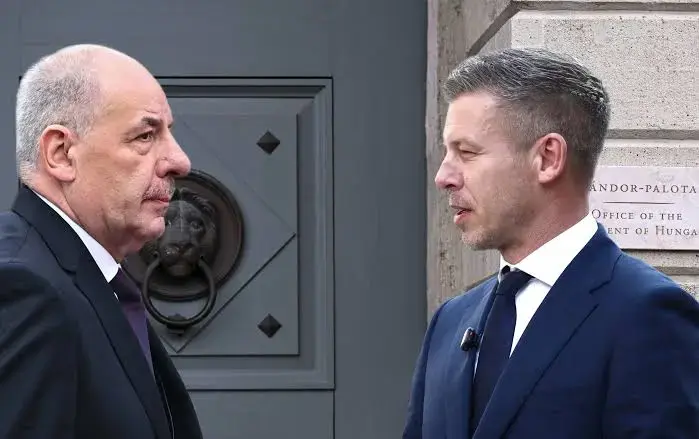
Creator: ATTILA KISBENEDEK | Credit: AFP
Hungarian President Tamás Sulyok signed a constitutional amendment Saturday that will remove him from office, ending months of pressure from Prime Minister Péter Magyar and closing a chapter on the political order established under former Prime Minister Viktor Orbán.
The amendment, passed by parliament Monday, gave Sulyok five days to sign or refer the law to Hungary's Constitutional Court for procedural review. A 2013 amendment pushed through by Orbán stripped the court of authority to rule on the substance of constitutional changes, leaving Sulyok with no avenue to challenge the measure on its merits.
"I am fulfilling my obligation under the Fundamental Law, after thoroughly weighing my legal options and my conscience," Sulyok wrote on social media Saturday. He added that his decision was "enduring proof that the fundamental values of a free society, the rule of law, democracy, and the principle of the separation of powers, have been trampled upon for the sake of political power."
Magyar, who has positioned himself as a reformer intent on dismantling Orbán's legacy, began the campaign to force Sulyok's departure earlier this year. He portrayed the president as a symbol of the entrenched system left by Orbán, despite Sulyok's relatively low public profile before the controversy erupted. Magyar repeatedly accused Sulyok of overseeing abuses of the rule of law, though Sulyok was appointed by Orbán but never joined his Fidesz party.
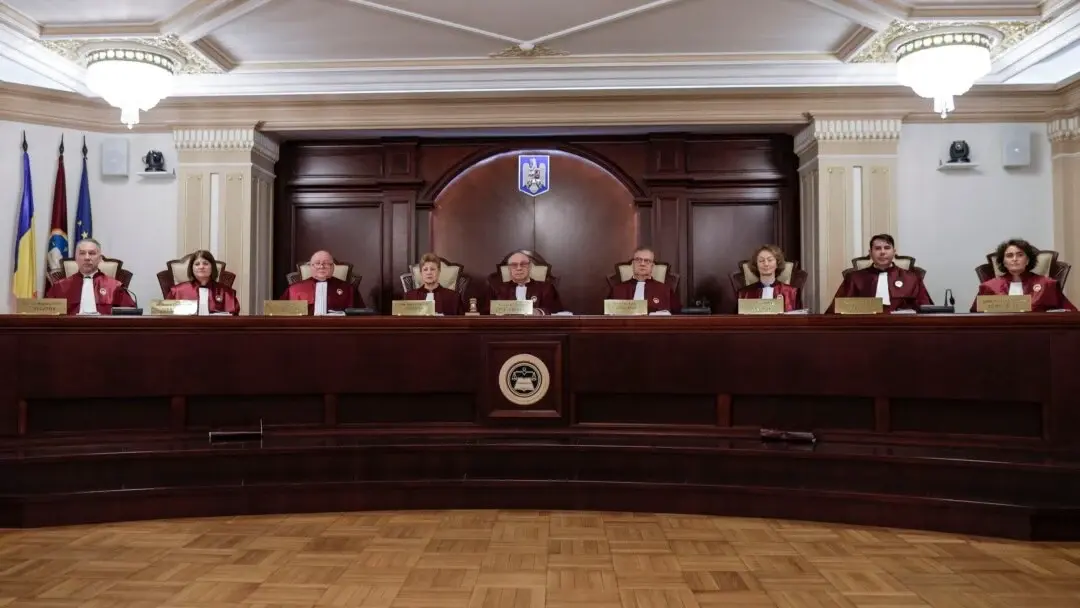
The amendment also reinstated a mandatory retirement age of 70 for Constitutional Court judges, forcing out four sitting justices, including court president Péter Polt. The provision accelerates the turnover of judicial figures appointed during Orbán's tenure and clears the way for new judges likely to be chosen by the current parliamentary majority.
"With Tamás Sulyok's signature, the last obstacle to our joint decisions coming into effect has been removed," Magyar said Saturday evening, according to a statement from his office. "We are restoring something that the Orbán regime has tried for many years to take away from the Hungarian people: the certainty that power can be limited."
Orbán, who left Hungary earlier this week to attend the World Cup final in the United States, responded on social media. "If this could be done to the president of the republic, then tomorrow no one will be safe," he wrote. "God protect Hungary!"
Márta Pardavi, co-chair of the Hungarian Helsinki Committee, told POLITICO that "what Hungary needs now is people with strong integrity and democratic commitment to lead the country back to democracy and rule of law. President Sulyok did not meet these criteria."
Sulyok's resignation takes effect Monday. Parliament speaker Ágnes Forsthoffer is set to succeed him as interim president, but Tisza party lawmakers submitted a resolution Friday to replace Forsthoffer as speaker, setting up further political maneuvering at Monday's extraordinary parliamentary session.

The events represent the most direct challenge to the political order established during Orbán's tenure. Legal experts and international observers have raised concerns about the precedent set by using a constitutional amendment to remove a sitting president, and about the concentration of power the judicial retirements will enable.
Sulyok's statement warned that the presidency "will no longer serve as any kind of check or balance," a reference to what critics describe as the broader erosion of institutional independence under Orbán. The president's decision to sign rather than refuse outright reflects the limited avenues available to constitutional officeholders in Hungary's current system.
Magyar has promised further reforms aimed at strengthening democratic institutions and restoring public confidence. Opposition parties and watchdog groups are demanding greater transparency in the selection of Sulyok's successor and the new Constitutional Court justices.
The political crisis has drawn attention in neighboring countries. Romanian President Klaus Iohannis dismissed suggestions that he should be removed from office following what some critics called a "huge betrayal of voters," calling the idea an "unserious measure," according to Romanian media reports this week.
The amendment's judicial retirement provision will have immediate consequences. Four justices, including Polt, must step down, potentially tilting the balance of the court in favor of the ruling party. Legal this could undermine the court's ability to serve as an effective check on executive power.
Magyar's supporters have hailed the developments as a long-overdue reckoning with Orbán's legacy. They argue that removing Sulyok and reshaping the judiciary are necessary steps toward rebuilding public trust. that the rapid pace of constitutional change risks destabilizing Hungary's institutional framework and concentrating power in the current government's hands.
International reaction has been muted, with most European Union officials declining to comment directly. Privately, some diplomats expressed concern that the precedent could embolden other governments to use constitutional amendments to remove political opponents. The European Commission has previously raised concerns about the independence of Hungary's judiciary and the rule of law under both Orbán and his successors.
The forced retirement of senior judges and the ongoing struggle over the speakership suggest that the transition away from Orbán's model will be neither smooth nor uncontested.
Sulyok signed the amendment on Saturday, effective immediately. Magyar is expected to be nominated as his successor in Monday's parliamentary session. Sulyok's final statement warned that 'the rule of law had ended in Hungary,' marking the end of his presidency after months of political pressure.
Comentarii
Fii primul care comentează.