How police radar measures speed and why sudden braking is risky
Police radars do not have a fixed range for measuring speed. Equipment and technical specifications determine their effective distance. Drivers cannot rely on braking upon sighting a police car to avoid penalties. OUG 195/2002 mandates adherence to speed limits. The general speed limits vary by road type, with specific sections having unique limits. Sudden braking can be hazardous, and it's safer to consistently follow speed regulations.

Arhivă
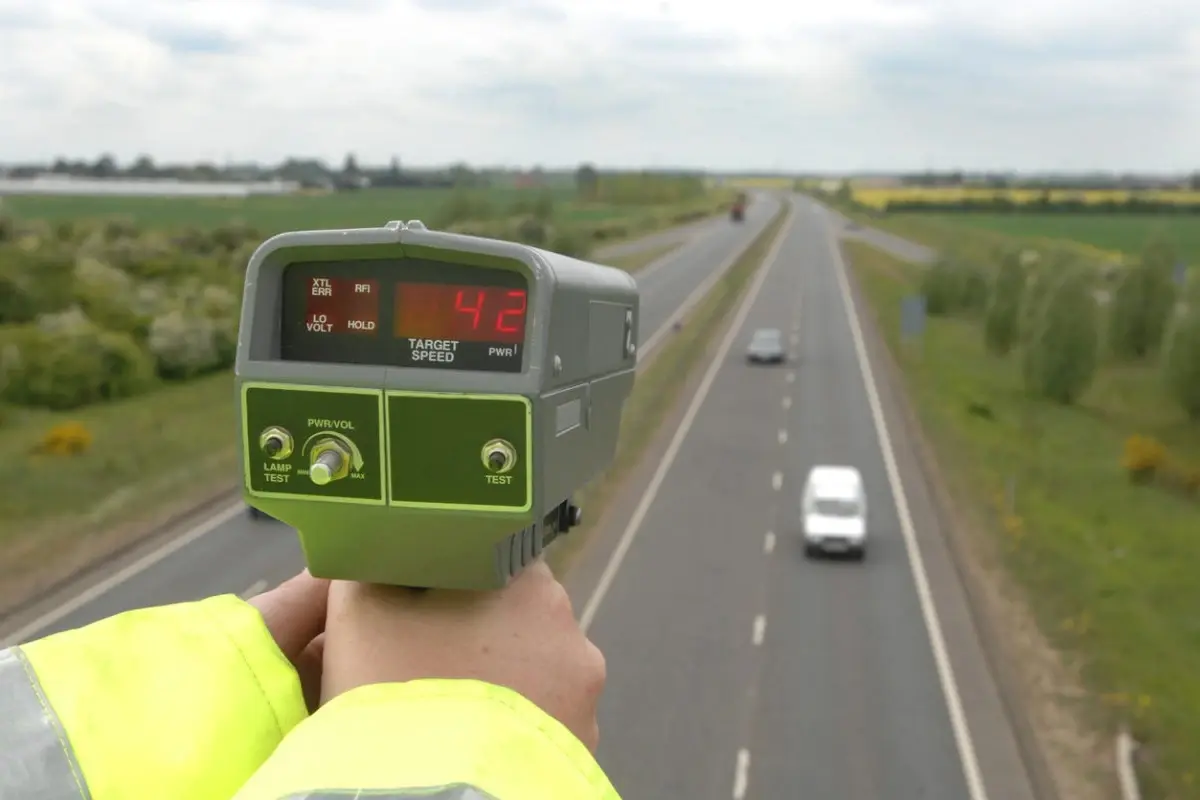
Police radar devices do not have a universal range for measuring vehicle speeds; their effective distance varies based on specific equipment and technical specifications. No legal provision allows drivers to escape penalties by merely decelerating when spotting a police vehicle.
According to OUG 195/2002, police are authorized to use approved technical methods for speed measurement. These methods must be documented in the official report, as required by the Road Code. The key factor is adhering to speed limits on the road section, not the radar's location.
Article 48 of OUG 195/2002 mandates drivers to comply with legal speed limits and adjust their speed according to road conditions. In localities, the general speed limit is 50 km/h unless signs indicate otherwise. On highways, the limit is 130 km/h, while express roads have a limit of 120 km/h. European national roads are limited to 100 km/h, and other roads to 90 km/h. Certain road sections may have different limits, clearly indicated by signage.
There is no specific point where drivers can safely avoid radar detection. Spotting a police car does not ensure a driver’s speed hasn't already been recorded. Sudden braking upon noticing law enforcement can endanger vehicles behind. It is safer to gradually reduce speed and consistently adhere to speed limits.
Radar devices can measure a vehicle's speed long before the driver sees the police car, and the current speedometer reading cannot prove the vehicle was not exceeding the limit earlier.
Comentarii
Fii primul care comentează.