Minister Rogobete Blames Bolojan for Public Outrage Over Political Baptism Party
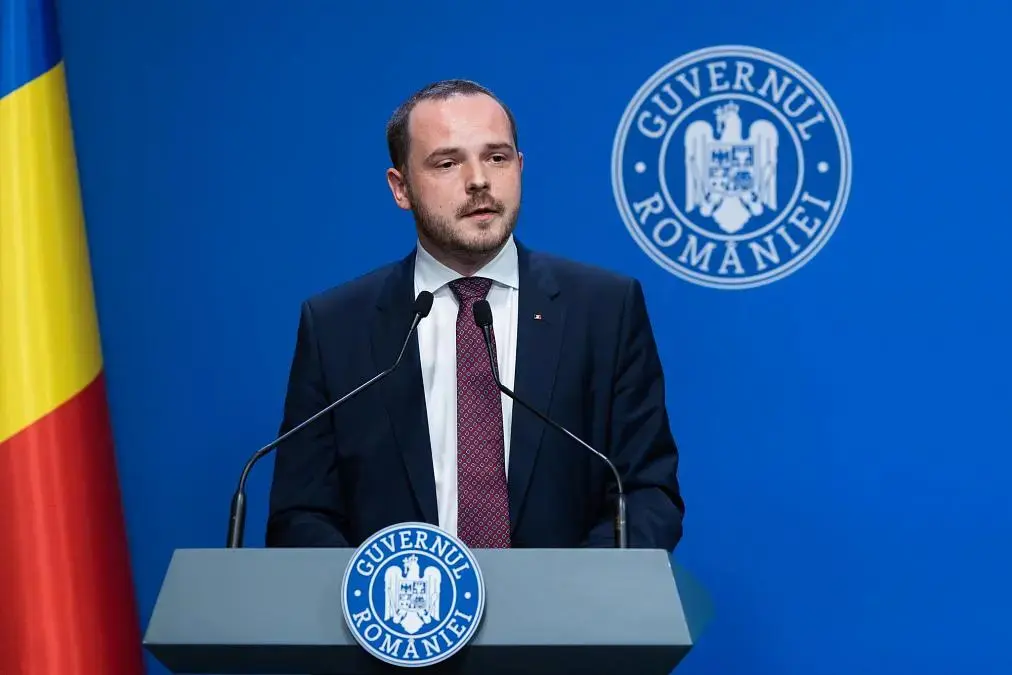
At a high-profile baptism in Bucharest, Alexandru Rogobete, Secretary of State at the Ministry of Health, deflected criticism over the event's extravagance by blaming Ilie Bolojan’s past economic policies for current public discontent. Rogobete argued that if Romanians enjoyed better living standards, the political elite’s celebrations would not provoke outrage. His remarks were made during a televised interview, shifting the focus from the event to broader socioeconomic issues.

Arhivă
Glitz flooded Bucharest during the baptism of Alfred Simonis’s son, an event that drew the Ministry of Health’s top representative, Secretary of State Alexandru Rogobete. In the upper echelons of Romanian politics, such gestures pass for routine: friendship and political solidarity are best displayed between platters of exotic fruit and three generations of crystal glassware. Yet, in a rhetorical twist worthy of a debate club, Rogobete named a surprising culprit for the public uproar: Ilie Bolojan.
Rogobete’s theory, unveiled Monday night on B1 TV’s “News Pass,” shifted the focus. He appeared composed, gaze fixed somewhere between the teleprompter and a tray of mini-éclairs, as he explained that the real issue was not the event’s extravagance, but the poverty now facing ordinary Romanians. That hardship, Rogobete argued, is the legacy of Bolojan’s economic policies from his time as prime minister. In this telling, everything connects: if not for Bolojan’s vision, nobody would mind the state footing the bill while the political class celebrates.
Rogobete did not attend as a mere guest but as an apostle of social empathy, at least by his own account. He tried to reassure the public: had living standards been higher, people would not have resented the golden balloons, red carpet, or champagne pyramid. Quite the opposite, he suggested, Romanians would have watched the livestream with a quiet sense of national pride. “Look, if we ordinary people have everything we need, let our elected officials enjoy themselves too,” he said.
The scene could have been lifted from a satirical revue. Rogobete, bow tie perfectly straight, was spotted at the head table. He insisted his presence was not to revel in opulence, but to support his friend Simonis. Whether French champagne corks popped or waiters paraded lobster platters, Rogobete claimed none of this could be blamed on him, even if he is a minister. He was there, he said, out of courtesy and affection, not to show off.
The public, less grateful and perhaps less informed, saw things differently. Instead of appreciating elite solidarity, citizens spent their evenings debating whether public funds might be better spent than on lavish parties for top guests. Some, more pointed in their criticism, suggested this kind of spectacle signals a final break between the ruling class and the people counting every leu at the supermarket. “We’re stuck with loan payments, they’re throwing parties,” muttered a man in line at the tax office. No one seemed to listen.

Rogobete persisted. He raised an eyebrow and presented his ultimate argument: social frustration doesn’t come from the red carpet, but from empty pockets, and those, he insisted, are Bolojan’s doing. So, if we’re looking for someone to blame for collective dissatisfaction, Rogobete advised, don’t get lost among catering invoices and DJ fees. Instead, look back at the political past, where Bolojan’s signature supposedly drew the line on prosperity.
Meanwhile, inside the hall, the country’s political elite kept dancing. They likely believed it only natural for the public to watch them with admiration, as if at a school recital for straight-A students. Perhaps they even expected a congratulatory message signed, “Anonymous Taxpayer.”
Critics, those who struggle with the subtleties of government logic, reminded anyone who would listen that, while inflation eats away at every salary and receipt, the country’s leaders spend on parties that private companies would not dare attempt for their own year-end events. “Instead of focusing on hospitals or schools, they’re competing over baptism parties with protocol guest lists,” said a mathematics teacher from Oradea, chalk in hand, calculating the per-guest cost of a festive meal.
The Social Democratic Party faithful responded in chorus: public money is always the object of envy, so better to spend it than leave it unused, bad optics otherwise. And if the public gets upset, the explanation is simple: they just don’t grasp the scale of political sacrifice behind every raised toast.
In the end, Rogobete clarified once more, with the air of a teacher who always has the answer: he did not attend the party to endorse luxury, but out of moral duty to friendship. That everything looked straight out of a lifestyle magazine was, in his view, just the unfair context of the current moment. And, naturally, the blame lies with old policies, never the new tables.
A modest proposal for the next political baptism or wedding: invitations should come with a clear note, “Attention: All criticism to be redirected to Bolojan.” The rest will just be background music.
Comentarii
Fii primul care comentează.
Republican Strongholds Fall: MAGA Faces Historic Defeat as Democrats Sweep Congress

Psychologists offer open session for teenagers on October 31

Romania braces for temperature drop and heavy rains