Von der Leyen declares 'new security era' after drone attacks on NATO sites
Ursula von der Leyen announced that Europe faces a 'new security era' following drone attacks on critical NATO infrastructure, with Germany attributing a recent incident to Russia. The attacks, including one in Romania, have prompted strong responses from European governments and heightened tensions with Moscow, which denies involvement.

Arhivă
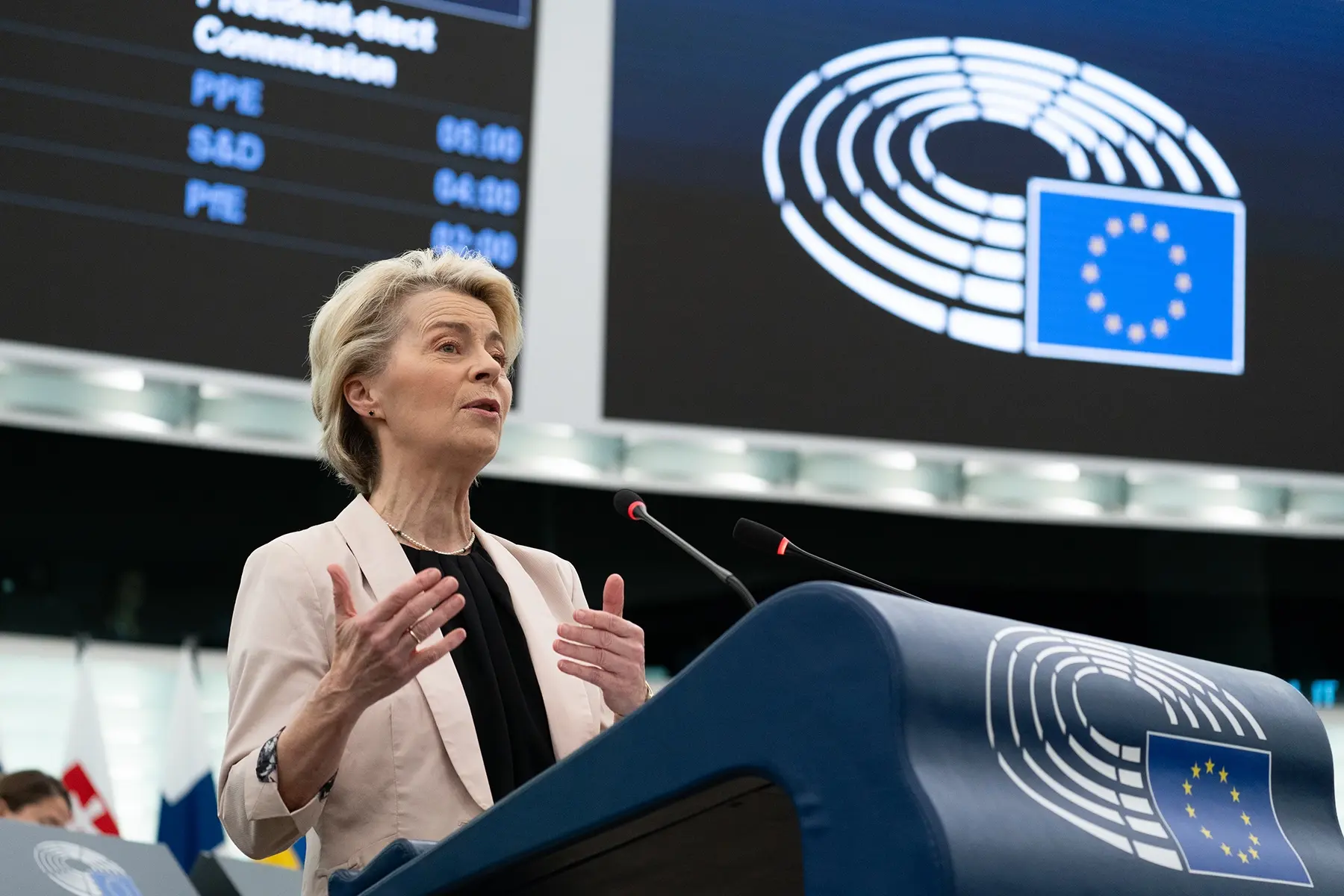
European Commission President Ursula von der Leyen declared Wednesday that Europe has entered a "new security era" following drone attacks on critical infrastructure, including an attempted sabotage at a NATO logistics hub in Germany that Berlin attributes to Russia.
Von der Leyen spoke in Brussels after a NATO meeting, warning that the continent must adapt to a reality where such attacks are increasingly likely. German authorities linked the August incident at Leipzig/Halle airport to Russian actors, marking what von der Leyen described as a new stage in Russian activities within the European Union.
"Europenii se confruntă cu un adevăr dur: aceasta este noua normalitate," von der Leyen said.
The Leipzig incident is not isolated. On May 29, a Russian drone carrying explosives crashed in Galați, Romania, prompting condemnation from the European Union. Romanian authorities, like their German counterparts, have been forced to address the risk posed by drones targeting critical sites.
Germany responded to the Leipzig attack by closing the Russian Consulate General in Bonn and terminating agreements related to the Russian House in Berlin. The German government has publicly accused Russia of conducting the attempted sabotage. Moscow has categorically rejected the allegations.
Russian Deputy Foreign Minister Aleksandr Grușko accused Berlin of escalating tensions by attributing the drone attack to Moscow, according to Russian state media. Moscow's denial has not reduced European concerns about the potential for further attacks on infrastructure.
Romania summoned the Russian ambassador in response to the Leipzig incident, highlighting broader regional anxiety over hybrid threats. The repeated appearance of drones in sensitive areas has heightened fears of sabotage or direct attacks on infrastructure important to both national and NATO operations.
NATO Secretary General Mark Rutte described the pattern of incidents as evidence of a broader threat posed by Russia. Rutte pointed to an increase in drone and missile incursions into NATO airspace and said hostile activities in allied states have intensified.
"Rusia a devenit tot mai imprudentă," Rutte said, characterizing what he sees as growing recklessness in Russian behavior.


Von der Leyen emphasized that Europe must respond to these new threats with greater speed and effectiveness. She indicated that pressure on Russia will increase as a result of these incidents. The European Union is preparing new measures against Moscow, including possible sanctions targeting the Russian military complex and actions against entities circumventing existing energy sanctions.
No specific timeline for these measures has been announced. Officials in Brussels have signaled that further action is imminent.
Von der Leyen warned that a successful attack, such as the one attempted at Leipzig/Halle, could cause significant damage and loss of life. The airport is an important logistics center for NATO operations, and its disruption would have consequences beyond Germany's borders. The same risk applies to other key sites across Europe, many of which have increased security as a result of recent events.
The European Union's response to the Galați drone incident included a public condemnation and a call for member states to coordinate their defenses against hybrid threats. The pattern of attacks has led to a reassessment of security protocols at airports, energy facilities, and other critical infrastructure.
Germany's actions against Russian diplomatic and cultural entities represent one facet of a broader effort to counter what Berlin sees as Russian aggression. Moscow has dismissed them as unfounded provocations.
Romania's decision to summon the Russian ambassador after the Leipzig incident demonstrates the interconnected nature of security concerns within the EU and NATO. The May drone crash in Galați, involving explosives, has become a reference point for European officials seeking to illustrate the tangible risks posed by hybrid attacks.
EU preparations for new sanctions illustrate the bloc's intent to escalate economic and political pressure on Moscow in response to security threats. Potential sanctions may target the Russian military complex directly, as well as entities accused of circumventing existing restrictions on energy trade. Final decisions are expected in the coming weeks.
NATO's assessment, as articulated by Rutte, is that hostile Russian activities have increased in frequency and severity. The alliance has tracked a rise in drone and missile incursions into member states' airspace, as well as other forms of hybrid interference.
Von der Leyen's warning reflects a consensus among EU and NATO leaders that the threat environment has changed fundamentally. The challenge now, as officials see it, is to adapt policies and defenses to prevent future attacks and ensure the safety of critical infrastructure across the continent.
Comentarii
Fii primul care comentează.