Caviar Socialism: Private Jets and Selective Memory in Romania’s PSD
The article critiques Romania's Social Democratic Party (PSD) for its contrast between populist rhetoric and the luxurious lifestyles of its leaders. It highlights former prime minister Victor Ponta's selective memory regarding private jet trips, exposing a disconnect between the party's public image and private behavior. This selective amnesia prompts questions about the sincerity of the party's commitment to ordinary Romanians.

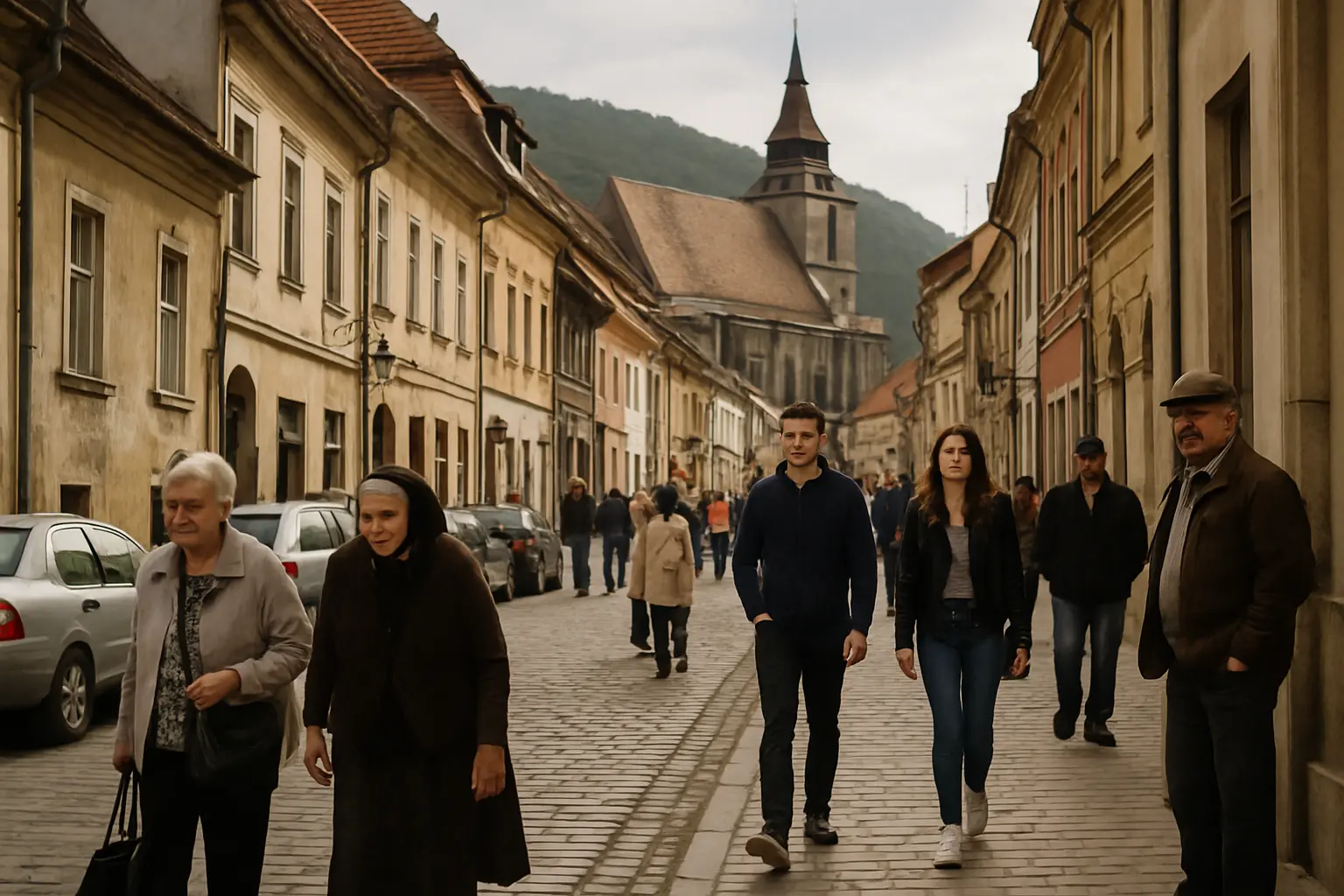
Imagine generată cu inteligență artificială
No party claims more devotion to the people than today’s Social Democratic Party (PSD), the undisputed champion of public concern for the “ordinary Romanian.” Its record: a steady stream of social policies meant to patch up family budgets, grease a pension, or paper over a hole in the wallet with a fresh promise. Judging by their speeches, you’d expect the PSD to host weekly solidarity festivals in every town square, complete with banners about social justice and teary-eyed tributes to pensioners’ sacrifices. All, naturally, delivered not from the economy class, but from the business section, preferably straight off a private runway.
Victor Ponta, former prime minister and, for years now, self-appointed expert in cataloguing others’ missteps, has become the protagonist in a story rarely whispered on street corners but played out at 36,000 feet. Dubbed the “Google of his opponents’ errors,” Ponta’s recall is razor-sharp, for others’ lapses. When the questions turn to his own record, the search engine crashes. “I don’t remember. What trip?” That’s how a former premier answered when asked about a private flight to an exclusive destination.
Selective amnesia, remarkably convenient when the luxury bill edges too close to the public eye. This isn’t about forgetting where you left your garage keys. It’s about failing to recall a private jet to a Greek island, with hand-picked guests. A trip like that isn’t a stray line item lost among receipts; at that level of office, it demands to be disclosed, owned, explained. Who was on board? Who paid? What was discussed? These aren’t questions for oral history, they’re the minimum for public transparency.
While ordinary people tally up their receipts and hope the numbers stretch to payday, PSD’s inner circle concerns itself with the flight manifest. Pensioners are told to tighten their belts. Entrepreneurs are handed yet another form. Meanwhile, former and current political leaders discover the charms of Greek islands and luxury cruises. Public reporting places Victor Ponta among a broader club: Manole, then Minister of Labor; Grindeanu, current PSD president, spotted aboard Nordis jets bound for Monaco; and Băluță, PSD mayor of Sector 4, linked to a private flight to Tokyo.
All from the same brotherhood of professed compassion for the poor. All, without hesitation, defenders of solidarity and collective responsibility, at least on television. At the private terminal check-in, selectivity takes over. On air, concern for the people. In the air, concern for the caviar menu and the guest list.
The richest irony isn’t the private jet itself, nor the exotic destinations. It’s that, upon landing, these protagonists lecture the public in solemn tones about how to live. “Be responsible.” “Understand the difficult moment.” “Tighten your belts.” Their responsibility is limited to luxury; the rest of us are left with the bill. In its current form, the PSD seems to have invented caviar socialism: speeches for the poor, privileges for the privileged.
The guest list for these flights includes judges, business figures, and, as press reports indicate, even a convicted felon. In a country still haunted by memories of collusion between power and business, this combination stings. The public isn’t seeking gossip, but a basic right to answers. Who paid? Under what terms? What was the purpose? Did private interests overlap with public office?
Ponta spent years in key roles: prime minister, party leader, a man with real levers of power. Now, as a public moralist, he preaches daily about others’ incompetence, betrayals, and errors. He knows who should resign, who’s “selling out the country,” who isn’t a “true patriot.” When the spotlight turns to his own actions, his memory evaporates. “I don’t remember” becomes the refrain.
The pattern repeats with Manole, whose presence on a private jet to the Greek islands coincided, hardly by accident, with a period when her ministry was supposed to prioritize wage inequality. It’s difficult to imagine salary reform being crafted between Egean waves.
Grindeanu, the PSD president, also appears on the luxury manifest, with a private flight to Monaco. Publicly available information shows the plane belonged to the Nordis group, and his presence raised a string of questions: why, in what capacity, who picked up the tab? The same questions, the same shrugs, the same lack of clear answers.
Mayor Băluță kept pace. Destination: Tokyo. Mode of travel: again, private jet. Once more, silence on legitimate questions about costs, purpose, and company. Meanwhile, residents of Sector 4 are lectured from the city hall podium about the challenges of managing public money or providing decent services. Always with that weary, paternal tone, heavy with responsibility.
By any reckoning, Romania now divides into two categories. First: those tracked at every step, from receipts to tax returns. Second: those who travel first class, their memories wiped clean after every landing. For the first group, the state knows exactly what you earned, when you paid, what you declared. For the second, the state is just a point of departure, never a destination.
Pensioners receive invitations to sacrifice. Workers are told to be patient. Entrepreneurs are urged to comply. Meanwhile, the political elite’s only inconvenience is a possible stop at duty free. The frustration isn’t the existence of private jets, it’s the double standard. Some must justify every leu. Others answer for nothing. Some queue at the counter. Others fly above the counters, literally.
That’s the real insult: not just flying private, but landing and then daring to deliver sermons on morality, decency, and solidarity. Sometimes even calling for “national unity” and “social consensus” between two charter flights.
Public memory, unlike politicians’, doesn’t start with the latest Facebook post. Romanians haven’t forgotten how, just a few years ago, the same Victor Ponta was described as a “kitten” in meetings with Brussels leaders, not the “sovereignist lion” he now plays on social media. Algorithms can boost a video, Facebook can polish a biography, but neither TikTok nor Facebook has a “delete the past” function, at least not yet.
That’s how caviar socialism works: speeches at the microphone, survival strategies played out at the roulette table on the Côte d’Azur. Lessons on poverty delivered with a business class ticket. And after every scandal, the standard reply remains: “I don’t remember.”
Everyone who has held or holds high public office and who has flown, metaphorically or not, above the rules should have the decency to explain. Who paid? What was the real purpose? Which private interests intersected with public duties? Not because the public craves gossip, but because transparency is a right.
If they can’t remember even that, perhaps they should try searching the Google of their own mistakes. Or, if nothing turns up, consult the memory of those who still know the difference between responsibility and made-to-order amnesia. Next time, they might want to jot down their flights in a diary, at least to avoid “forgetting” their landing spot at the next integrity check.
Comentarii
Fii primul care comentează.