Deputy Rigman’s Public Lessons: Critique Without Accountability in Turda
The article examines Deputy Ciprian Rigman's public criticisms of how European funds are managed in Turda, Romania. Despite his authoritative tone and civic posture, Rigman avoids specifics and accountability, preferring general statements over detailed analysis. The piece questions the effectiveness and sincerity of such public lessons delivered from a position of power.
Arhivă
Faced with a genuine model of civic modesty, a clear-headed voice of public responsibility, composed and grounded in common sense, one can only respond with respect. That is how Turda, blessed by the presence of Mr. Ciprian Rigman in Romania’s Parliament, has found itself receiving not only European funds but also life lessons, delivered straight from the parliamentary lectern and, more recently, from Facebook. From his personal account, which, in practice, is funded by the state.
Rigman’s post shines like a polar star in the sea of digital opinions, guiding us toward a deeper truth: investments in Turda, according to the deputy, have been poorly executed. No examples. No descent into the messy specifics that might inconvenience anyone. Just broad wisdom, dispensed from a higher plane. Why get tangled up in reality when you can offer opinions?
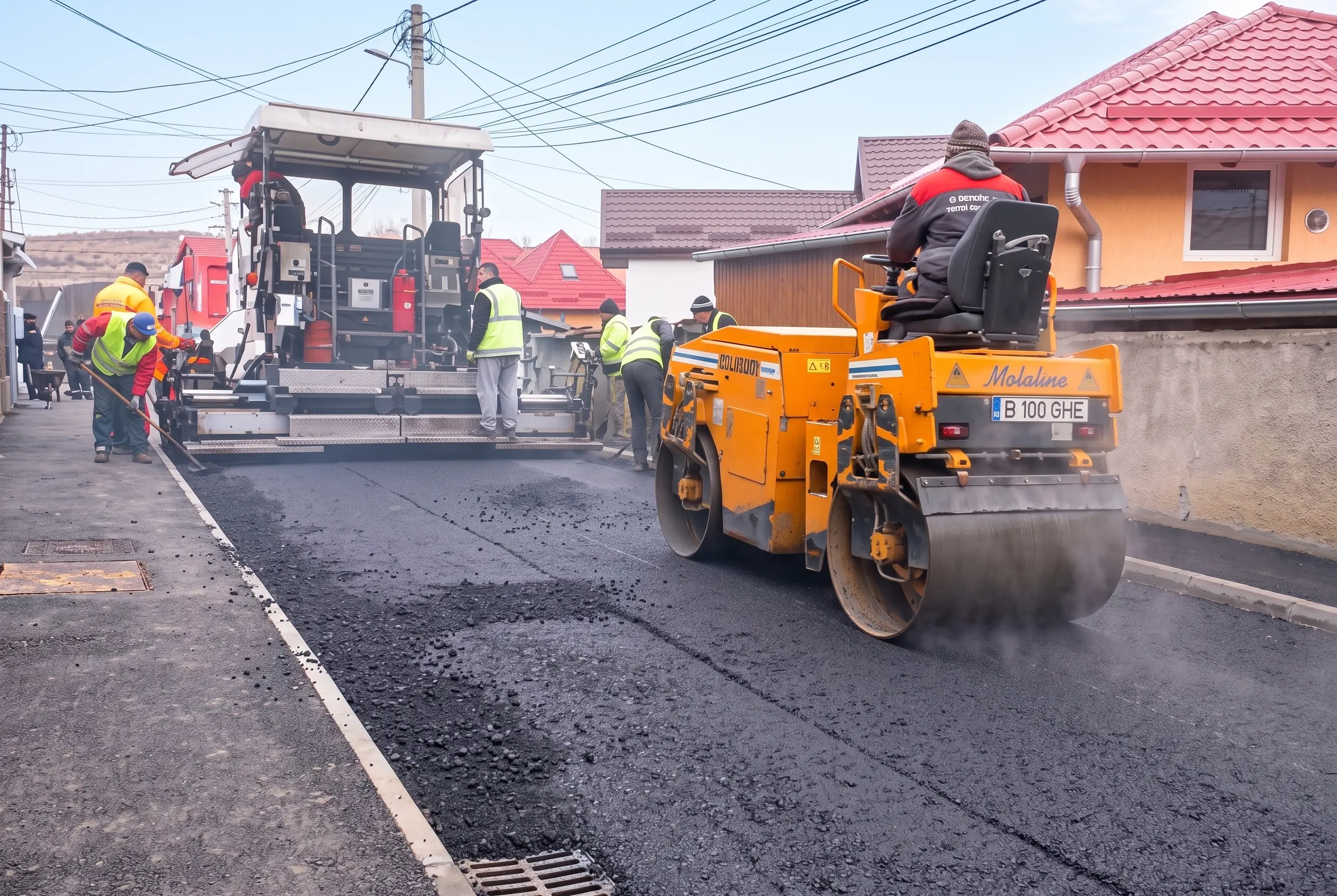
He informs us himself that, although European funds “have supported and continue to support the development of Romanian communities,” in Turda they have “often been spent in a slapdash manner.” On what, exactly? He doesn’t say. The roadworks? The Polivalent Hall? The restoration of heritage buildings? The electric public transport system, unique in Romania at an urban scale? These are earthly details, left to lesser mortals, not the grand strategists of national development.
Who, after all, could better judge the quality of local investments than someone who, for eight years, played ball boy in the Local Council, during the era when public money circulated smoothly under the baton of Tudor Ștefanie, nicknamed “Mustafa” by the current mayor’s party colleagues? Back then, Rigman would raise his hand with a certain nobility at every proposal, even those that might leave a patch of unfinished asphalt or a tangled contract on the City Hall’s desk. The city changed before his vigilant eyes: every curb, every contract, every signature became a page in Rigman’s personal archive, careful never to disturb the cosmic balance of silence.
Now, two decades later, the deputy’s voice rings out, firm and unyielding, from the Parliament’s lectern, just two steps from the subsidized croissant buffet: “Turda still has a problem.” When did this critical eye open? Was it at the first per diem, the first forfeit bonus, or the second bill paid from the state-allocated sum, a sum well over €100,000, as the Chamber of Deputies’ records show? Perhaps it was that moment, gazing down at a belly that had become a true symbol of prosperity, when our distinguished parliamentarian decided it was time to invest in morality, not just himself.
The €100,000-plus he can spend without explanation, half of it at his exclusive discretion, with no need to justify a cent to the public, has not inspired any ideas for what a well-executed investment might look like. Maybe a course in administrative ethics. Maybe a concrete plan for a neglected neighborhood. Even a proposal for a European-funded project he might follow from start to finish, eyes on the numbers and results. But no. Rigman has assumed the role of neutral observer. He criticizes, he passes judgment, but he avoids the messy business of action.
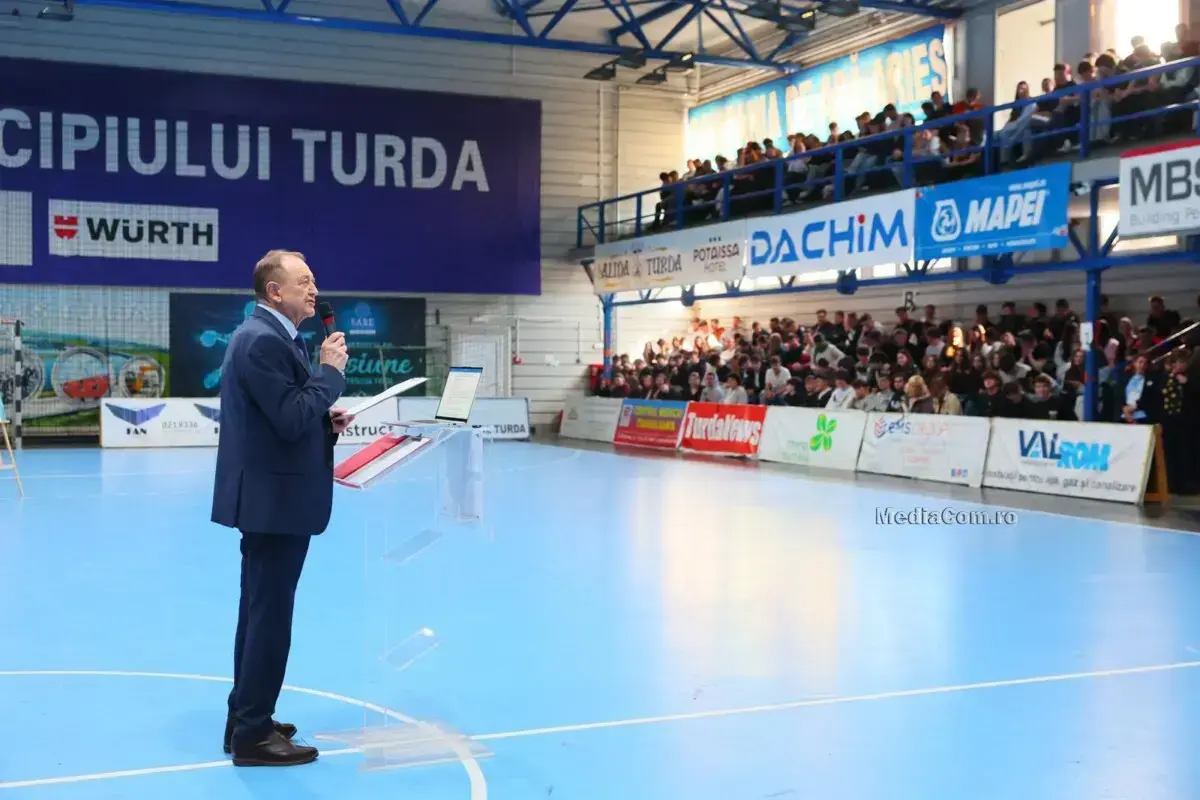
A quiet scene from an old council meeting, back when “Mustafa” wielded his pen and signature, shows Rigman at the table on the right, dossier in front, raising his hand to approve twenty contracts in an hour. No sign of protest, no gesture of dissent. Later, at the council buffet, the same hand reached for a slice of salami with equal promptness. Memory is said to be short, but for some, only reflex remains.
While Turda ticked off project after project, now showcased at conferences and international fairs as examples of best practice: electric public transport, the restoration of the Roman castrum, investments in the salt mine, school renovations, Rigman watched over the quality of the work. And, so as not to disturb the flow of European funds, he said nothing. Now, however, as public money rolls quietly into his own expense account, his voice rises: “Quality depends on the integrity and competence of local authorities.” Not a word about his own contribution to integrity or competence. An attitude worthy of a Facebook analyst and an honest beneficiary of the forfeit.
Meanwhile, Turda’s residents look at what has been built: paved streets, diesel-free public transport, modernized schools, a salt mine drawing tens of thousands of tourists each year. None of it, in Rigman’s eyes, seems to count for anything but failure. Why? “Investments made in a slapdash manner.” No names, no numbers, no examples. It would have been simpler to show up with a list, where the money was lost, who erred, how much was paid, what doesn’t work. He could have attended a public debate, answered questions, proposed solutions. Instead, Rigman has other priorities: monitoring the city’s progress from Facebook, eyes on his forfeit sum, mind on the next post.
Occasionally, a citizen asks him on Facebook: “Which investment was done badly, Mr. Deputy? So I’ll know not to take the electric bus, not to send my child to the renovated school, not to visit the salt mine?” The answer never comes. Perhaps a new status will appear, with even greater concern for quality, but even less substance. After all, the job of a parliamentarian is demanding: you must always think about what not to say.
He says little about the hundreds of thousands of euros he can spend at will. Perhaps because, in this case, the quality of the spending can only be measured with a tailor’s tape, behind the suit jacket. The sum is public: over €100,000, plus salary, per diem, housing, transport, phone. All legal, all by the book. No one asks for explanations. Rigman, for his part, has made no move for these forfeit sums to become transparent, for every leu spent to be justified. It is much easier to criticize others’ investments than to explain what you have done with the money you received from the state.
One day, at the Parliament’s lectern, Rigman might be seen quickly checking his phone, perhaps composing his next post. In the chamber, other deputies debate the budget, investments, the future of cities. Rigman looks down, self-assured, with the air of someone who possesses the truth. No one gets an answer to the simple question: where would Turda be if, for twenty years, every project had been “done right”? As long as the forfeit sum arrives each month, there is no reason to elaborate.
A modest proposal emerges from all this: let there be, in Turda or Bucharest, a monument dedicated to opinion unaccompanied by responsibility. A monument that grows each year in proportion to the unjustified forfeit sums. Perhaps Mr. Rigman himself will cut the ribbon, hand raised, careful not to stain his buffet suit. The monument would take the shape of a Facebook post: many words, little substance, all on the public dime.
Comentarii
Fii primul care comentează.