Who owns the parties? The System, the crisis, and PNL's hour of reckoning
Ciprian Ciucu, a former mayor, challenges the public perception of Romanian politics by exposing a hidden System that manipulates parties and politicians from behind the scenes. He argues that this System, insulated from accountability, controls wealth and power, influencing major parties like PSD, AUR, and PNL. PNL now faces a important moment to assert its independence from these shadowy forces.

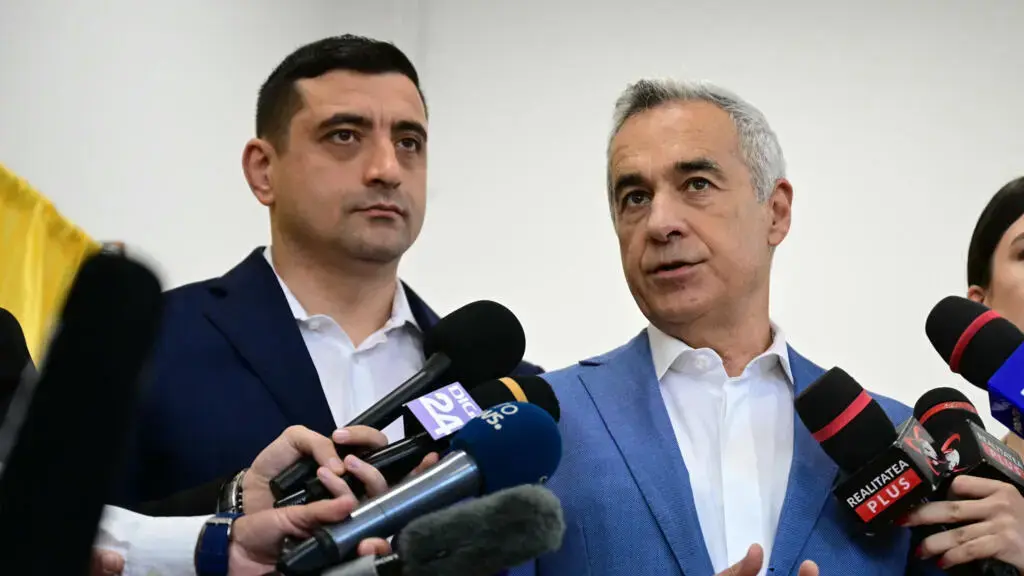
The public myth of Romanian politics holds that parties compete for power, politicians seek office, voters choose between them. The reality, according to Ciprian Ciucu, a former mayor and now a sharp critic of the backstage order, is different. The System, as he calls it, does not run for office. It governs through others.
Some in the System wear epaulettes, their uniforms and insignia visible to all. Others run companies that latch onto public contracts, draining the budget for private gain. The System's agents are appointed to key positions, including within the judiciary, placing decisions in the hands of those whose loyalty is not to the party, nor to the law, but to the hidden structure itself. Ciucu's formulation is precise. The System is insulated from criminal liability. On the rare occasion when a politician or minister is held to account, it is the individual who falls, not the network.
When one of the System's own is caught in the net of justice, the outcome is always escape. The pattern is so consistent that the exceptions prove the rule. Wealth, in this world, flows to the System's core. Those within it are not merely well-off. They are, to use Ciucu's own words, "very, very rich."
PSD, Ciucu claims, does not own itself. AUR, he says, is a creation of the System. Even within PNL, betrayals are explained as the result of blackmail and pressure from System actors. The party, at times, has belonged to the System as much as any other. Only now, he argues, is PNL beginning to break free, to act for Romanians rather than for the hidden order. The price, he warns, is a campaign of attacks from all sides. The knives of the System are long, he says. The bullet of the homeland, sweet.
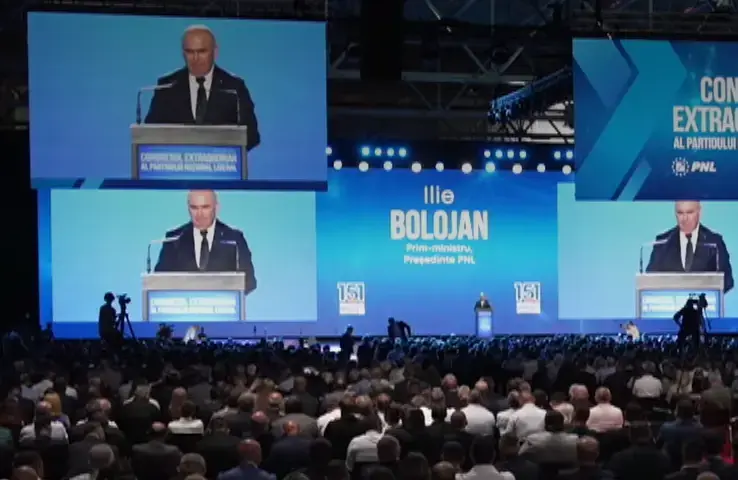
On Sunday, the extraordinary congress of PNL convened at Romexpo. The context was crisis. President Nicușor Dan had named Adrian Veștea as prime minister without consulting the party or its leadership, an act that forced the party to clarify its direction and leadership under pressure. Nearly 1,800 delegates gathered. Only one candidate stood: Ilie Bolojan, the current party president, submitting a motion titled "Modernization with Roots."
Bolojan's remarks to the congress were blunt. He did not want this congress, he told delegates, but the crisis left no alternative. The party, he argued, must decide what it stands for, what it wants to become, and what vision it offers Romania. The measure of leadership, he implied, is not whether one welcomes the storm, but whether one stands in it.
His account of recent history was unsparing. PNL, he said, had accepted the responsibility of restoring Romania's finances at a time when the budget, in his words, was in "a coma." The comparison was deliberate. In the summer of the previous year, the government inherited fiscal accounts on the brink of collapse. The recovery was painful, Bolojan conceded. Social and political costs were unavoidable. The public's anger was understandable. He thanked people for their patience, acknowledging that the process had left wounds.
Yet Bolojan insisted the party had nothing to be ashamed of. The alternative, he said, would have been to run from responsibility. PNL had played a role in the crisis, he admitted, and therefore had a duty to help resolve it. The metaphor of the patient was not accidental. Bolojan addressed the party as a doctor might address a family whose relative has survived intensive care: the ordeal was necessary, the outcome uncertain, but the process honest.
The attacks PNL now faces, Bolojan told the congress, are the price of having "turned on the lights," cut privileges, and shown that government can be run differently. The party, he said, is under siege from all directions, with all available weapons. He could not recall a time in recent years when a party had been so fiercely targeted. The implication was clear: the System fights hardest when threatened.
Bolojan's analysis of the censure motion that toppled the government was clinical. The strategy, he argued, relied on the expectation that PNL's local leaders would betray the party, seduced by offers of office or personal advantage. The plan was to make PNL the "keychain" of PSD, executing decisions taken elsewhere. Bolojan expressed pride that the party had resisted, that it had not abandoned its values. He thanked his colleagues for their resilience and consistency.
The partnership with PSD, Bolojan made clear, was a mistake. He had hoped for a real partnership, but discovered that trust was impossible. "You cannot be a partner with lies, with running from responsibility, with contempt for Romania," Bolojan told the delegates. He pointed to the censure motion as proof: to bring down a government in a crisis, with no alternative solution and no willingness to take responsibility, is not the act of a partner, but of an opportunist.
Bolojan recalled that PSD had initially agreed to unpopular measures, knowing that PNL would bear the political cost. But when the government's actions threatened PSD's client networks and interests, the social democrats acted to bring the government down. The numbers and percentages, he said, matter less than the broader lesson: PNL has demonstrated that Romania can be governed differently. With respect for public money. Without arrogance. By telling people the truth. By establishing rules that apply to all.
Such a model, Bolojan argued, sets a new standard. In the current context, many seek conspiratorial explanations for PNL's recent rise in the polls. He dismissed these as distractions from the substance: governance with integrity is possible.
The System, as described by Ciucu and echoed in Bolojan's narrative, is not easily displaced. It operates through politicians, ministers, and parties that do not truly control their own destinies. The System's agents are placed in key positions, including in justice, to ensure decisions benefit the network rather than the public. When things go wrong, the System is never held criminally responsible. Politicians may occasionally be sanctioned, but the real power structure remains untouched.
The extraordinary congress, then, was more than a procedural gathering. It was a contest over whether PNL could reclaim its autonomy. The stakes are not merely the party's future, but whether any political actor in Romania can function independently of the System's grip.
PSD, according to Ciucu, remains a party that does not own itself. Its decisions are shaped not by its members or voters, but by the interests and demands of the System. The same, he claims, is true for AUR, which he describes as a creation of the System. Even within PNL, betrayals and defections are explained as the result of pressure brought to bear by System actors, sometimes through blackmail over personal vulnerabilities. Adrian Veștea's recent break with PNL, for instance, is cast in this light.
There have been times, Ciucu maintains, when PNL itself was not its own master. Only now, he argues, is the party beginning to break free. The result: a barrage of attacks.
The crisis that led to the congress began when Nicușor Dan, the party's president, named Adrian Veștea as prime minister without consulting the party. This act, bypassing the party's structures, was itself evidence of the System's mode of operation: decisions taken at the top, without transparency, and imposed on the organization. The congress, then, was a forced reckoning.
Bolojan's candidacy, unopposed, was less a contest than a test of will. His motion, "Modernization with Roots," signaled an attempt to balance renewal with continuity. The party's identity, he argued, must be preserved even as it adapts to new realities.
The gathering of 1,793 delegates at Romexpo was an act of political theater, but also of necessity. The party had to answer a simple question: who decides its fate? The answer, in Bolojan's view, must be the party itself, not external actors, not the System.
The System's influence is not confined to party politics. Its agents, as Ciucu points out, are embedded in key state functions, including the judiciary. The pattern is familiar to anyone who has watched the fate of corruption investigations in Romania. When someone from the System is caught, the outcome is predictable: escape. On the rare occasion when a politician or minister is held accountable, it is almost always someone who, in Ciucu's words, "does not own themselves," but belongs to the System.
The wealth accumulated by the System's insiders is not incidental. It is the result of a structure designed to extract value from the public sphere. The beneficiaries are not the parties or their voters, but the network itself. Public contracts, regulatory decisions, judicial outcomes, all can be steered for private gain.
The opposition to the System is therefore not merely a matter of changing governments or leaders. It is a question of whether the underlying structure can be challenged at all. The experience of the past year, as recounted by Bolojan, is that attempts to do so provoke fierce resistance. The party that tries is attacked from all sides. Offers of office and privilege are dangled before local leaders. The hope is that enough will defect to bring the party to heel.
Bolojan's pride in the party's resistance is not misplaced. In a context where loyalty is often rewarded with personal gain, the refusal to betray is itself an act of defiance. Yet the cost is high. The party is isolated, under constant assault, and forced to defend its choices.
The attempted partnership with PSD, in Bolojan's account, was doomed from the start. Trust was not possible. When the government's actions threatened the interests of PSD's networks, the alliance collapsed. The lesson, he said, is that one cannot be a partner with actors who are not acting in good faith. The censure motion, brought at a moment of crisis, was not an act of responsible governance, but of opportunism.
The party's recent record, Bolojan contends, is proof that a different kind of government is possible. Respect for public funds, transparency, and rules that apply to all are not merely slogans, but achievable standards. The public's anger at the costs of reform is real, but so is the need for honesty about those costs.
The System, as described by Ciucu and echoed in Bolojan's warnings, is not simply a conspiracy of elites. It is a structure that shapes the incentives and decisions of those in power. Its resilience lies in its ability to survive changes in government, to adapt to new circumstances, and to ensure that its core interests are protected.
The current moment, then, is one of rare clarity. The extraordinary congress was forced by crisis, but it has made visible the choices facing PNL, and, by extension, the Romanian political system. The question is whether parties can reclaim their autonomy, or whether the System will continue to govern through proxies.
Ciucu's warnings are not idle speculation. The fate of those who have challenged the System in the past is instructive. The knives are long, he says. The bullet of the homeland is sweet. The implication is clear: those who break ranks face consequences. Bolojan, for his part, has chosen to confront these risks directly, framing the party's stand as a test of character and principle.
The implications reach beyond party politics. If the System can be challenged, it will not be through rhetoric alone. It will require the willingness to accept costs, to endure attacks, and to persist in the face of adversity. Bolojan's address to the congress was as much a warning as a call to action. The party, he said, must decide who it is and what it wants to become. The answer will determine not only its own fate, but the possibility of genuine self-government in Romania.
The delegates' decision to support Bolojan was not merely an endorsement of his leadership, but a statement of intent. The party claims, at least for now, to belong to itself. Whether this claim can withstand the pressures of the System. The evidence of recent history is not encouraging. The System has survived previous challenges, adapting and reasserting its control whenever threatened.
Yet the fact that the question is being asked at all is significant. The extraordinary congress was both a symptom and a cause of the current crisis. It forced the party to confront its own dependencies, to articulate its vision, and to commit to a path forward. The presence of nearly 1,800 delegates, the unopposed candidacy of Bolojan, and the explicit rejection of external control are all signs that the party recognizes the stakes.
The broader public, meanwhile, is left to judge the sincerity of these claims. The pattern of Romanian politics has long been one of disappointment and disillusionment. Parties promise autonomy, only to fall back into familiar patterns of dependence. The System, invisible but omnipresent, remains the ultimate arbiter.
If Bolojan's analysis is correct, the future of the party, and perhaps of Romanian democracy itself, depends on the ability to resist the temptations and pressures of the System. The lesson of the past year is that such resistance is possible, but costly. The party's refusal to betray its values, its willingness to endure attacks, and its insistence on transparency are all necessary, if insufficient, conditions for change.
The System, for now, remains intact. Its agents operate in the open and in the shadows. Its wealth is undiminished. Its ability to escape accountability is, as Ciucu notes, undisturbed. The parties, from PSD to AUR to PNL, remain vulnerable to its influence.
In Romania, the question is not who governs, but who owns those who govern.
Comentarii
Fii primul care comentează.