Romania reduces budget deficit by 44% in first five months
Romania's budget deficit narrowed 44% y/y to RON 35.9 billion. The deficit-to-GDP ratio dropped to 1.75% from 3.35% last year. Finance Minister Alexandru Nazare emphasizes no relaxation despite good figures. Total expenditures decreased by 1.5% while revenues increased by 9.2%. Key focus remains on reducing the deficit below 3% of GDP by 2024.

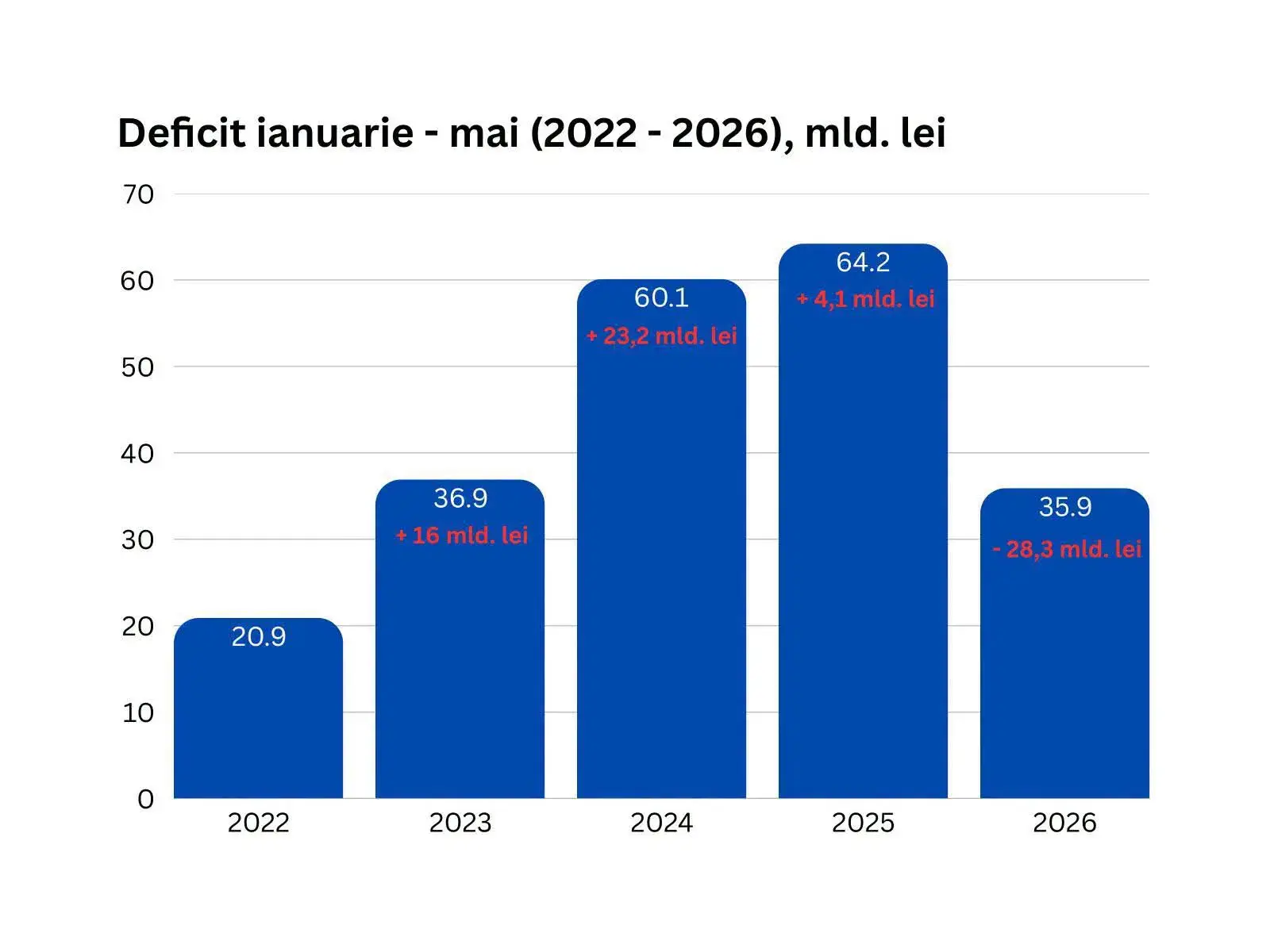
Romania's budget deficit shrank by 44% year-on-year, reaching RON 35.9 billion (EUR 6.9 billion) in the first five months of the year, according to official data. This reduction lowered the deficit-to-GDP ratio to 1.75% from 3.35% during the same period last year.
Finance Minister Alexandru Nazare stated that while the figures show improvement, there is no room for complacency. "Figures are good, but no relaxation allowed," he remarked, underscoring the government's ongoing priorities of deficit reduction, PNRR investments, and necessary reforms.
The significant deficit correction was largely attributed to expenditure cuts made from January to May. During the first quarter, the absence of a budget law further constrained expenditures. Total public expenditures decreased by 1.5% year-on-year to RON 315.5 billion, reducing the expenditures-to-GDP ratio to 15.3% from 16.7% the previous year.
In contrast, total budget revenues saw a 9.2% year-on-year increase, amounting to RON 279.5 billion, which represented 13.6% of the projected full-year GDP. Revenue growth was driven by improved VAT collection, which rose by 23%, and a 30% increase in property ownership tax. Personal income tax revenues also increased by 13.4% year-on-year.
Ionuț Dumitru, chief economist at Raiffeisen Bank, expressed caution, noting that while the budget deficit appears small, "there is a long way to go." Dumitru believes it is too soon to consider the 1.75% GDP deficit as good news.
Romania aims to further reduce its deficit, targeting a full-year deficit of 6.2% of GDP. The government has committed to the European Union to bring the deficit below 3% over the next seven years. Last year, Romania's deficit reached 9.3% in ESA terms, the highest in the EU, with plans to decrease it to 6.0% of GDP by 2025.
Capital expenditures, which contracted by 32% year-on-year to RON 15.4 billion, were a significant component of the expenditure reduction. Meanwhile, total investments, including EU funds, rose by 10% to RON 44.7 billion. Specifically, investment expenditures from EU funds increased by RON 11 billion, despite a sharp contraction in non-investment EU expenditures.
The government expects full-year revenues to increase from 34.7% to 36.0% of GDP, with expenditures slightly decreasing from 42.4% to 42.3%. Public payroll and social security expenditures also saw reductions, with public payroll decreasing by 4.1% and social security expenditures reaching 5.1% of GDP, down from 5.5% last year.
The progress in reducing the deficit is seen as a positive step towards financial stability, but the government remains focused on sustaining this trajectory to meet long-term fiscal goals.
Comentarii
Fii primul care comentează.