Romania's political deadlock: why no bloc can govern alone
Romania faces a persistent political stalemate, with major parties unable to form a majority government after failed negotiations. President Nicușor Dan has urged party leaders to resume dialogue, emphasizing that responsibility for government formation lies with them. The deadlock centers on control over ministries and state resources, rather than individual personalities.
A government with full powers remains out of reach in Bucharest. President Nicușor Dan acknowledged as much after a round of fractious consultations at Cotroceni Palace, attended by the leaders of PSD, PNL, USR, UDMR, and minority representatives. His statement captured both the circular logic and the exhaustion dominating Romania's political class this week: "We have returned to the political deadlock that I thought was overcome on Tuesday."
Dan made clear that only a PSD minority government seemed, for a brief moment, to hold the prospect of a parliamentary majority. That prospect evaporated before Friday. Instead, PNL, USR, and UDMR closed ranks behind Siegfried Mureșan, a liberal MEP, as their candidate for prime minister, in a configuration that would exclude PSD from government. The Social Democrats, for their part, insisted on their own leader, Sorin Grindeanu, as the sole acceptable choice.
Deadlock.
The president faulted the parties for failing to do the work of government formation, insisting that the responsibility rests with them, not the presidency. "It is the parties' responsibility to negotiate among themselves a majority for any government formula they deem appropriate. I continue to urge them to return to dialogue. Romania needs a government with full powers," Dan announced. In effect, he had little else to offer.
The underlying dispute is not about personalities. It concerns control: of ministries, budgets, and the levers of state. The brief window in which PNL appeared willing to support a PSD minority government, on the condition of programmatic guarantees, closed almost as soon as it opened. Dan himself confirmed that "on Tuesday, PNL committed to vote for a PSD minority government, with certain conditions on the government program. From Tuesday to today, PNL has changed its position." That admission did not strengthen the president's hand.
Friday's declaration by PNL, USR, and UDMR, naming Mureșan as their candidate, was not a surprise. It was a countermove. PSD responded by reiterating its support for Grindeanu and accusing its rivals of obstructing the formation of a government with full powers. The mutual vetoes are not accidental. They are the mechanism by which each bloc seeks to avoid being outmaneuvered.
The anti-reform camp has tried several gambits. These included attempts to destabilize PNL, to peel away USR from the reformist bloc, and to draw AUR into the architecture of power. Each failed. PNL, under Ilie Bolojan's leadership, emerged consolidated rather than fractured. USR did not leave the reformist camp. AUR's integration produced only internal discord. Even the push to advance Adrian Veștea as a compromise premier ended with Bolojan's position strengthened, not weakened.
The president's own authority has suffered in the process. Dan, in his temporary stewardship of Cotroceni, has not managed to craft a narrative that explains the deadlock or justifies his own role. He has admitted that he cannot overcome "the system", a striking contradiction for a man who, at least formally, leads it. When was Nicușor Dan crowned as head of the system? The question points to the informal, almost accidental, nature of power transfer in moments of institutional crisis in Romania.
What is at stake is not only who becomes prime minister but how the machinery of state is managed and for whose benefit. The system does not function without a steady infusion of public funds. Hence the recurring appeals to stability, responsibility, and functional government. In practice, these are calls for calm while the state apparatus continues its management of public money with what has been described as "institutional care." The translation, for the citizen: trust us, while we handle your funds as we see fit.
Ilie Bolojan's intervention is instructive. He did not unveil a new strategy or propose radical reform. Instead, he demanded that any government be bound by rules, transparency, and budgetary responsibility. For the entrenched system, this was enough to trigger alarm. In Romanian politics, the true threat is not extremism or scandal but a politician who insists on asking the pointed question: "Why are we paying for this?" That, more than ideology or rhetoric, unsettles the status quo.
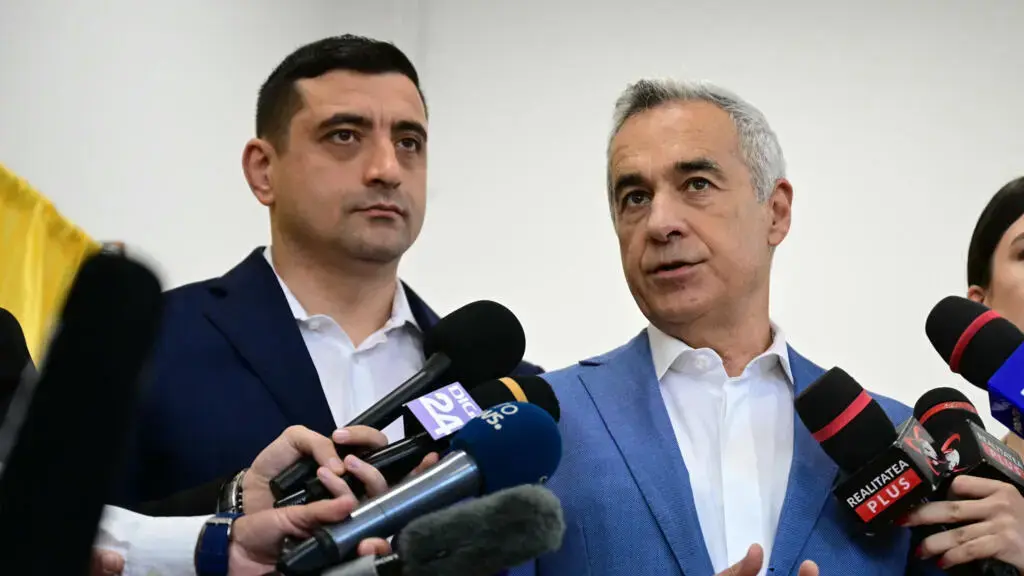
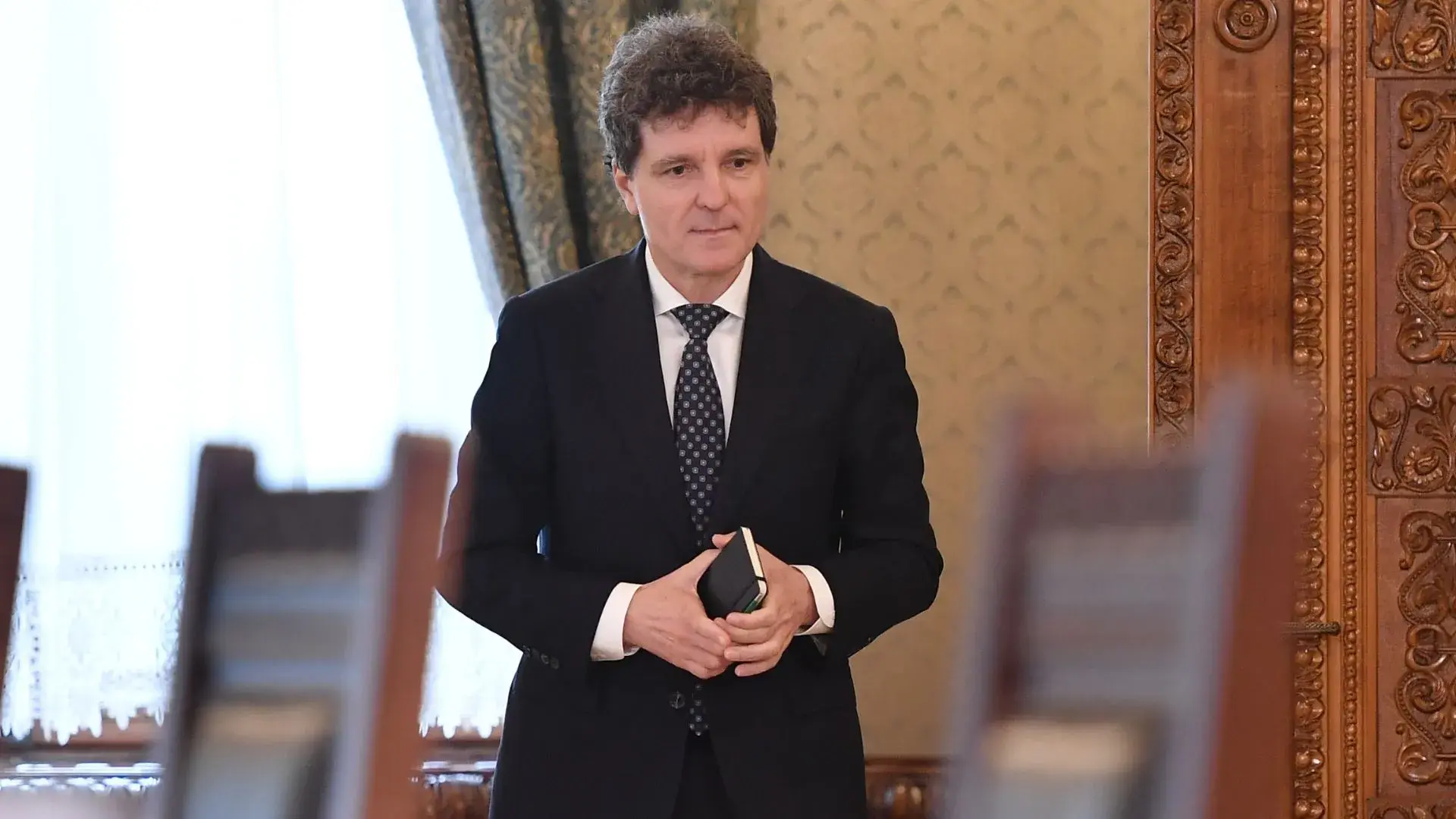
Bolojan's response to Dan's claims was direct: "Today, the National Liberal Party presented its solution for a new government." The solution, Siegfried Mureșan, an experienced manager of European funds and budgets, was supported by USR and UDMR. Cotroceni rejected it. The reasons were as unspoken as they were obvious: too much financial expertise, too little room for PSD's maneuvering, and too few opportunities for the old habits to persist.
Further, Bolojan made plain that PNL would not support Grindeanu's candidacy for prime minister without conditions. "PNL did not promise a blank check for Mr. Grindeanu," Bolojan told reporters, using a phrase that has become shorthand for unconditional support in Romanian politics. For PSD, a "blank check" does not mean responsibility; it means access to the budget, ministries, and the ability to make promises to be filled in later. PNL, informed by the experience of previous coalitions, is not prepared to offer guarantees without substance.
The critical moment came when Bolojan stated, "We found that Mr. Grindeanu wants only a blank check." That ended any pretense of genuine negotiation. Grindeanu, by this account, does not seek governance under rules, but power without boundaries. He does not want political agreements, but unconditional signatures. He is not interested in a responsible majority, but in securing the support of PNL, USR, and UDMR for PSD's return to the levers of government.
This impasse is not unique to Romania, nor is it new in its politics. Minority governments, shifting alliances, and the struggle for control of state resources have defined post-communist governance in Bucharest. What is different now is the explicitness with which each side frames the stakes. Parties no longer pretend that their disputes are about policy. They are about the distribution of state power and the mechanisms by which it is exercised.
The strongest argument for compromise is the country's need for a government with full powers. No one disputes this. The counterargument, advanced most forcefully by PNL and echoed by USR and UDMR, is that the cost of an unconditional coalition is too high, both in terms of public money and political credibility. PSD's claim that its exclusion is a form of obstruction is not without merit. In a system where no party can govern alone, mutual suspicion substitutes for cooperation.
There is, however, a limit to the logic of mutual veto. At some point, the inability to form a government with full powers becomes its own indictment of the political class. Citizens are left with caretaker administrations, delayed reforms, and a sense that the real decisions are made elsewhere, if they are made at all. The longer this persists, the more the system appears to function for its own sake, rather than for the public it claims to serve.
It is tempting to see in Bolojan's insistence on rules and transparency the outline of a new political ethic. Yet even this is constrained by the realities of coalition politics and the entrenched interests of the state apparatus. The system adapts to survive; it absorbs threats, marginalizes reformers, and waits out moments of crisis.
PSD's leadership, under Grindeanu, faces its own risks. The failed gambits to integrate AUR, destabilize PNL, or peel away USR have left the party exposed. The anti-reform bloc, which once seemed capable of dictating terms, is now at risk of internal fracture. AUR faces potential fragmentation. PSD's control is no longer assured. The presidential stage, meanwhile, grows increasingly unstable.
For the citizen, little comfort can be drawn from these maneuvers. The rhetoric of responsibility and stability is belied by the spectacle of mutual distrust and institutional inertia. The system's demand for public trust is not matched by evidence of public benefit. Rules and transparency remain ideas more often invoked than enforced.
One fact is not in dispute: Romania cannot afford government by default. The parties have run out of excuses. The only question that matters is who governs, and for what purpose. That question demands a concrete answer, not another round of blame-shifting or procedural theater. No more blank checks.
Comentarii
Fii primul care comentează.