Are You Tired or Are You No Longer Happy?
This essay explores how exhaustion can masquerade as unhappiness, leading us to believe we need radical life changes when we may simply need rest. Tiredness alters perception, reduces tolerance, and amplifies negative feelings, making small problems seem insurmountable. While some dissatisfaction reflects genuine problems requiring change, important decisions made during exhaustion deserve caution. The piece offers practical questions to distinguish between temporary depletion and deeper unhappiness, emphasizing that rest encompasses more than sleep.

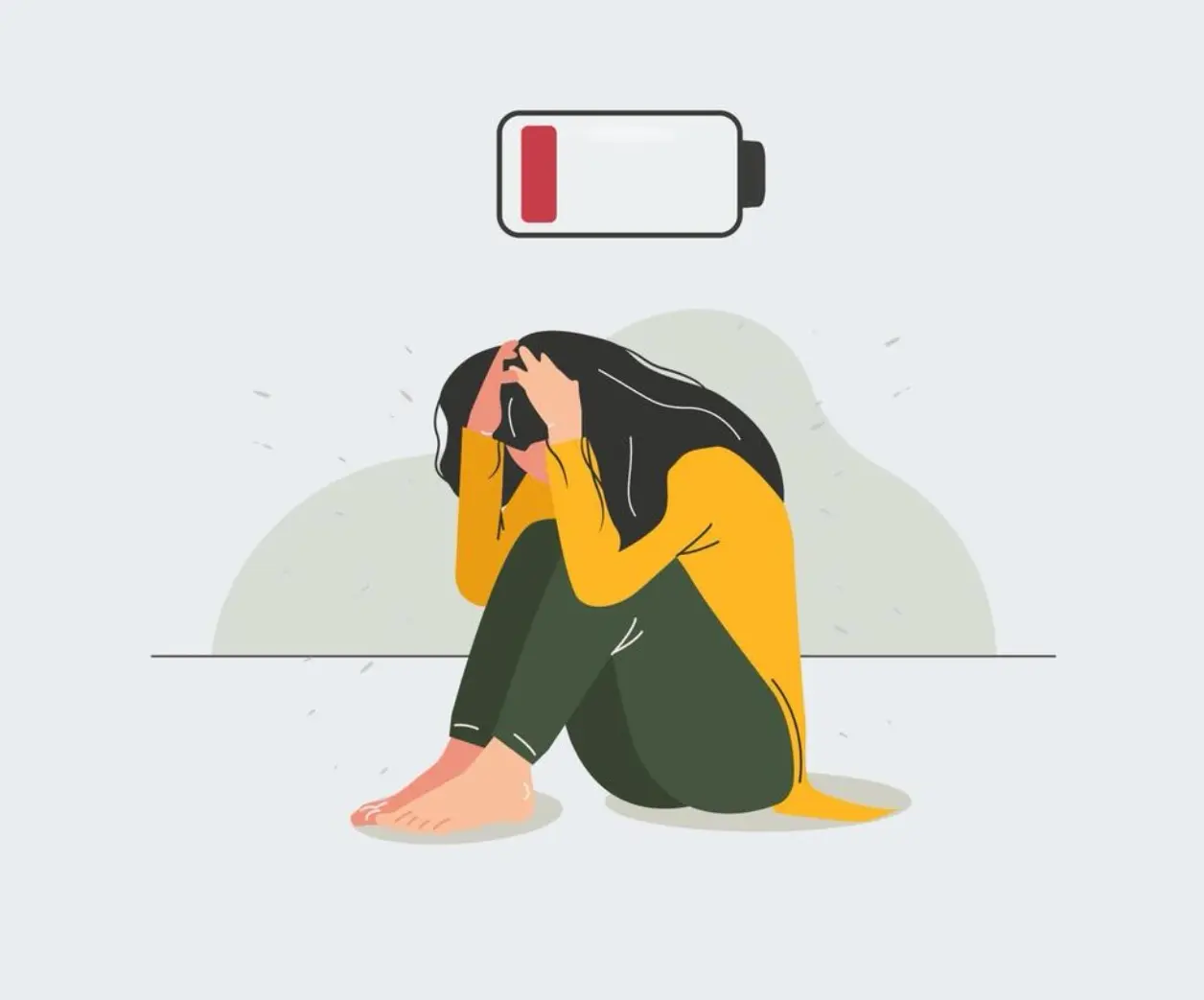
About the moments when fatigue makes us believe we need to change our entire life
There are days when we no longer like anything. People bother us, the house seems too noisy, work too hard, our partner too inattentive, the children too demanding, the phone rings too much, and things that once brought us pleasure no longer mean much to us. It crosses our mind that perhaps we are no longer happy. That perhaps we chose wrong. That we need a radical change.
But before we change everything, there is a simple question we should ask ourselves: am I unhappy or am I simply very tired?
Because fatigue doesn't always feel like sleepiness. Sometimes it feels like irritation. Like lack of patience. Like indifference. Like the desire to no longer talk to anyone. Like the feeling that everyone wants something from us and that we have nothing left to offer. Sometimes fatigue resembles unhappiness so much that we end up confusing one with the other.
When the body and mind say "I can't anymore"
A tired person doesn't see the world with the same eyes as when they are rested and balanced. Frustration tolerance decreases. Small problems seem bigger. Noises are more disturbing. A banal remark can be perceived as an attack. A simple task seems impossible. And a discussion that, on a good day, we would have had calmly can become the reason for an argument.
Imagine a mother who wakes up early, prepares the children, goes to work, answers phones, solves problems, does shopping, gets home, cooks, checks homework and is already thinking about tomorrow. At ten in the evening, her partner asks her why she is so nervous. Perhaps the problem isn't that she no longer loves him. Perhaps, in that moment, she simply has no more resources.
Or the person who goes to work for months on end without a real break. They begin to believe they hate their profession. They can no longer stand their colleagues, every request annoys them and they dream of leaving. After a few days in which they sleep, rest and get out of that rhythm, they discover that the profession wasn't the main problem. It was exhaustion.
Fatigue changes the way we interpret life
When we are exhausted, the mind begins to simplify things into harsh conclusions: "I can't anymore", "I'm fed up with everyone", "I don't like anything anymore", "My life is not what I want". Sometimes these thoughts signal real problems and should not be ignored. But other times they are the voice of an over-solicited organism asking for a break, not a new life.
That's why important decisions made in moments of exhaustion deserve to be viewed with caution. Not because our feelings are false, but because the state we are in can amplify the negative and reduce our ability to see alternatives.
Not every dissatisfaction is just fatigue
It would be equally wrong to explain every unhappiness through fatigue. There are relationships that hurt us, workplaces that constantly consume us, toxic environments, emotional needs ignored for years and lives built more according to others' expectations than our own values. Sometimes, after we rest, the problem remains. And this is precisely the important information.
The difference can be observed over time. If after sleep, a break, a few calmer days or a period when the pressure decreases you begin to feel interest, closeness, patience and pleasure again, it's possible that exhaustion played a major role. If however, even when you have resources, the same sadness, inner emptiness or dissatisfaction persists, it's worth looking more carefully at what's happening in your life.
Before you say "I'm no longer happy", ask yourself a few things
When did I last sleep enough for several nights in a row? When did I have a day when I didn't have to solve everyone's problems? When did I do something without it being useful, productive or obligatory? When did I sit alone, in silence, without a phone? When did I ask for help? When did I last say "I can't today"?
Sometimes the answers to these questions are surprising. There are people who try to find out if they are happy while living for months or even years in an almost continuous state of over-solicitation.
Rest doesn't just mean sleep
We can sleep eight hours and still be tired. There is physical fatigue, but there is also emotional, mental and social fatigue. You can be exhausted from constant worry about someone. From conflicts. From the responsibility of making all the decisions. From financial problems. From the fact that you must always seem strong. From too many conversations, too many notifications and too few moments when nobody needs you.
Sometimes we need sleep. Other times we need silence. A walk. A day without obligations. Concrete help. To tell someone what weighs on us. To give up a few responsibilities. To stop trying to be available to everyone.
And sometimes we need to accept that we cannot function permanently at maximum capacity.
Don't make all your life's decisions on a bad day
A hard day doesn't mean a wrong life. An argument doesn't necessarily mean a finished relationship. A week when you don't feel like anything doesn't automatically mean you've lost the joy of living. And the fact that you need to withdraw a little doesn't mean you no longer love those around you.
Sometimes we need to give ourselves permission not to immediately resolve everything we feel. To rest before drawing conclusions. To restore our resources before making decisions that can change our lives.
But there are also situations when the lack of energy, loss of interest, sadness, irritability, sleep difficulties or feeling of emptiness persist and affect daily functioning. Then it is not helpful to simply tell ourselves "I'm just tired". A discussion with a doctor or mental health specialist can help understand the cause and choose the right support.
Perhaps before asking ourselves "What do I need to change in my life?", we should also ask ourselves "What do I need now?". The answer might be an important change. But it might also be something much simpler: rest, help, silence, boundaries, time for ourselves.
Not all fatigue means unhappiness and not all unhappiness is healed through rest. Wisdom is learning to distinguish between them.
Because sometimes we don't need to give up the life we have. We just need to stop, for a little while, carrying it alone on our shoulders.
"Sometimes we don't want another life. We just want to have the strength again to feel the one we have."


Comentarii
Fii primul care comentează.