Romania's defense strategy questioned amid NATO exercises
Brigadier General (Reserve) Dorin Toma raises concerns about Romania's defense readiness against a potential Russian invasion. Toma emphasizes the strategic importance of the Focșani Gate, a historical military corridor. He criticizes current defense preparations, likening them to outdated strategies from WWI and WWII. Analysts worry about the implications of potentially abandoning parts of Moldova. The new NATO 'Forward Defence' strategy demands immediate peacetime preparation.

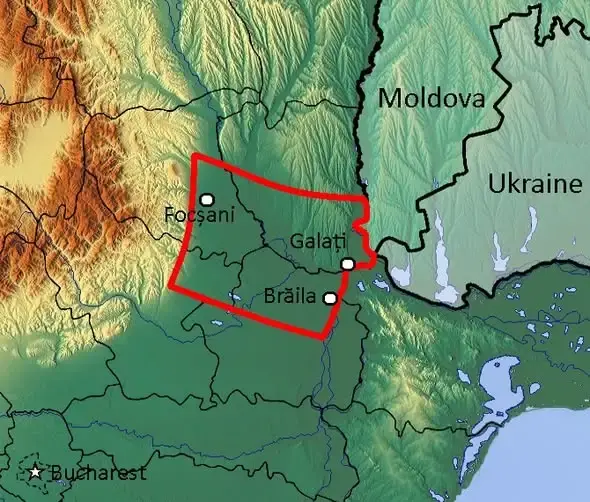
Brigadier General (Reserve) Dorin Toma has raised critical questions regarding Romania's defense strategy in the face of potential Russian aggression. He highlights the Focșani Gate as a important point in halting any invasion, a sentiment rooted in its historical significance as a north-south military corridor. The Focșani Gate, encompassing Panciu, Foltești, Galați, Tichilești, and Râmnicu-Sărat, offers flat terrain ideal for armored mobility, making it a strategic focal point.
Toma argues that the current Romanian defense strategy appears reminiscent of early 20th-century tactics, akin to those used during World War I and II. He suggests that the Romanian Army's communications have inadvertently sown public mistrust and anxiety. The recent announcement of a NATO exercise aimed at defending the Focșani Gate has fueled speculations that the army might consider abandoning Moldova, a notion Toma finds concerning.
Historically, the Focșani–Nămoloasa–Galați line was constructed in the 19th century to counter Russian threats. During World War I in 1917, Romanian forces effectively defended the Focșani area. Similarly, in 1944, a German-Romanian defense line was established here, although plans were abandoned following Romania's change of sides on August 23, 1944.

Toma's analysis suggests that current defense plans could imply ceding significant portions of Moldova, drawing parallels to pre-World War I or 1944 strategies. He emphasizes that national defense efforts should focus on the eastern border, particularly around Galați, which he identifies as critical for defense operations.
The Romanian Army, according to Toma, must urgently bolster its operational capacity, especially in Moldova and Dobrogea, regions identified by historians and military analysts as having capability deficits. The pre-2023 NATO plans endorsed a flexible defense strategy with controlled retreats, but the ongoing conflict in Ukraine has demonstrated that temporarily ceding territory is not a viable option.
NATO's new regional strategy, 'Forward Defence,' adopted in 2023 and 2024, aims to defend every inch of territory from the onset of aggression. This strategy necessitates peacetime preparation and has led to the pre-positioning of NATO battle groups and the implementation of a new force model, which can mobilize 300,000 troops within 10 to 30 days.
NATO's Article 3 underscores the importance of member states developing a functional army and a resilient society. The United States has called for increased defense investments from NATO members, stressing that these funds must translate into tangible military capabilities. Toma's critique of Romania's current defense posture underscores the urgency of aligning national strategies with NATO's evolving defense framework.
Comentarii
Fii primul care comentează.

CIA chief travels to Moscow following US intelligence on Russian military preparations
BNR holds rates at 6.50% as inflation hits 10.85%

How market forces, not policy, are eroding Europe's cash infrastructure