Romania ranks second in EU for state aid
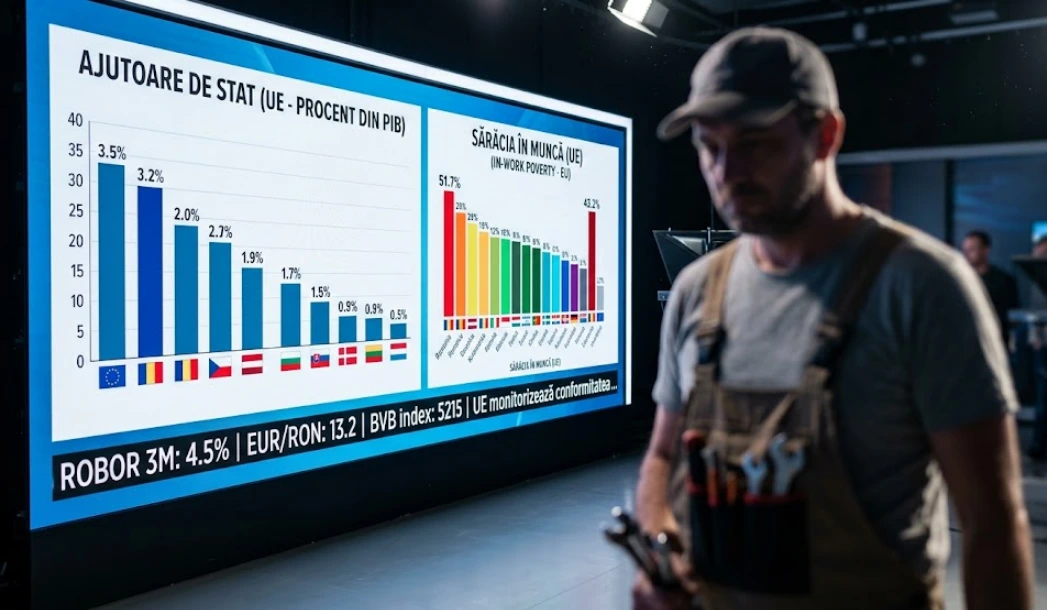
Romania ranks second in the EU for state aid provision, trailing only Hungary. This ranking highlights significant state intervention in the economy amid persistent in-work poverty.

Imagine generată cu AI
Romania ranks second in the European Union for state aid provision, trailing only Hungary, according to recent statistics. This ranking underscores Romania's significant reliance on state intervention within its economy, a strategy that has sparked debate among economists and policymakers. State aid in Romania encompasses various subsidies, grants, and tax incentives aimed at supporting businesses and fostering economic growth.
Despite these efforts, Romania also ranks among the top in European statistics for in-work poverty. In-work poverty refers to individuals who hold jobs yet earn incomes insufficient to meet basic living standards. This paradox highlights a critical issue within the Romanian economic field: substantial state aid does not necessarily translate into improved living conditions for all working citizens.
The European Commission's data reveals that Romania's state aid provision is a double-edged sword. While it provides necessary support for businesses and can stimulate economic activity, it also suggests potential inefficiencies in addressing the root causes of poverty among employed individuals. Critics argue that a more targeted approach might yield better long-term results.
Economists point to structural issues within Romania's labor market as a contributing factor to in-work poverty. Low wages, high levels of informal employment, and insufficient social protection systems exacerbate the challenges faced by working individuals. The Romanian government has implemented several measures to address these issues, but progress remains slow.


Comparatively, Hungary, the only EU country surpassing Romania in state aid provision, faces similar challenges. However, Hungary's economic policies have shown varying degrees of success in tackling in-work poverty, offering potential lessons for Romania. The effectiveness of state aid as a tool for economic development remains a subject of intense scrutiny and debate across the European Union.
Romania's approach to state aid reflects broader trends within the EU, where member states grapple with balancing economic support and social equity. The ongoing challenge is to design policies that not only boost economic growth but also ensure that the benefits are equitably distributed among the population.
The European Union's regulations on state aid aim to prevent excessive government intervention that could distort competition within the single market. Romania's position as a leading provider of state aid raises questions about compliance with these regulations and the potential long-term impacts on its economy.
Policy experts suggest that Romania could benefit from adopting best practices from other EU countries that have successfully reduced in-work poverty. These practices include enhancing social safety nets, promoting fair labor practices, and investing in education and skills development. Such measures could complement existing state aid strategies, providing a more complete approach to economic and social challenges.
The Romanian government continues to navigate the complexities of state aid provision and its implications for economic and social policy. As the EU monitors compliance and effectiveness, Romania's experience offers valuable insights into the interplay between state intervention and market forces in addressing poverty and fostering sustainable growth.
Comentarii
Fii primul care comentează.


