AUR deputy demands NATO Article 4 consultation after drone injures two in Galați
Ramona Bruynseels, AUR deputy from Cluj, has urged Romania to invoke Article 4 of the NATO treaty following a Russian drone attack in Galați. The incident injured two and forced the evacuation of 70 people, prompting calls for political consultations on national security threats.

credit: Shutterstock
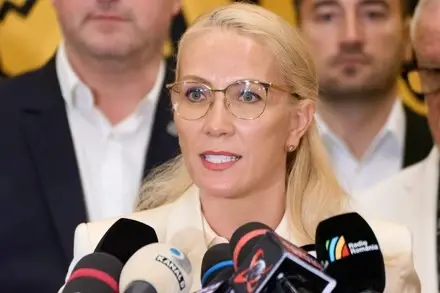
Ramona Bruynseels, deputy for AUR from Cluj and secretary of the Commission for Defense, Public Order, and National Security, has called on the Romanian state to invoke Article 4 of the North Atlantic Treaty following a drone strike in Galați municipality. A Russian drone hit a residential building in the city, injuring two people and forcing the evacuation of approximately 70 Romanian citizens, Bruynseels said in a press release. The incident has been described by President Nicușor Dan as the most serious event affecting Romanian territory since the beginning of the war in Ukraine.
Bruynseels, who heads AUR Cluj, said the government should request formal consultations with NATO allies under the treaty provision designed for situations where a member state considers its security threatened. "Article 4 is not a declaration of war," Bruynseels said. "It is a mechanism for political consultation, an instrument for situations where a member state considers its security threatened."
The article she cited states: "The Parties will consult together whenever, in the opinion of any of them, the territorial integrity, political independence or security of any of the Parties is threatened." The provision has been invoked before by NATO members facing cross-border incidents. Poland requested the activation of Article 4 in September 2025 after Russian drones entered Polish airspace.
Warsaw shot down the drones. No Polish citizen was injured in that incident, but the government deemed the airspace violation sufficient grounds for consultation with the alliance. The Galați strike represents a more direct impact on civilian infrastructure.
Two residents required medical attention, and local authorities evacuated approximately 70 people from the affected residential building. The evacuation underscores the immediate threat posed to the local population and prompts questions about Romania's preparedness for such incidents. Bruynseels' call for NATO consultation reflects her focus on national security issues since taking over the leadership of AUR Cluj.
Her position on the defense commission gives her a platform to press for government action on military and security matters. The request places pressure on Romanian officials to respond to what President Nicușor Dan characterized as an unprecedented breach of national territory during the Ukraine conflict. Invoking Article 4 would bring Romania into formal consultations with NATO representatives and allied governments.
The mechanism allows member states to raise security concerns and coordinate responses without triggering the collective defense obligations of Article 5. Poland's use of the provision in September established a recent precedent for invoking the article in response to drone incursions, even when no casualties result. The Romanian government has not yet announced whether it will pursue the consultation request.
The decision requires an assessment of the incident's severity, the likelihood of recurrence, and the potential diplomatic and military implications of engaging NATO's consultation process. Romanian officials will need to weigh the benefits of allied coordination against the risk of escalating tensions in the region. The drone strike in Galați occurred against the backdrop of ongoing conflict in Ukraine, where Russian military operations have repeatedly affected neighboring countries.
Cross-border incidents involving drones, missiles, and other military assets have tested the security protocols of NATO's eastern members. Each incident forces governments to balance defensive measures with the imperative to avoid direct confrontation. Bruynseels' press release emphasized that Article 4 consultations serve as a political tool rather than a military trigger.
The distinction matters for a government navigating the complexities of alliance obligations while managing domestic security concerns. Formal consultations would allow Romania to present evidence of the strike, discuss defensive measures, and coordinate intelligence sharing with allies. The evacuation of 70 citizens from the residential building in Galați illustrates the human cost of the incident.
Local authorities moved residents to temporary accommodations while assessing structural damage to the building. The injuries sustained by two people, though not life-threatening, add urgency to calls for enhanced air defense systems and early warning mechanisms. Romania's response to the Galați incident will likely influence how other NATO members perceive the alliance's eastern flank security.
The country's decision on invoking Article 4 will signal its assessment of the threat level and its expectations for allied support. Poland's invocation in September demonstrated that NATO members are willing to use the consultation mechanism for drone-related incidents. The international community will watch Romania's next steps closely.
The precedent set by Poland shows that invoking Article 4 does not automatically lead to military escalation, but it does formalize the security concern within NATO structures. For Romania, the calculation involves not only immediate security needs but also long-term strategic positioning within the alliance. Bruynseels' call for consultation reflects broader concerns within AUR about Romania's defense posture.
The party has consistently advocated for stronger security measures and closer coordination with NATO allies. The Galați incident provides a concrete case for those arguments, particularly given President Nicușor Dan's characterization of the strike as the most serious territorial impact since the Ukraine war began. Romanian officials now face a decision point.
They must evaluate the evidence from Galați, assess the threat of future incidents, and determine whether formal NATO consultations serve the national interest. The outcome will shape Romania's defense strategy and its role within the alliance at a time when the security environment in Eastern Europe remains volatile.
Comentarii
Fii primul care comentează.