Dan warns Russia: ambassador Lipaev faces expulsion after second Geran-2 strike
President Nicușor Dan of Romania has warned of potential diplomatic measures, including expelling the Russian ambassador, following a drone incident in Galați. This marks a significant escalation in Romania's response to perceived threats.

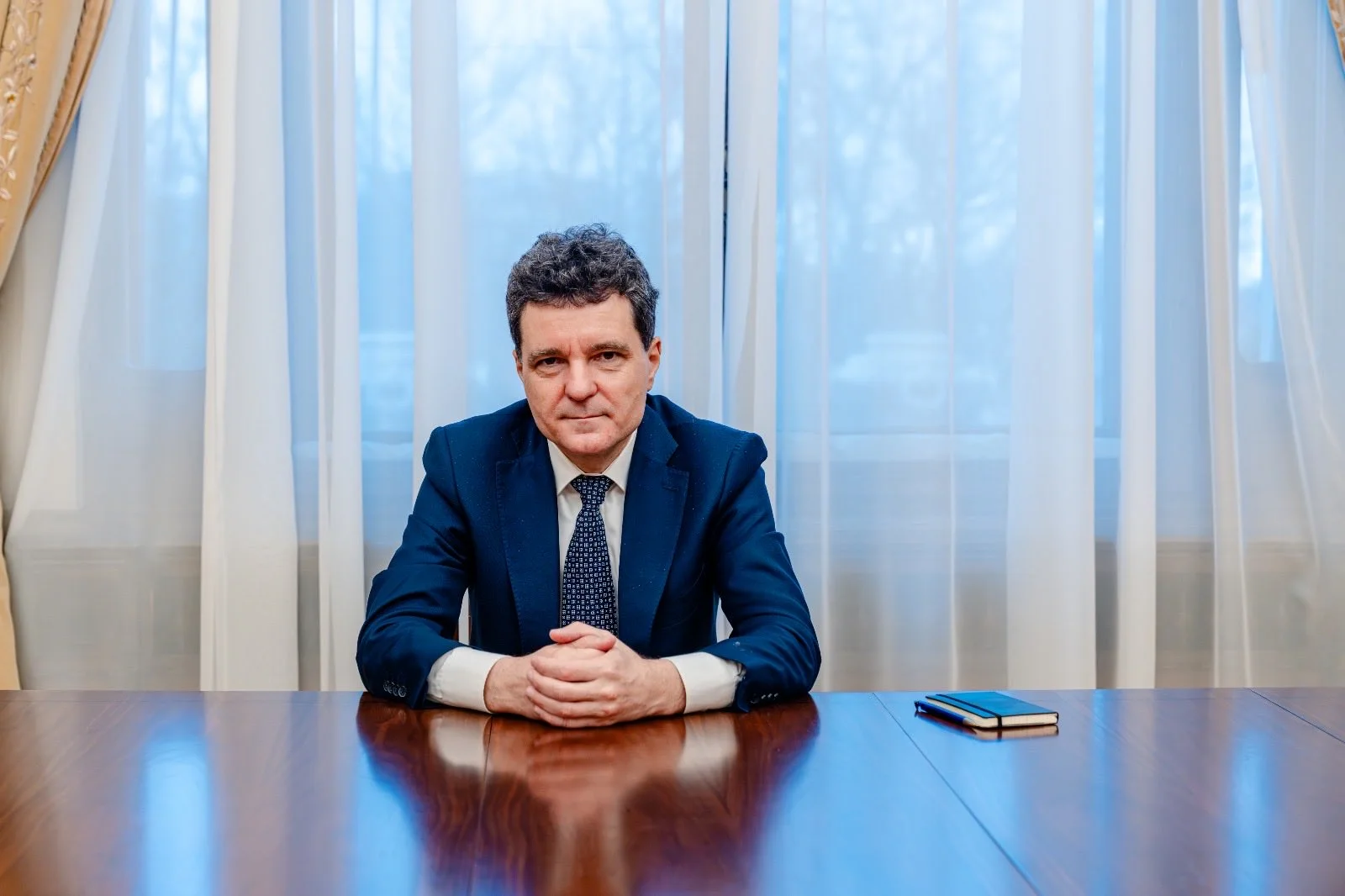
President Nicușor Dan said Saturday he does not exclude expelling Russian Ambassador Vladimir Lipaev if incidents like the drone strike in Galați occur again, marking the second time in five weeks that a Russian Geran-2 drone has crossed into Romanian territory. Dan made the statement in an interview with the BBC, one day after a drone hit a residential block in Galați, injuring two people. The president visited the site Sunday, where damage to the building's upper floors remained visible.
Bucharest has already closed the Consulate General of the Russian Federation in Constanța and expelled the consul general in response to the strike. Dan said the measures serve as a warning. "The situation became dangerous for civilians," he said.
"If incidents continue, additional measures will follow." Expelling the ambassador would represent the next step in what Dan described as a diplomatic hierarchy of measures. "We do not exclude taking other measures against them if incidents do not cease," he said.
"Expulsion of the ambassador is an example of a diplomatic measure." Analysis of fragments recovered from the Galați strike confirmed the drone as a Russian Geran-2 type, identical to remains from a drone that landed four or five weeks earlier without exploding. Experts compared the wreckage from both incidents and found the components matched.
The strikes have focused attention on Romania's 60-kilometer stretch of Danube border, where the country has requested temporary assistance from international partners. The United States has already provided specialized equipment for border security, according to officials familiar with the deployments. Romania's response comes as NATO's eastern flank countries intensify defense cooperation.
At the recent B9 summit in Bucharest, attended by representatives from NATO's eastern members and Nordic states, participants agreed to increase defense funding and expand military production capacity. The summit served as preparation for the upcoming NATO meeting in Ankara, where alliance members will discuss security on the eastern front. The diplomatic escalation reflects Romania's position that civilian safety now requires stronger measures.
Dan's visit to Galați included meetings with the two injured victims, both residents of the block where the drone struck. Photographs released by the presidency showed extensive damage to the building's facade and interior walls. The closure of the Constanța consulate removes Russia's diplomatic presence from Romania's Black Sea coast, a region that has seen increased military activity since the start of the war in Ukraine.

The consul general was given a standard period to leave the country, according to protocol for expelled diplomats. Dan's statement about the ambassador represents the most direct warning Romania has issued to Moscow since the first drone incident five weeks ago. At that time, officials said the unexploded drone would be analyzed but did not threaten diplomatic consequences.
The shift in tone followed the Galați strike, which marked the first time a Russian drone caused injuries on Romanian soil. Romania has not accused Russia of deliberately targeting its territory. Officials have described the incidents as spillover from the war in Ukraine, where Russia regularly launches Geran-2 drones against Ukrainian infrastructure along the Danube.
The river forms part of the border between Romania and Ukraine, and drones that miss their targets or malfunction can cross into Romanian airspace. The Geran-2, a Iranian-designed Shahed-136 drone manufactured under license in Russia, has a range of approximately 2,500 kilometers and carries a warhead of 40 to 50 kilograms. Ukrainian air defenses regularly intercept the drones, but some evade detection, particularly in areas near the border where radar coverage overlaps.
Romania's request for assistance in monitoring the Danube border acknowledges limits in its current surveillance capabilities. The 60-kilometer stretch Dan referenced includes several populated areas where a drone strike could cause significant casualties. The equipment provided by the United States includes radar systems designed to detect low-flying objects, according to defense officials.
The B9 summit agreements on defense spending aim to convert budget increases into operational capabilities, with particular emphasis on air defense and border surveillance. Romania has committed to raising its defense budget to 2.5 percent of GDP, above the NATO minimum of 2 percent, with funds allocated for radar modernization and drone detection systems. Dan's warning about further measures if incidents continue leaves open the question of what steps might follow an ambassador's expulsion.
Diplomatic options beyond that point typically include downgrading relations to the chargé d'affaires level or severing ties entirely, moves that would leave Romania with minimal diplomatic channels to Moscow. The president's statement also serves as a message to NATO allies that Romania expects support in defending its airspace. As a member of the alliance, Romania can invoke Article 4 consultations if it considers its security threatened, though officials have not indicated they plan to take that step.
The Galați incident has already prompted discussions in Bucharest about whether Romania's air defense systems require reinforcement. The country operates a mix of Soviet-era and NATO-standard equipment, with gaps in coverage that the recent drone strikes have exposed. Dan said the diplomatic measures taken so far aim to prevent further incidents rather than escalate tensions.
"These are warnings to the Russian side," he said. But he made clear that the warnings have limits, and that the expulsion of Ambassador Lipaev remains a possibility if Russian drones continue crossing into Romanian territory.
Sursă: www.monitorulcj.ro
Comentarii
Fii primul care comentează.