Băile Felix festival brings 155 young voices together, including Romanian children from Italy
The 'Suflete și voci de aur' festival, hosted at the George Bologan Culture House in Băile Felix, celebrates its fifth edition by featuring Romanian children from Italy. This year's event includes 155 participants from various counties and partners with local educational and cultural institutions.
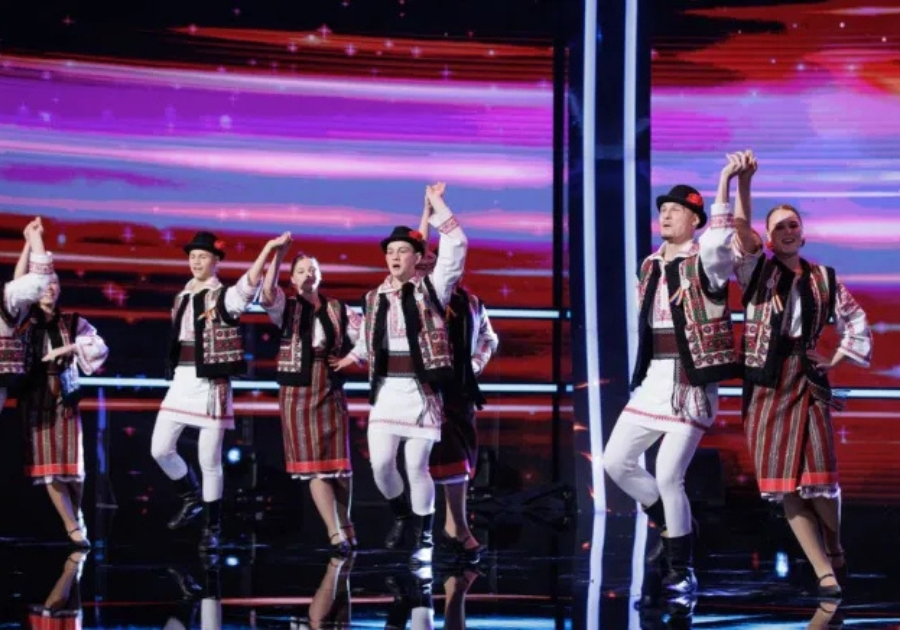
The fifth edition of 'Suflete și voci de aur' opens this Thursday at the George Bologan Culture House in Băile Felix, gathering 155 children and teenagers from across northwestern Romania and, for the first time, from the diaspora in Italy. The festival-contest, organized by Palatul Copiilor Oradea under director Marius Constantin Marcu and coordinating professor Anamaria Turc-Gal, has become a fixture in the region's cultural calendar since its inception. This year's expansion marks a shift in scale and ambition.
Participants range from five to nineteen years old. They come from Bihor, Arad, Cluj, Timiș, Satu Mare, Maramureș, Sălaj, and Ilfov counties, competing as vocal soloists or members of vocal groups across age-divided categories. The youngest performers, aged five and six, take the stage immediately after the 9 AM opening.
By evening, the middle school vocal groups section begins at 6:15 PM, followed by a recital at 6:30 PM. The awards ceremony is scheduled for 7 PM. Last year, the festival took place at Casa Tineretului in Oradea.
The move to Băile Felix reflects partnerships with the Ministry of Education and Research, the Bihor County School Inspectorate, the 'Florile Bihorului' Vocal Group Association, and Turism Băile Felix. These collaborations have allowed the event to grow beyond its original footprint, drawing competitors from a wider geographic area and offering them a stage that carries institutional weight. The diaspora presence comes through the 'Carpatica' ensemble from Torino, Italy.
Fourteen children and young people, aged twelve to nineteen, represent the Italian-Romanian Culture and Traditions Center in Torino. All were born and raised in Italy. Earlier this year, the ensemble reached the live semifinals of 'Românii au talent' season 16, performing traditional Romanian music for a national television audience.
Their participation at Băile Felix connects two cultural geographies—the northwestern Romanian heartland and the Italian diaspora communities that maintain ties through language, song, and collective memory. Bihor TV will film and broadcast the contest. The station is led by popular music artist Sânziana Toader Ardelean and her husband Cătălin Ardelean.
Romina Suciu will present the day's events. Among the performers are Carina Berindeie, Anastasia Ianc, Elena Buda, Maria Miclăuș, and Ianis Vedinaș, all trophy winners from the previous edition. Andreea Costa, Rareș Ivanov, Andra Sabău, and Maria Ghit, graduates of the popular canto class, will also compete.
The festival's structure—two sections, multiple age categories, a full day of performances—creates a rhythm that mirrors the region's approach to cultural events: patient, inclusive, built around the idea that every voice deserves its moment. There is no rush The youngest children perform in the morning light. The older competitors, some nearly adults, take the stage as evening approaches.

In between, families wait, applaud, move between the hall and the corridors, creating the particular atmosphere of a contest where the outcome matters less than the fact of participation. Anamaria Turc-Gal has emphasized that the festival is not solely about competition. It provides a platform for young artists to express themselves and connect with their heritage.
Her words point to a dual function: the contest rewards technical skill and stage presence, but it also serves as a gathering point for communities that might otherwise remain separate. A child from Satu Mare meets another from Ilfov. A teenager from Torino hears a folk melody sung by someone from Maramureș.
These encounters are not incidental. They are part of the festival's design. The inclusion of the 'Carpatica' ensemble adds a layer of complexity to the event's cultural logic.
The members are Romanian by heritage, Italian by upbringing. They sing in Romanian, perform traditional repertoire, and represent a center dedicated to preserving Romanian culture abroad. Their presence at Băile Felix suggests that the festival's organizers understand the diaspora not as a distant, abstract category but as a living extension of the communities they serve.
The teenagers from Torino are not guests in a symbolic sense. They are competitors, subject to the same rules and judging criteria as everyone else. This is the festival's fifth year.
It has moved venues, expanded its participant base, and secured institutional backing. It has also maintained its focus on children and teenagers, a demographic that represents both continuity and change in the region's cultural life. Some of the performers will go on to professional careers.
Others will not. But for one day in early June, they share a stage, a repertoire, and an audience that recognizes their effort. The George Bologan Culture House in Băile Felix, a town known primarily for its thermal baths, becomes the center of a small cultural universe.
The festival's timing—early June, after the school year but before the summer dispersal—ensures maximum participation. The day's schedule, from 9 AM to 7 PM, accommodates the logistical realities of families traveling from multiple counties. The broadcast by Bihor TV extends the event's reach beyond those physically present, creating a record that participants can revisit and that future competitors can study.
What remains after the awards are distributed and the hall empties is a question the festival poses but does not answer: what does it mean to preserve a musical tradition in a region where economic migration, demographic shifts, and the pull of urban centers constantly reshape community life? The 155 children registered for this edition are part of a generation that will decide whether the songs they perform today remain living practice or become archival material. The festival offers them a space to make that decision, not through policy or manifesto, but through the act of singing itself.
Sursă: www.ebihoreanul.ro
Comentarii
Fii primul care comentează.