Musk crosses $1 trillion as SpaceX debuts at $2.2 trillion
Elon Musk's ascension to trillionaire status, fueled by SpaceX's monumental IPO, has not only solidified his position as a leading figure in global finance but also intensified discussions on wealth inequality and the potential of space technology. With SpaceX's valuation skyrocketing and Musk's influence expanding, the implications of his wealth and the company's ambitious goals are under scrutiny.

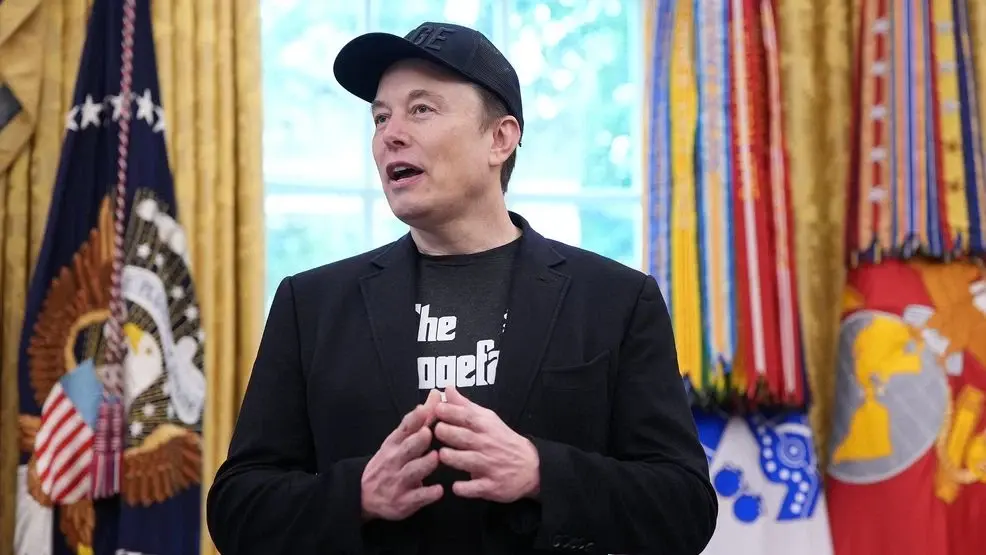
Elon Musk became the first person to hold a trillion-dollar fortune on Friday, propelled by SpaceX's stock market debut, the largest in history. His net worth reached $1.11 trillion, according to Bloomberg's wealth index, as the rocket and satellite company listed on Nasdaq at a $2.2 trillion valuation.
SpaceX priced shares at $135 apiece. Trading opened at $150, spiked to $176.50 within hours, then closed at roughly $161. The initial public offering raised $75 billion from institutional investors before the first trade. Musk owns 42 percent of SpaceX outright, granting him unilateral operational control and a stake Bloomberg valued at $767.1 billion at Friday's close. Add $53.8 billion in SpaceX options, $168 billion in Tesla equity, and $116.4 billion in Tesla options, and the sum is a fortune comparable to Poland's annual economic output.
The debut enriched thousands of SpaceX employees holding equity grants, minting an estimated several thousand new millionaires in a single session. For Musk, however, the wealth remains largely notional: lockup provisions bar him from selling SpaceX shares for twelve months, and his Tesla holdings face similar restrictions tied to margin loan covenants.
SpaceX is not profitable. The company reported cumulative losses exceeding $9 billion over recent fiscal periods, driven by capital expenditure on reusable rocket systems, the Starlink satellite constellation, and, following its acquisition of xAI, artificial intelligence infrastructure. Revenue derives chiefly from launch contracts with NASA, the Department of Defense, and commercial satellite operators, plus subscription fees from Starlink's 3.2 million users. The prospectus filed with the Securities and Exchange Commission describes the business model as "pre-revenue in key segments," notably interplanetary transport and lunar logistics.
That has not deterred buyers. Nancy Tengler, chief investment officer at Laffer Tengler Investments, told CNBC she views the AI division as "a cash incinerator" but expects SpaceX to merge with Tesla within three years, creating what she termed "an industrial combine without precedent." Susannah Streeter, head of money and markets at Hargreaves Lansdown, attributed the share-price surge to "scarcity and vision more than fundamentals," noting that retail demand for SpaceX exposure had been pent up for years.

The trillion-dollar threshold reignited the wealth-inequality debate Musk has come to personify. Senator Elizabeth Warren posted on X, the platform Musk owns, that his trillionaire status constitutes "a wake-up call" and renewed her call for a federal wealth tax on fortunes above $50 million. Senator Bernie Sanders, speaking to reporters in Vermont, said Musk's fortune "illustrates everything wrong with American capitalism." Both senators have clashed with Musk repeatedly since he assumed an informal advisory role in Donald Trump's administration, where he co-chairs the Department of Government Efficiency.
Musk's political spending has drawn parallel scrutiny. Federal Election Commission filings show he contributed $277 million to Republican candidates and political action committees in the 2024 cycle, the largest individual outlay on record. His policy influence has been more direct: as DOGE co-chair, he advocated shutting the U.S. Agency for International Development, a move the administration enacted in January. Research published in *The Lancet* in March estimated the closure could result in 2.1 million additional deaths in low-income countries by 2030 due to halted vaccination and nutrition programs.
Internationally, Musk has sparred with British Prime Minister Keir Starmer over immigration enforcement and with German Chancellor Olaf Scholz over energy policy, using X to amplify criticism that government spokespeople have called "interference." The European Commission opened a Digital Services Act investigation in February into whether X's content-moderation practices violate EU law, citing Musk's personal posts as evidence.
SpaceX's prospectus outlines an ambition the company calls "multiplanetary commerce": regular cargo and crew transport to lunar orbit by 2028, followed by Mars surface missions in the 2030s. The filing acknowledges that "no market currently exists for such services" and that success depends on "technological breakthroughs not yet demonstrated." Starship, the fully reusable heavy-lift vehicle central to this vision, has completed four test flights; none has yet achieved a controlled landing.
Investor appetite appears undeterred by the uncertainty. Analysts at Morgan Stanley set a twelve-month price target of $185 per share, implying a $2.6 trillion valuation, based on what they termed "option value on future space economy." The firm's base-case model assumes Starlink reaches 10 million subscribers by 2027 and that reusable rockets reduce launch costs by 80 percent within five years, both projections the company has missed in prior guidance.
Musk has said nothing publicly since the listing. His last post on X, timestamped Thursday evening, read: "Mars or bust." Whether that refers to SpaceX's mission or his own financial position remains, characteristically, unclear.
Comentarii
Fii primul care comentează.