Romania Between Opportunity and Depopulation
Romania faces a human cost from EU migration: villages age as youth depart, children grow up without parents, specialists leave, birth rates fall, and traditions fade. The author asks why so many felt compelled to leave and calls for policies that give young people reasons to stay.

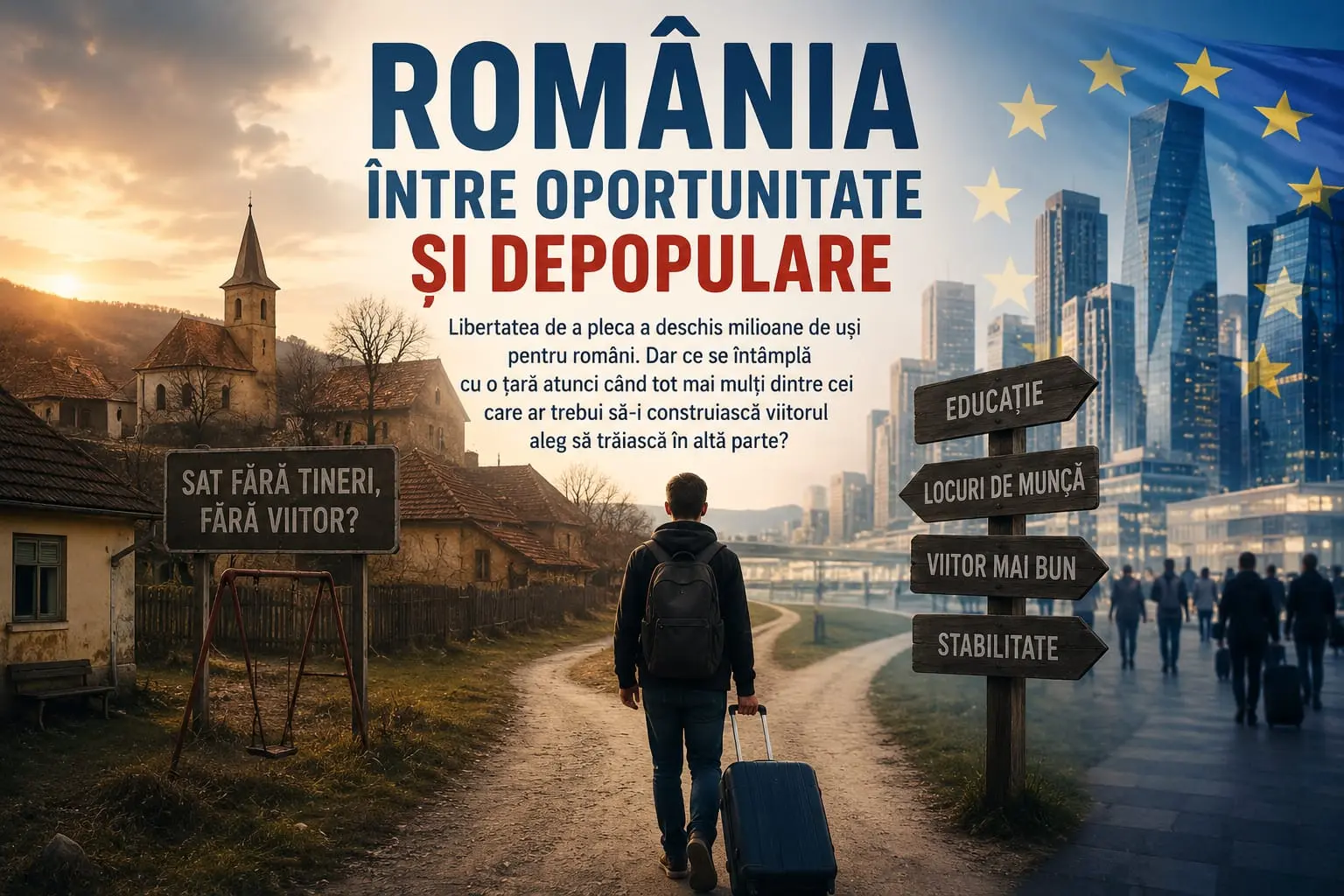
In recent years, discussions about the European Union have focused almost exclusively on funds, infrastructure and freedom of movement. All of these are real benefits. However, there is also a cost that is talked about much less: the human cost. This article is not a condemnation of the European Union, but an invitation to reflect on the changes Romania is going through and on the responsibility we have for its future.
1. The departure of the most valuable resource: people
Freedom of movement has offered millions of Romanians the chance of a better life. At the same time, numerous communities have been left without young people, without professionals and without people who could have built the local future.
2. Villages that are aging
In many rural areas schools are closing due to lack of children, and households remain inhabited only by the elderly. Communities are slowly losing their vitality.
3. Children left at home
Thousands of children have grown up in the care of grandparents or relatives, while parents have worked abroad. Beyond financial support, distance can leave deep emotional marks.
4. The deficit of specialists
Romania feels the lack of doctors, nurses, engineers, teachers and craftsmen. We train valuable people, but many choose to build their future in other states.
5. Traditions and identity
Romanians in the diaspora often preserve the language and customs. However, as generations pass, their children and grandchildren may identify more and more with the countries in which they were born. It is a natural process of migration, and its scale differs from family to family.
6. The decline in birth rate
Depopulation and migration overlap with the decline in birth rate. The result is increasing pressure on education, health and pension systems.
7. The loss of crafts and communities
When people disappear, so do stories, crafts, traditions and connections between generations. A community does not mean only buildings, but the people who give it life.
8. The question that matters
Perhaps the real question is not what the European Union has taken from us, but why so many Romanians have felt they must leave. Economic differences, opportunities and internal decisions have contributed together to this reality.
Conclusion
The greatest loss cannot be measured in money, but in people. Romania needs policies that offer real reasons for young people to stay or return home: well-paid jobs, quality education, high-performing medical services, respect for professionals and support for family. Only in this way can we keep alive the cultural and spiritual identity of this country.
The freedom to leave has opened millions of doors for Romanians. But what happens to a country when more and more of those who should be building its future choose to live elsewhere?
Comentarii
Fii primul care comentează.

Gold Price Surges as Market Eyes $4,500 Milestone
University City Rents Surge as New Academic Year Approaches
Turkey Pursues Interpol Arrest Warrant for Netanyahu Over Flotilla Incident