Belgium investigates FIFA's Balogun clearance ahead of USA clash
FIFA overturned Folarin Balogun's expected suspension, allowing him to play for the United States against Belgium in the World Cup round of 16. The Royal Belgian Football Association expressed surprise and is investigating FIFA's use of Article 27 to delay the suspension, citing a possible contradiction with Article 66.4. The decision could impact both teams' tournament ambitions.

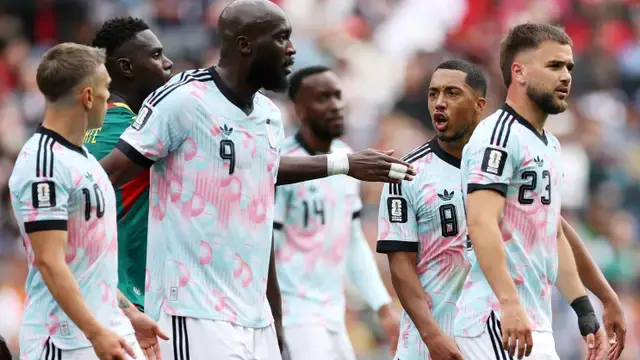
FIFA cleared United States striker Folarin Balogun to play in Monday's World Cup round of 16 against Belgium, overturning an expected suspension from a red card received against Bosnia and Herzegovina. The Royal Belgian Football Association responded Sunday with a formal statement expressing "astonishment" and warning it is investigating all potential options.
The decision arrives days before Belgium and the United States meet in Seattle on Monday, July 6, at 5:00 p.m. local time. The United States seeks its first quarter-final appearance since 2002. Belgium faces a key test of its tournament ambitions.
Balogun, who has scored three goals at the 2026 World Cup, was sent off in the United States' previous match. Under standard FIFA regulations, a red card triggers an automatic suspension for the next match. FIFA invoked a discretionary provision, referencing Article 27 of its Disciplinary Code, to delay enforcement of Balogun's suspension.
"The Royal Belgian Football Association is astonished by FIFA's decision to declare suspended United States player Folarin Balogun eligible to play in the USA-Belgium match on Monday, 6 July, at 5:00 p.m. (Seattle time)," the RBFA said in Sunday's statement.
According to the RBFA, FIFA's justification relies on Article 27 of the Disciplinary Code, which allows the Disciplinary Committee to suspend enforcement of previously imposed sanctions. The Belgian association argued this reading contradicts Article 66.4 of the same code. That provision states a player sent off with a red card is automatically suspended for the team's next match.
"However, Article 66.4 of the same FIFA Disciplinary Code clearly provides that a red card (sending-off) automatically results in a suspension for the team's next match, as has been the case for all previous red cards issued during this FIFA World Cup," the RBFA said.
The RBFA cited the World Cup 2026 Competition Regulations, specifically Article 10.5. That article states: "If a player or team official is sent off as a result of a direct or indirect red card (second caution), they will automatically be suspended from their team's subsequent match. In addition, further sanctions may be imposed."
The Belgian association referenced FIFA World Cup 2026 Circular No. 16, distributed to all participating member associations on May 12, 2026. The circular "explicitly reaffirmed" the automatic nature of suspensions following red cards, the RBFA said. The same rule is reiterated at every Match Coordination Meeting and included in all tournament workshop presentations, per the association's statement.
"In order to safeguard the legitimate rights of all participating teams and to protect the fundamental principles of fair play in our sport, both at this FIFA World Cup and at future editions of the tournament, the RBFA is investigating all potential options," the association said.
FIFA has not publicly detailed the rationale behind invoking Article 27 in this case. The RBFA has not specified what action it may pursue, but the language in its statement points to potential appeals or formal protests ahead of the match.
Balogun's eligibility represents a significant development for the United States. The striker has been central to Mauricio Pochettino's squad, scoring three times during the group stage and contributing to the team's progress to the round of 16. His absence, had the suspension stood, could have influenced the outcome against Belgium.
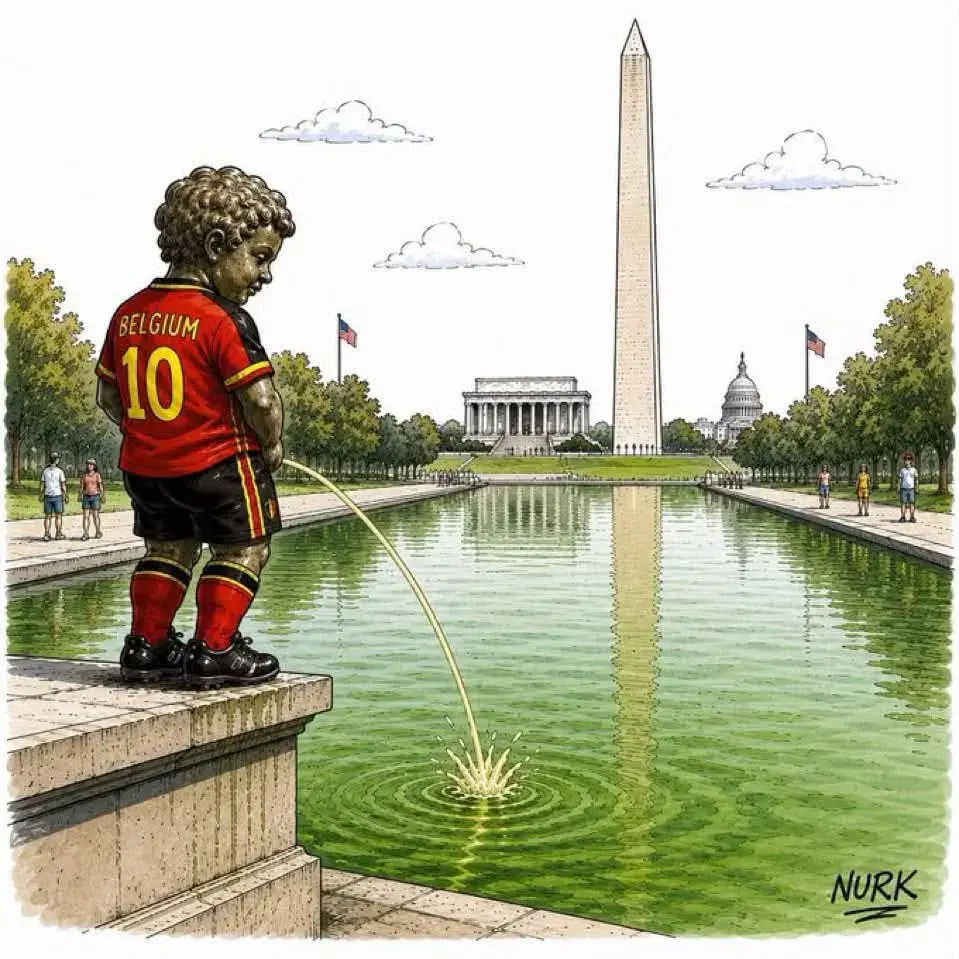
Belgium features high-profile players such as Kevin De Bruyne and Jeremy Doku. The Belgian side has advanced to the round of 16 with a squad anchored by De Bruyne and Doku, both expected to start in Seattle. Belgium has relied on disciplined defensive play and quick transitions. Balogun's presence presents a tactical challenge for coach Domenico Tedesco's plans.
The United States' path to the knockout round has been marked by narrow margins and key contributions from its attacking core, which includes Malik Tillman and Christian Pulisic alongside Balogun. Tournament statistics show Balogun's three goals account for nearly a third of the team's total scoring output in the 2026 World Cup so far.
The controversy over Balogun's eligibility has drawn attention to the consistency of FIFA's disciplinary process. In previous matches during the 2026 World Cup, red cards have led to automatic suspensions without exception, per data compiled from official match reports. The RBFA's statement specifically references this precedent, arguing the sudden application of Article 27 in Balogun's case represents a break from established practice.
FIFA's Disciplinary Code, last updated for the 2026 tournament, contains multiple provisions regarding player suspensions. Article 27 grants the Disciplinary Committee authority to suspend enforcement of disciplinary sanctions. Article 66.4 is explicit in mandating an automatic one-match ban for players sent off. The Competition Regulations and Circular No. 16 reiterate this automaticity, with no mention of exceptions or discretionary waivers.
The specific circumstances under which FIFA may choose to invoke Article 27 remain unclear. The RBFA's statement does not allege procedural irregularity. It argues the decision undermines the principle of equal treatment for all teams. By the RBFA's account, every other red card in the tournament has resulted in an immediate suspension, including for players from teams eliminated in the group stage.
The timing of FIFA's announcement has added to the sense of controversy. With the United States-Belgium fixture set for Monday evening in Seattle (Tuesday morning BST), the RBFA's options for recourse are limited to urgent appeals or protests to tournament authorities. As of Sunday night, FIFA had not responded publicly to the Belgian association's statement.
A win against Belgium would send the United States to its first World Cup quarter-final in 24 years, a milestone last reached in 2002. The inclusion of Balogun strengthens the American attack, which faces a Belgian defense that conceded only two goals in the group stage. For Belgium, the potential precedent set by FIFA's decision is a source of concern beyond this single match, as it may affect disciplinary expectations for the remainder of the tournament.
The RBFA's threat of action has not been accompanied by details, but the association's statement leaves open the possibility of legal or procedural challenges. In previous World Cups, teams have filed appeals with FIFA's disciplinary bodies or sought provisional measures from the Court of Arbitration for Sport, though such actions are rarely resolved before the next match is played.
The FIFA World Cup 2026 Competition Regulations, provided to all teams ahead of the tournament, are intended to ensure uniform application of disciplinary rules. The RBFA's reference to Circular No. 16 and repeated reminders at Match Coordination Meetings highlight the expectation among teams that suspensions for red cards are automatic and non-negotiable. The sudden application of a discretionary provision has prompted questions about transparency and consistency.
Players from both teams have not commented publicly on the eligibility dispute. Pochettino has relied on Balogun as a central figure in the attack. Belgian manager Tedesco has focused on tactical preparation for the round of 16. The broader football community is watching closely, as the outcome of the RBFA's challenge could influence disciplinary procedures in future tournaments.
The match will be played at Lumen Field in Seattle, with kickoff scheduled for 5:00 p.m. local time on July 6 (1:00 a.m. BST on July 7). Balogun is expected to feature in the starting lineup, barring any last-minute intervention by FIFA or tournament authorities. The RBFA's investigation into potential options is ongoing, according to its latest statement.
FIFA's decision to clear Balogun using Article 27 has drawn criticism from Belgium and observers who question the criteria for suspending disciplinary sanctions. The RBFA's formal investigation into the ruling underscores the controversy surrounding the governing body's interpretation of its own regulations.
Comentarii
Fii primul care comentează.