Ukrainian drones reach Izvarîne crossing, 250 kilometers beyond Kyiv-controlled lines
Ukrainian drones have reached the Izvarîne border crossing, over 250 kilometers from Kyiv-controlled areas, marking a significant escalation in their capacity to disrupt Russian logistics. Key supply routes in the occupied Luhansk region are now under Ukrainian surveillance and control, as reported by the 3rd Army Corps.

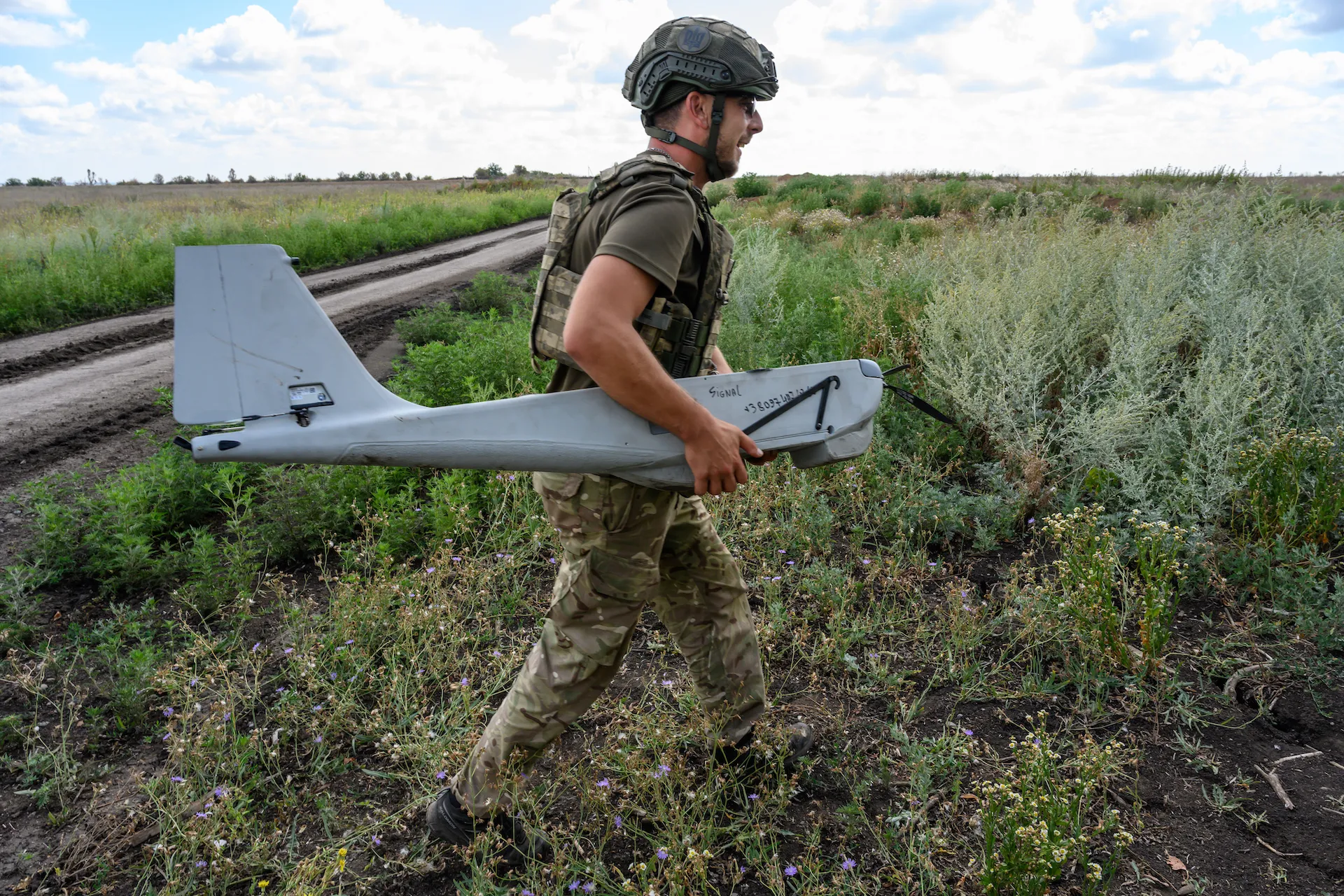
Ukrainian drones reached the Izvarîne border crossing point on May 31, a strategic location over 250 kilometers from territory controlled by Kyiv. The incursion marks the deepest documented penetration by Ukrainian unmanned aerial vehicles into Russian-held logistics networks since the war began, according to statements from the 3rd Army Corps of the Armed Forces of Ukraine. Lieutenant Colonel Maxim Jorin, Deputy Commander of the 3rd Army Corps, said his unit's drones now permanently monitor the main logistical routes used by the Russian army in the occupied Luhansk region.
This surveillance allows Ukrainian forces to strike supply lines, military infrastructure, and other targets deep within Russian positions, Jorin said. "Currently, there are no more safe places for Russians in this region," he said. Jorin added that Ukrainian forces will continue to destroy Russian military infrastructure and personnel.
The 3rd Army Corps announced in a Facebook post on May 31 that Ukrainian drones had taken control of key Russian military supply routes in occupied areas of the Luhansk region. Brigadier General Andrii Biletsky, commander of the 3rd Army Corps, said that Luhansk, Starobilsk, Alchevsk, Brianka, and Kadiivka are now under the control of unmanned aerial vehicles operated by his unit. "Luhansk, Starobilsk, Alchevsk, Brianka, and Kadiivka are now under the control of unmanned aerial vehicles (UAV) of the 3rd Army Corps," Biletsky said.
Biletsky also announced the launch of an operation in the Luhansk region and in historically ethnic Ukrainian territories known as Eastern Ukraine. These territories are partially located in Russia's Kursk, Voronezh, and Belgorod regions, according to the 3rd Army Corps statement. Jorin, who was born in Rubizhne in the Luhansk region, said the operations carry personal significance.
"For me, as a person born in Rubizhne, in the Luhansk region, such operations have a special significance," he said. Jorin appealed to Ukrainian citizens remaining in occupied territories to support resistance efforts, though he did not specify what form that support should take. The Ministry of Defense and the General Staff of Ukraine have allocated five billion hryvnia to develop what officials describe as "middle strike" attack capabilities aimed at destroying Russian logistics behind the front lines.


The funding represents a significant investment in drone technology and operational capacity, according to ministry statements reviewed by Transilvania Times. Recent operations have targeted several military depots in the occupied Donetsk region, which serve as important logistical centers for the Russian army. The 413th Regiment of Unmanned Systems Forces reported these attacks, which focused on intersections of main railway lines and road networks.
Ukrainian drones attacked military logistical depots near Novoselivka and Dokuchayevsk, as well as a temporary deployment site in the village of Syhnalne, near Olenivka, according to the regiment's public statements. President Volodymyr Zelensky emphasized the strategic importance of attacks on refineries and fuel depots in remarks to Ukrainian media. Diminishing energy resources directly impacts Russia's ability to sustain its war efforts, Zelensky said.
"This is one of the actions that reduce Russia's aggressive potential," he said. Ukrainian drones struck a pumping station in Russia's Kirov region on May 30, approximately 1200 kilometers from the Ukrainian border and nearly 800 kilometers northeast of Moscow. Governor Aleksandr Sokolov confirmed the attack and said there were no casualties.
Images published on Russian social media showed massive smoke columns rising from the facility. Further strikes were reported in the Saratov region, near the border with Kazakhstan, where local authorities noted damage to civilian infrastructure but provided no details on the extent or nature of the damage. In the Rostov region, the locality of Matveev-Kurgan experienced a state of emergency following an attack on a fuel depot that sparked an extensive fire affecting shops and homes, according to local emergency services.
Russia launched 229 drones at Ukraine in response, of which 212 were intercepted, according to Ukrainian authorities. A depot belonging to a private courier company in Dnipro was completely destroyed by fire caused by a Russian attack, though company representatives confirmed that no employees were harmed. The operations in Luhansk and beyond represent a significant expansion of Ukrainian drone capabilities.
The 3rd Army Corps has not disclosed the number of drones deployed or the specific models used in the operations. Russian military leadership has not issued a public response to the Ukrainian claims as of June 1.
Sursă: adevarul.ro
Comentarii
Fii primul care comentează.