Ukraine moves drone command centers underground after 90% of Russian losses attributed to UAVs
Ukraine's experience in drone warfare is transforming NATO's military strategies, highlighting the need for flexible command structures. Ukrainian innovations in mobility and dispersion are reshaping defense tactics across Europe.

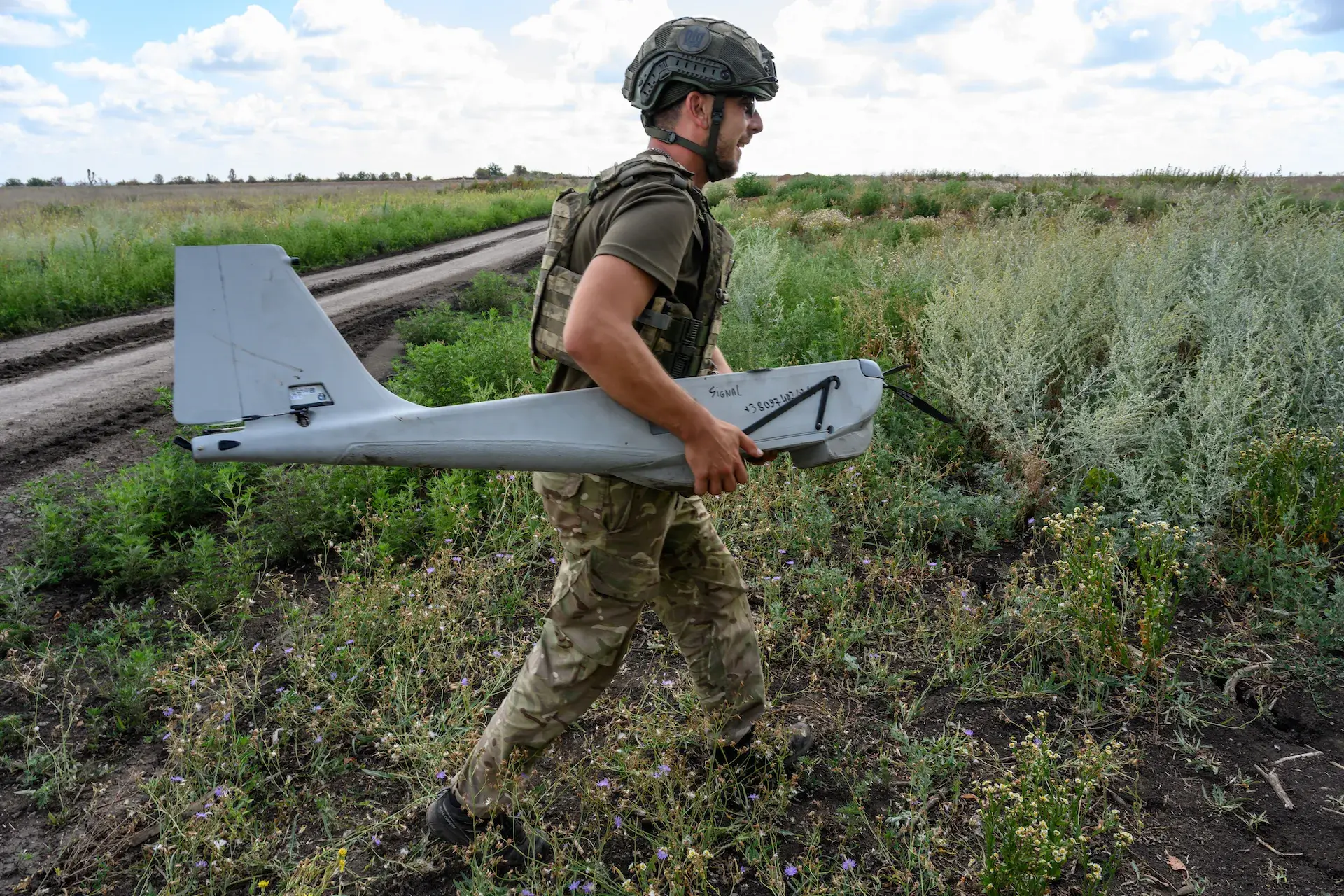
Ukraine has become the world's most important military laboratory for the use of drones. The transformation came at a steep cost: thousands of Ukrainian lives lost while accumulating battlefield experience that now reshapes Western military thinking. The Ukrainian military concluded that drone units and command centers are priority targets.
Russian forces hunt them relentlessly. Ukraine responded by placing command and training centers in underground structures, installing command posts in bunkers or special underground locations designed for survival under constant surveillance. Permanent mobility became doctrine.
Many command centers now operate from special vehicles, trucks, and armored personnel carriers. Units change positions frequently, sometimes multiple times daily. Ukrainian drone operators work from underground shelters or hidden locations, piloting devices from maximum distances from the combat zone.
The goal: stay alive long enough to complete the mission. Kyiv claims drones are responsible for 90% of Russian army losses. The Command of Unmanned Systems Forces reported that Russian attempts to strike drone unit leaders have intensified as Moscow grasps the scale of losses inflicted by unmanned systems.
The statistic explains why Russian forces dedicate substantial resources to identifying and eliminating drone specialists. Taras Berezoveț, Head of the Military Cooperation Department for the Territorial Defense Forces of Ukraine, delivered Ukraine's message to Western armies at a drone technology summit in Latvia. Western armies must abandon the concept of fixed bases, he said.
The flexible model based on mobility and dispersion is not optional. "Western armies must adapt or face dire consequences," Berezoveț stated. Building underground centers costs more.
Berezoveț emphasized they must be as deep as possible. Russian units actively target drone operators, he warned, and their search for Ukrainian drone unit locations never stops. NATO listened.
The alliance recognized that its traditional command and control model, built for a different era, cannot survive the battlefield Ukraine now navigates daily. General Sir John Stringer, Deputy Supreme Allied Commander Europe for NATO, acknowledged that the war in Ukraine exposed vulnerabilities in NATO's large, single command centers. "The future belongs to distributed networks with numerous smaller command centers," Stringer said.


The new approach complicates logistics and coordination across member states. NATO considers it necessary anyway. Moving units across borders involves complex procedures and approvals.
NATO must streamline the process to keep pace with evolving threats. Russian forces' efforts to locate and strike Ukrainian command centers demonstrate what happens when doctrine lags behind technology. Ukraine's experience influenced the defense industry directly.
Ukrainian companies producing drones abandoned the giant factory model, dispersing production capacities across numerous locations. Some of the largest producers now operate over 15 different production centers. Concentration equals vulnerability.
Ark Robotics, a Ukrainian company, exemplifies the shift. "A huge factory becomes a target in war," its director stated. The strategic advantage of dispersion became obvious once the war began.
European allies absorbed the lesson at varying speeds. Karmo Saar, representing Estonian drone supplier KrattWorks, warned that Europe must learn quickly from Kyiv's experience. "Not applying these lessons will be costly if conflict erupts," Saar cautioned.
Many European states continue to think in terms of peace. They risk learning lessons too late, he added. NATO invests massively in developing unmanned warfare capabilities.
The alliance's traditional command structures, rooted in post-Cold War strategies, are being replaced by more agile, responsive systems. The evolution aims to counter threats like those posed by Russia, which considers command centers and drone pilots maximum priority targets. Ukraine projects military infrastructure for high-intensity conflict, a reality Western Europe has not faced in decades.
President Volodymyr Zelensky sends anti-drone experts to Romania and Baltic countries, sharing knowledge paid for in blood. The expertise Ukraine offers cannot be learned in peacetime exercises. The lessons learned on Ukraine's battlefields are reshaping military strategies across Europe.
NATO's adoption of a distributed network model, inspired by Ukraine's innovations, represents a significant shift in defense tactics. The upcoming defense summits will determine the pace and scope of these strategic transformations. Implementation speed may decide whether NATO adapts in time or learns Ukraine's lessons the hard way.
Source: adevarul.ro
Comentarii
Fii primul care comentează.

CIA chief travels to Moscow following US intelligence on Russian military preparations
Russian AI drone kills three at Zaporizhzhia gas station
Ukrainian hacker crashes Russian defence budget call