Sandu restores Băsescu's citizenship after 9-year political dispute
Moldova's President Maia Sandu reinstated former Romanian President Traian Băsescu's citizenship, ending a political dispute. The move highlights Moldova's strategic alignment amid regional tensions.

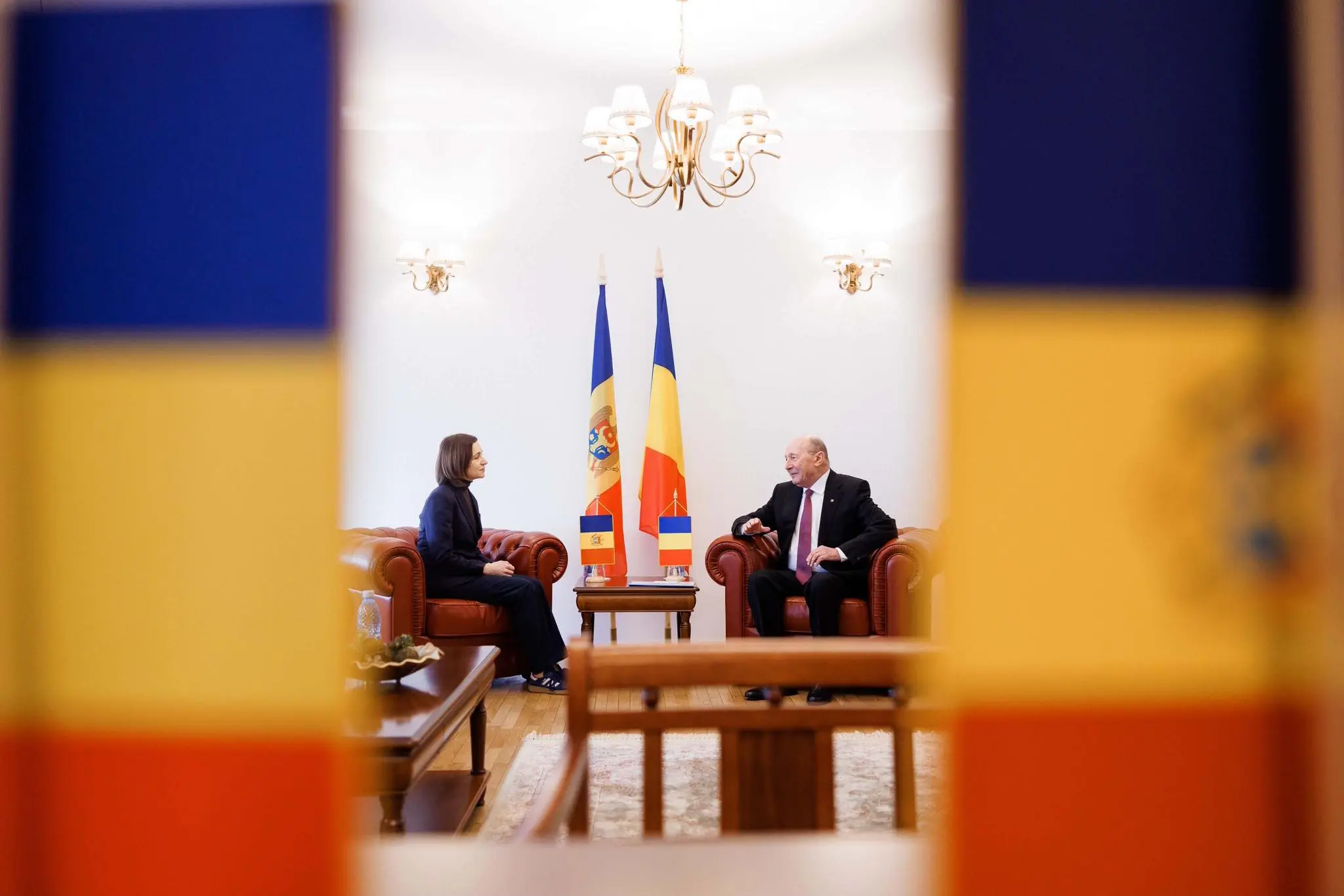
Moldova's President Maia Sandu restored Traian Băsescu's Moldovan citizenship on May 26, ending a political dispute that began nearly a decade ago when the former Romanian president first received the status in 2016. Sandu signed the decree after receiving a written request from Băsescu several weeks earlier, she said during her online show "Jurnal politic" on May 30, according to NewsMaker. md.
The reinstatement closes a chapter that opened in 2016, when then-President Nicolae Timofti granted Băsescu citizenship by decree. That status lasted less than a year. In 2017, shortly after taking office, President Igor Dodon withdrew the citizenship, turning what had been a symbolic gesture of cross-border solidarity into a recurring flashpoint in Moldovan politics.
"The law requires a written request for granting citizenship," Sandu said in her May 30 broadcast. "I received Mr. Băsescu's signed request a few weeks ago."
She offered no further explanation for the timing, but the procedural language suggested she viewed the matter as straightforward once the formal requirement had been met. Băsescu responded on Facebook the same day Sandu signed the decree. He thanked the Moldovan president and reaffirmed his support for Moldova's European integration and unification with Romania, positions he has held publicly since entering politics.
In comments to "Adevărul" on May 26, he described the rapprochement with Moldova, along with its derussification and Europeanization, as his core project throughout his political career. He also issued a warning about the continued presence of Russian troops in Transnistria, the breakaway region on Moldova's eastern border that has remained outside Chișinău's control since the early 1990s. Băsescu has repeatedly framed the Russian military presence there as an immediate threat to Moldova's sovereignty, and his May 26 comments reiterated that concern.
The citizenship saga reflects broader tensions over Moldova's geopolitical orientation. Băsescu, who served as Romania's president from 2004 to 2014, has long advocated for closer ties between Bucharest and Chișinău, and for Moldova's integration into European institutions. His 2016 citizenship was widely seen as a symbol of those ties, making its revocation by Dodon, a politician aligned with Moscow, a pointed rebuke.
Dodon's decision to strip Băsescu of citizenship came shortly after he assumed office in 2017, and it signaled a shift in Moldova's foreign policy under his leadership. Dodon had campaigned on closer relations with Russia and a more skeptical stance toward the European Union, positions that put him at odds with pro-European forces in Moldova and with Băsescu personally. Sandu, who took office in 2020, has pursued the opposite course.
She has positioned Moldova firmly within the European orbit, and her decision to restore Băsescu's citizenship aligns with that broader strategy. By resolving the dispute, she also removed a lingering irritant in relations with Romania, a European Union member state whose support Moldova has sought as it navigates its own path toward EU integration. The restoration carries symbolic weight beyond the individual case.
Băsescu is not simply a former head of state; he is a figure closely associated with the idea of Romanian-Moldovan unity, a concept that remains divisive within Moldova itself. Supporters see unification as a natural expression of shared language, culture, and history. Opponents view it as a threat to Moldovan sovereignty and identity.
Sandu has not endorsed unification, but her decision to restore Băsescu's citizenship will likely be interpreted through that lens. Her words to Băsescu, "You are not only our brother, but also our fellow citizen," underscore the cultural and historical ties between the two countries, even as they stop short of a political commitment. The timing of the restoration also coincides with heightened security concerns in the region.
Russian forces remain stationed in Transnistria, and the war in Ukraine has intensified fears in Chișinău that Moldova could face similar pressure from Moscow. Băsescu's warnings about the Russian military presence have taken on added urgency in that context, and his restoration to citizenship may be seen as part of a broader effort to strengthen Moldova's ties with Western allies. For Băsescu, the restoration represents a personal vindication after years of legal and political limbo.
For Sandu, it resolves a dispute inherited from previous administrations and reinforces her government's pro-European credentials. For Moldova, it marks another step in the delicate balancing act between asserting its sovereignty and managing the geopolitical pressures that continue to shape its future. The decree Sandu signed on May 26 was procedural in form, but its implications extend well beyond the paperwork.
It reflects the choices Moldova's leadership is making about the country's direction, the alliances it seeks, and the threats it perceives. Whether those choices will bring the stability and integration Moldova's pro-European leaders promise remains an open question, but the restoration of Băsescu's citizenship signals where the current government intends to look for answers.
Sursă: adevarul.ro
Comentarii
Fii primul care comentează.