Radu Georgescu warns of impending housing market crash
Radu Georgescu forecasts a 50% decrease in housing prices. He claims the current bubble surpasses the 2008 crisis.
Romania faces high salary taxes and low net salaries. 25% of homes remain empty, exacerbating the issue.
Mortgage rates in Romania are significantly higher than in Bulgaria.

Credit: Radu Georgescu
Radu Georgescu, a seasoned financial analyst and former Financial Director of GE Romania, has issued a stark warning about the Romanian housing market. According to Georgescu, housing prices are poised to plummet by 50%, driven by what he describes as a housing bubble even larger than the one preceding the 2008 financial crisis. Georgescu, who experienced the 2008 crisis firsthand during his tenure at GE, is not optimistic about the current market conditions.
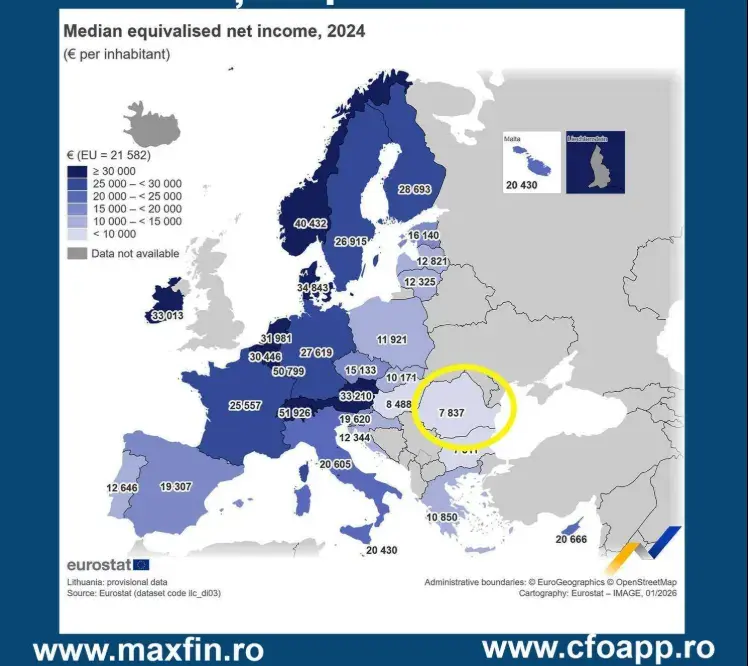
Georgescu's analysis points to several factors contributing to this precarious situation. He highlights that Romania has the highest salary taxes globally, which severely impacts the disposable income of its citizens. With a net average salary of just 653 euros, Romanians are struggling to meet basic affordability thresholds for housing. The FED's housing affordability index, which deems housing unaffordable if costs exceed 30% of net salary, sets a threshold of 196 euros for Romania—a figure that many cannot meet given their financial constraints.
The disparity in mortgage rates between Romania and neighboring Bulgaria further exacerbates the issue. While the average mortgage interest rate in Romania stands at 8.5%, Bulgaria offers a significantly lower rate of 3.5%. This difference results in Romanian homeowners paying 3.4 times more in interest over the life of a mortgage compared to their Bulgarian counterparts. For a standard 100,000 euro loan over 30 years, Romanians end up paying 195,000 euros in interest, a stark contrast to the 57,000 euros paid in Bulgaria.
The situation is further complicated by the fact that 25% of Romanian homes are currently empty, as revealed by the 2021 Census. This includes properties in Bucharest, where maintenance personnel are notably absent due to the lack of occupancy. Real estate agents have played a role in inflating the housing bubble, urging clients to "buy now" with promises that prices in Romania will align with those in Germany and France. However, these claims overlook the reality that Germany and France boast net salaries four to five times higher and mortgage rates two to three times lower than Romania.
Strikes have erupted across the country as people express their inability to afford bank installments. Many Romanians, swayed by real estate agents' promises, now find themselves in financial distress. The question remains: how will the Romanian housing market adjust to these pressures, and what measures will be taken to address the underlying economic challenges?
Comentarii
Fii primul care comentează.