Pashinyan Secures Victory in Armenian Election Amid Regional Tension
Armenian Prime Minister Nikol Pashinyan has declared victory in the general election, with his Civil Contract party leading with 54.5% of the vote. This election, the first since Armenia's military defeat by Azerbaijan in 2023, tests Pashinyan's Western-oriented policies and his efforts to secure peace with Azerbaijan.

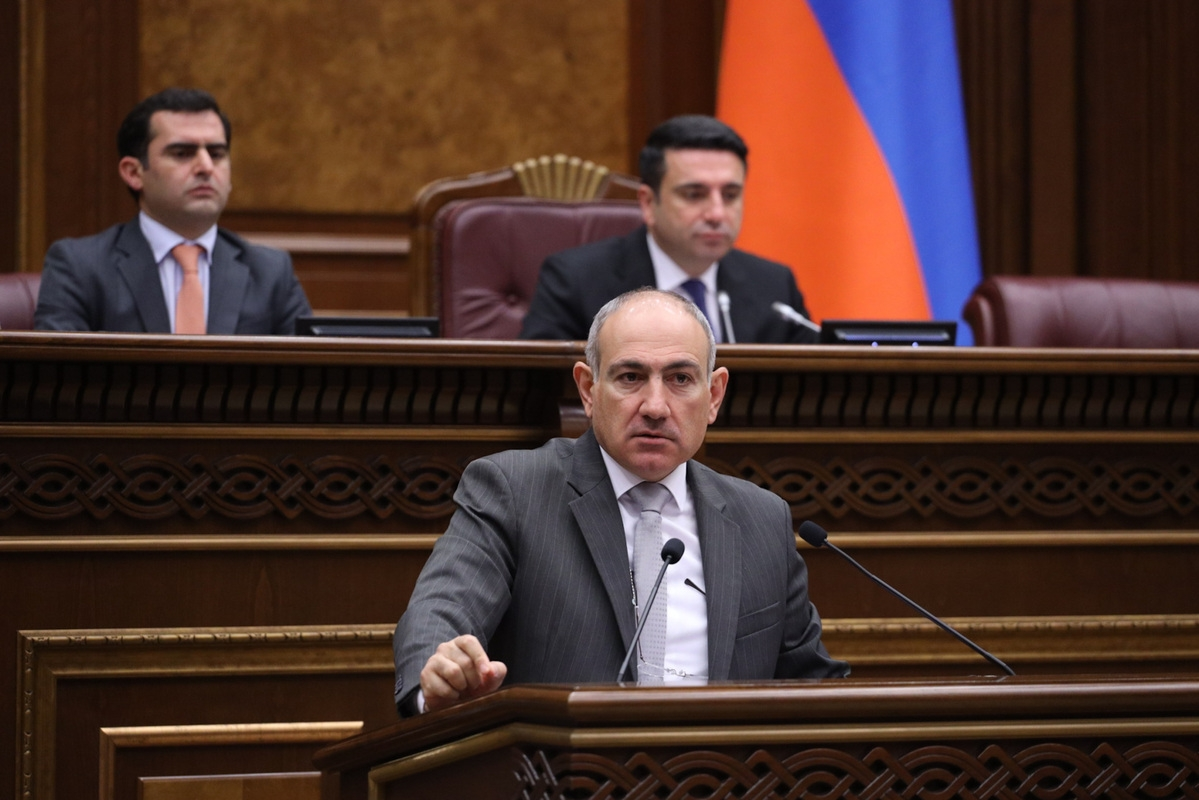
Armenian Prime Minister Nikol Pashinyan has declared victory in the country's general election, with preliminary results showing his Civil Contract party leading with 54.5% of the vote. This outcome is based on data from 21% of polling stations, according to Armenia's Election Commission. The early figures also indicate that the Strong Armenia alliance secured 21.9%, while the Armenia Alliance and the Prosperous Armenia party trailed with 8.7% and roughly 5%, respectively.
Voter turnout was nearly 59%, reflecting strong public engagement in this key election. This election marks Armenia's first since its 2023 military defeat by Azerbaijan, a conflict that has dramatically altered the political field of the 2.9 million-strong nation. The vote was a critical test of Pashinyan's strategy to pivot Yerevan towards Western alliances and to negotiate a lasting peace with Baku.
The Central Election Commission is anticipated to release official preliminary results later on Monday. The initial data suggests a strong lead for Civil Contract against three pro-Russian opposition parties that have criticized Pashinyan's foreign policy shift. Samvel Karapetyan, leader of the Strong Armenia alliance, campaigned on a pro-business platform, emphasizing the importance of maintaining ties with Moscow.
His alliance's second-place position in the early count positions it as a significant opposition force in Armenia's parliament, where 17 parties and two political blocs vied for seats. Since 2018, when Pashinyan took power following the Velvet Revolution, Civil Contract has worked to strengthen Armenia's ties with the European Union and the United States. These moves have strained the country's traditional relationship with Russia, its primary security ally.
Exit polls released on Sunday evening showed differing results. A survey commissioned by the ruling party reported that Civil Contract received 56.7% of the vote, according to local media. However, other polls suggested a potential opposition majority, though these figures remain unverified by the Election Commission.
The election took place across 2,005 polling stations nationwide. Under Armenian electoral law, parties must surpass a 5% threshold, while political blocs require 7% to enter the National Assembly. Pashinyan's strong showing in the early count could provide him with the mandate needed to pursue peace negotiations with Azerbaijan and to improve relations with Turkey, Azerbaijan's regional ally.
The longstanding conflict over the Nagorno-Karabakh region, which Azerbaijan reclaimed in a 2023 military operation, remains a contentious issue. The 2023 defeat caused the displacement of tens of thousands of ethnic Armenians and significantly impacted Pashinyan's political standing. Opposition parties have accused him of mishandling the conflict and neglecting Armenian interests, allegations he has consistently denied.


Pashinyan argues that peace with Azerbaijan is necessary for Armenia's security and economic future. The Armenia Alliance, securing 8.7% in the early count, has advocated for closer ties with Russia and has been vocal in its criticism of Pashinyan's Western orientation. The Prosperous Armenia party, close to the 5% threshold, has positioned itself as a centrist option focusing on economic issues.
Vote counting continues across the country, with full preliminary results expected by late Monday. The final tally will determine the composition of Armenia's 107-seat parliament and influence the nation's foreign policy, security, and economic reform directions. Since coming to power in 2018, Pashinyan's Civil Contract party has faced challenges, particularly following the 2023 military defeat that eroded some of its support.
The party had previously won landslides in the snap elections of 2018 and 2021. The election occurred amid ongoing negotiations between Yerevan and Baku over border demarcation, transport links, and the status of ethnic Armenians in Azerbaijan-controlled areas. Pashinyan has expressed willingness to recognize Azerbaijan's territorial integrity, including Nagorno-Karabakh, in exchange for security guarantees and protection of Armenian cultural sites.
Russia, with a military base in Armenia and bound by a defense treaty, has watched Pashinyan's Western pivot with concern. Moscow has accused Yerevan of undermining the Collective Security Treaty Organisation and has scaled back its security commitments to Armenia. The European Union and the United States have increased their involvement with Armenia, offering economic aid and supporting democratic reforms.
Brussels sent a civilian monitoring mission to the Armenian-Azerbaijani border in 2023, a move that displeased both Baku and Moscow. If confirmed, the Strong Armenia alliance's second-place finish would mark the emergence of a new opposition force in Armenian politics. Karapetyan, a businessman with interests in construction and energy, has criticized Pashinyan's economic policies but has been cautious in directly attacking his foreign policy.
Led by former President Robert Kocharyan, the Armenia Alliance has been more direct in its accusations against Pashinyan, accusing him of capitulating to Azerbaijan and betraying Armenian national interests. Kocharyan, who served as president from 1998 to 2008, maintains close ties with Moscow. The Prosperous Armenia party, founded by businessman Gagik Tsarukyan, has struggled to establish a distinct political identity.
Its performance near the electoral threshold highlights the fragmentation of Armenia's opposition, which has yet to unite behind a single alternative to Pashinyan. The Central Election Commission is expected to announce official preliminary results later Monday, with final certified results due shortly thereafter. The newly elected parliament will convene in the coming weeks to form a government and set the legislative agenda for the next term.
Sursă: reuters.com
Comentarii
Fii primul care comentează.


