Political Patronage and Strong-Arm Tactics: How a German Investor Was Stripped of a Luxury Fleet in Western Romania
Kai Kipka was beaten and threatened in Timișoara amid a vehicle dispute. He claims illegal dispossession of 50 vehicles. Răzvan Popeți, his former associate, is accused of fraud. Popeți allegedly used political connections to influence the case. Authorities are investigating the complex fraud and assault allegations.

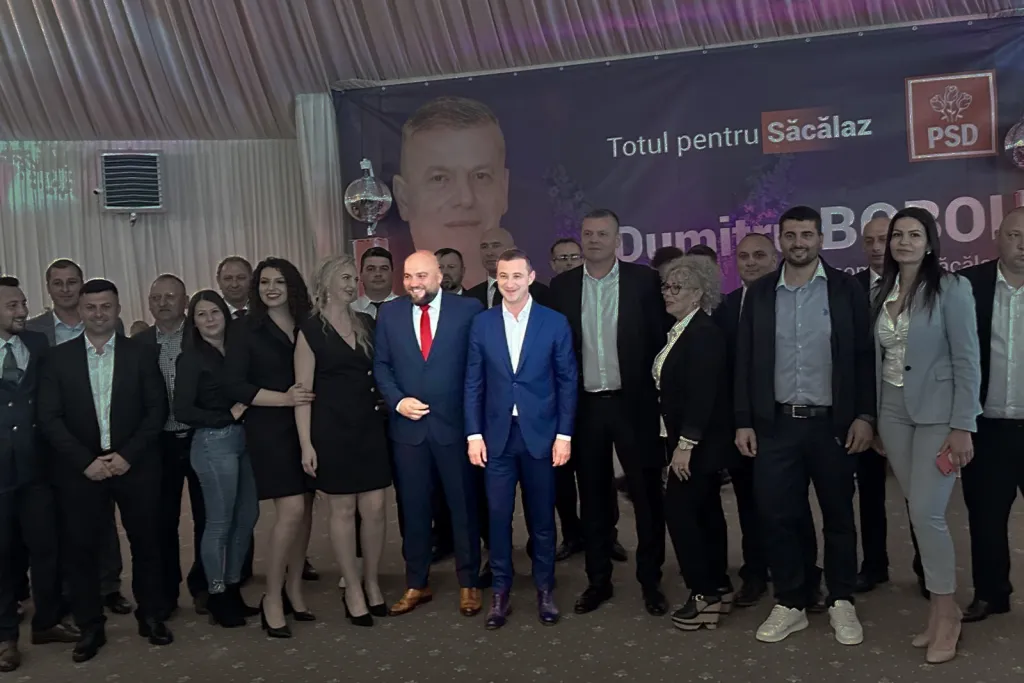
Răzvan Popeți, stânga și Alfred Simonis. Foto: Facebook
A secluded street in southern Timișoara, well past midnight. A Porsche bearing German license plates is tailed and aggressively boxed in by a black Mercedes. Within seconds, five heavily built men step out, flanking the trapped vehicle. The encounter quickly turns violent: a foreign national is dragged from the passenger seat, assaulted, and threatened with his life, while his colleague's phone is violently slapped away to stop her from filming the attack. This ambush, reminiscent of 1990s mob friction, was not a random act of street violence; it was the boiling point of a sophisticated corporate hijacking. A deep-dive investigation by the independent journalism platform Snoop (snoop.ro) has exposed how a local politician seamlessly weaponized his political clout to strip a foreign investor of a 50-car commercial fleet, leaving the victim trapped in an agonizing gridlock of bureaucratic indifference and police inaction.
The victim of the assault, 58-year-old German entrepreneur Kai Kipka, arrived in Romania in the wake of the pandemic, looking to invest heavily in the country’s booming ride-sharing market. The man accused of engineering his financial ruin is his Romanian business partner, 39-year-old Răzvan Daniel Popeți. To the online world, Popeți was a ubiquitous fleet manager operating under the pseudonym "Nicholas Popoviciu," using Facebook groups to aggressively recruit Uber and Bolt drivers. In the real world, however, his leverage came from a rapid ascent through the ranks of the ruling Social Democratic Party (PSD) in Timiș County, where he served as a local party chairman and boasted deep ties to the regional political elite.
Popeți’s political pedigree goes a long way in explaining his sense of absolute impunity. The Snoop investigation revealed that Popeți is a lifelong childhood friend of Alfred Simonis, the current President of the Timiș County Council and former Speaker of Romania's Chamber of Deputies. During the formative months of the business venture, Popeți’s wife was employed directly at Simonis’s parliamentary office, while Popeți himself frequently used photos taken inside the Parliament building to project an aura of untouchable authority to prospective partners. When pressed by investigative reporters, Simonis attempted a strategic pivot, insisting that while the two have shared a beer for over three decades, their public and private lives remain entirely separate. Yet, in private dealings, Popeți routinely dropped the names of other powerful regional allies, including Cristian Anton, the former head of the Romanian Road Authority (ARR), who was recently arrested by anti-corruption prosecutors after being caught with hundreds of thousands of euros stuffed into shoeboxes.
The machinery of the fraud was set in motion in 2023. Kipka injected significant capital into the Romanian market, importing a brand-new fleet consisting of 46 Peugeot 2008 SUVs and four Citroën vehicles. On the recommendation of a local accountant, he appointed Popeți as co-administrator of his company, XRentX, to handle day-to-day operations. Friction surfaced almost immediately. Kipka, accustomed to strict Western compliance, flatly rejected Popeți’s suggestions to hire drivers under the table, pointing out that in Germany, off-the-books employment carries severe prison sentences.
Realizing his partner would not play along, the local politician began operating a shadow business. Without the knowledge or consent of the German majority shareholder, Popeți quietly established two parallel front companies—Town Rides SRL and Cabway SRL. He then systematically diverted Kipka's entire fleet to his own entities. Capitalizing on his political connections within the local road authority, Popeți secured the necessary ride-sharing permits almost instantly. By the end of 2024, his shadow entities had generated nearly €100,000 in net profit, fueled entirely by the stolen German fleet. By the time Kipka discovered his parking lots were empty and his cars were actively being spotted across the city, Popeți had already drafted dozens of backdated, cross-renting contracts, signing as both the lessor and the lessee to fabricate a paper trail of legitimacy for prosecutors.
What followed exposed a disturbing paralysis within local law enforcement, leading the German investor to openly accuse the police of shielding the perpetrators. Desperate to reclaim his property, Kipka took matters into his own hands, tracking down two of his vehicles and confiscating their physical license plates. The backlash was immediate. The next day, Popeți’s associates, accompanied by an individual wearing a police uniform who claimed to be from a local precinct, raided the compound where the cars were stored and drove them away, completely bypassing the fact that the legal plates were still in Kipka's possession. Shortly after, the exact same vehicles were spotted back on the streets, operating with duplicate plates. When Kipka demanded answers from the vehicle registration authority, officials flatly refused to show him the paperwork used to authorize the duplicate tags, triggering yet another criminal complaint from the investor.
In total, Kipka filed six criminal complaints with the local Police, the Prosecutor’s Office, and the Directorate for Investigating Organized Crime and Terrorism (DIICOT). However, the justice system ground to a halt. DIICOT quickly dismissed the organized crime racketeering charges, arguing that the scheme lacked the strict organizational structure required by law, and kicked the fraud and money laundering case down to local prosecutors, where the file gathered dust for months.
A formal institutional response only materialized in the summer of 2026, after Snoop’s reporting triggered significant public pressure. The Timiș County Police Inspectorate finally confirmed multiple active investigations. The Economic Crime Investigation Service is currently looking into tax evasion surrounding the ride-sharing fleet, under the coordination of the regional tribunal. Furthermore, Popeți is facing criminal charges for assault, harassment, and stalking stemming from the late-night traffic ambush. The judiciary has since issued domestic abuse and stalking restraining orders lasting four and eight months, forcing the politician to wear an electronic monitoring ankle bracelet and maintain a strict 100-meter perimeter from Kipka and his staff.
Yet, the epilog of this corporate hijacking proves that politically connected networks are highly adept at dodging the law. As soon as the legal walls began closing in late last year, Popeți executed a classic shell game, selling both front companies to an Armenian national born in Russia and residing in France. Despite supposedly exiting the business, Popeți never truly left the lucrative Timișoara ride-sharing market. A close associate from his home village recently set up seven new corporate entities controlling 35 vehicles. Among them is a company named Cabway Team SRL—virtually identical to the seized entity—and the primary contact number listed on the corporate registry remains the personal cell phone of the local PSD chairman.
Meanwhile, the distinctive orange Peugeot SUVs that represented Kipka's initial investment have vanished from local streets. The German entrepreneur now only catches glimpses of his fleet through automated speeding tickets mailed to him from across Western Europe, indicating his vehicles have been trafficked out of the country entirely. Terrified of further violence and confined to a local hotel room, Kipka expressed his profound disillusionment with the investment climate and safety in Romania, admitting that his only solace lies in the courage of the female judges who defied political gravity to sign his protection orders. Reached for comment via text message, Răzvan Popeți remained defiant, brushing off the allegations with institutional arrogance: "I am a private citizen and I have no obligation to explain my business dealings to anyone except the proper authorities. Rest assured, I have always abided by the law."
Sursă: https;//snoop.ro
Comentarii
Fii primul care comentează.