Transylvania Highway nears milestone with Nădășelu-Zimbor section
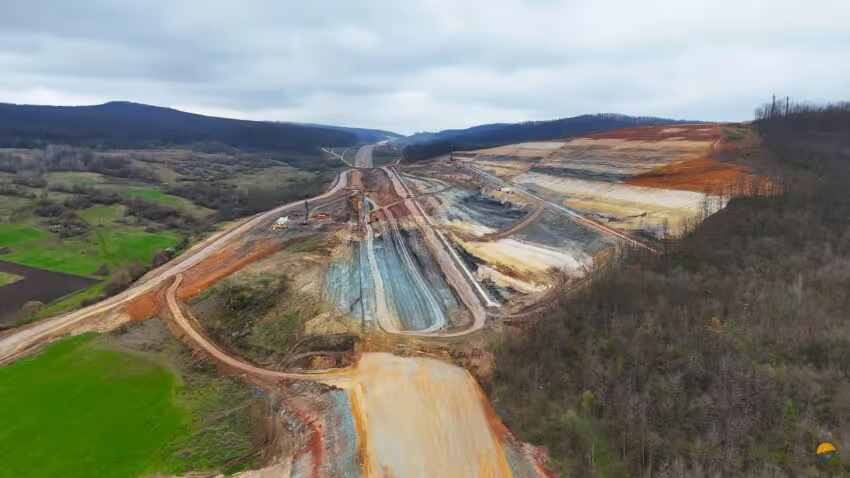
The Nădășelu-Zimbor section of the Transylvania Highway is nearing completion, with 98% of works finished. This segment is important for connecting western and central Romania. Final preparations are being made for its opening.

Credit: Shutterstock
The Nădășelu-Zimbor section of the Transylvania Highway, a important link in Romania's road network, is nearing completion with 98% of the works finished. Cristian Pistol, the General Director of the National Company for Road Infrastructure Administration (CNAIR), confirmed that the project is in its final phase, with the constructor UMB Spedition focusing on the last operations before the section is opened to traffic. This 30.6-kilometer stretch is part of the ambitious Transylvania Highway (A3), a project initiated in the early 2000s with the goal of connecting the western and central regions of Romania.
The highway's planned route spans from Brașov through Târgu Mureș and Cluj to Oradea, aiming to enhance road connectivity and facilitate economic integration within Transylvania. Despite its strategic importance, the Transylvania Highway project has been plagued by delays, route changes, and fragmentation into multiple contracts over the years. However, recent developments have seen several sections, particularly in the Cluj area, entering active construction phases, marking significant progress towards the highway's completion.
UMB Spedition, a Romanian construction company, is responsible for the Nădășelu-Zimbor segment. Current efforts are concentrated on laying the asphalt wearing layer, arranging short-term parking lots, and finalizing necessary infrastructure such as rainwater collection and evacuation systems. Additionally, the installation of directional barriers, Intelligent Transportation Systems (ITS), and road lighting infrastructure is underway.
Cristian Pistol emphasized the excellent progress of the works, noting that the completion and subsequent opening to traffic depend on the final finishing works, testing, and reception procedures. He highlighted the importance of these sections in increasing road connectivity in Transylvania and ensuring the continuity of the highway network. The contract for this segment is valued at approximately 1.625 billion RON, excluding VAT, with funding provided through the Transport Program 2021–2027.


This investment underscores the project's significance in enhancing regional infrastructure and supporting economic growth. The Transylvania Highway's completion is poised to transform transportation in the region, reducing travel times and improving safety. Once operational, the Nădășelu-Zimbor section will serve as a important artery, facilitating the movement of goods and people across the country.
This progress marks a key moment in Romania's infrastructure development, as the nation strives to modernize its road networks to meet European standards. In comparison to other European countries, Romania's highway network has historically lagged behind in terms of both quality and extent. However, projects like the Transylvania Highway are important steps towards bridging this gap, aligning with broader EU objectives of enhancing cross-border connectivity and economic cohesion.
As the Nădășelu-Zimbor section nears its operational phase, attention will inevitably turn to the remaining segments of the Transylvania Highway. Continued investment and efficient project management will be necessary to ensure that the entire route is completed without further delays. The successful integration of modern technologies and sustainable practices will also play a key role in the highway's long-term viability.
The upcoming opening of the Nădășelu-Zimbor section is not just a milestone for regional connectivity but also proof of the potential of Romanian engineering and construction capabilities. It reflects a broader commitment to infrastructure modernization, which is important for the country's economic future and its role within the European Union. As works on the Nădășelu-Zimbor section conclude, the focus will shift towards ensuring that the infrastructure is maintained to high standards.
Regular inspections and timely interventions will be necessary to preserve the integrity and functionality of the highway, ensuring it serves its purpose effectively for years to come. The Transylvania Highway project, once fully realized, promises to be a transformative development for Romania, enhancing mobility and fostering economic opportunities. The Nădășelu-Zimbor section's nearing completion is a significant step forward, bringing the vision of a modern, interconnected Romania closer to reality.
Comentarii
Fii primul care comentează.