Old apartments cost 26% more than new ones in Bucharest — while the rest of Romania tells a different story
In May 2026, old apartments in Bucharest are priced higher than new ones, with a 26% difference. This contrasts with Oradea, where new units are more expensive. Data is from Storia.

Romania's real estate market, as of May 2026, does not move as a single organism. It moves as several, each with its own logic — and Bucharest, as is its habit, operates by rules that appear to contradict everyone else's.
In the capital, old apartments cost 2,535 euro per square meter. New ones cost 2,015 euro per square meter. That 520 euro gap — a 26% premium for age over modernity — runs against the intuition that fresher construction commands fresher prices. Buyers in Bucharest are, on average, paying more for buildings that predate current insulation standards, current seismic norms, and, in many cases, current plumbing expectations. The data comes from Storia, Romania's most visited real estate platform, and reflects average asking prices across one-to-three room apartments.
The premium is not universal. In Oradea, the market has arrived at the opposite conclusion: new apartments exceed old ones by 183 euro per square meter, a differential that translates to a 9% advantage for new construction. Timișoara follows a similar direction, with new apartments running 105 euro per square meter above their older counterparts. In both cities, the market appears to reward the new.
Iași occupies a middle position — old apartments at 2,034 euro per square meter, new ones at 1,885 euro per square meter, a gap of 149 euro. The premium for old stock exists, but it is narrow enough to suggest something closer to equilibrium than preference.


What makes Bucharest's inversion legible, if not entirely comfortable, is geography. Old apartments in the capital tend to cluster in central or semi-central neighborhoods where land is scarce and new development is structurally constrained. New constructions, by contrast, are pushed toward the periphery — areas where square footage is cheaper to build and, apparently, cheaper to buy. The premium, in other words, may be less about the age of the walls and more about what surrounds them. (This does not make the seismic risk calculus any less relevant; it simply explains why buyers are setting it aside.)
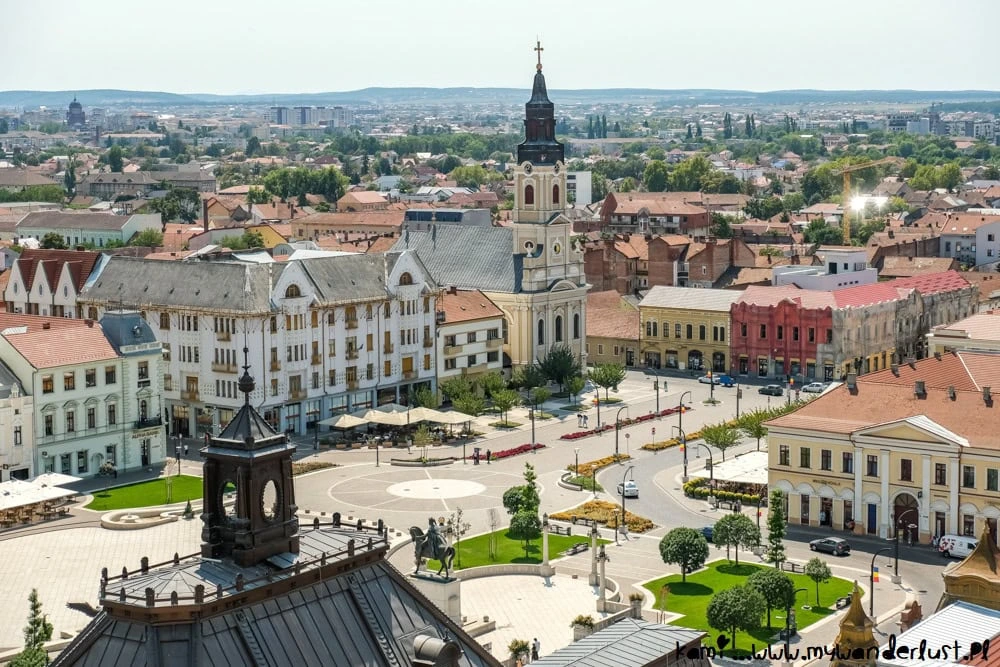
Oradea and Timișoara present a different urban geometry. New developments there are not necessarily peripheral — and the local appetite for modern finishes, energy efficiency, and developer warranties appears to translate directly into price. The market rewards what it values.
The divergence across these four cities resists a single national narrative. Romania's real estate market is often discussed as though Bucharest's dynamics were representative; they are not. A 26% old-apartment premium in the capital and a 9% new-apartment premium in Oradea are not minor regional variations — they are structurally different markets operating under different buyer priorities, different supply constraints, and different relationships between location and value.
What the Storia data captures is asking prices, not transaction prices. The gap between what sellers request and what buyers ultimately pay can be substantial, particularly in a market where financing conditions shift quarterly. The figures describe sentiment and positioning as much as they describe settled value — a distinction worth holding onto when the numbers feel unusually clean.
Sursă: www.ebihoreanul.ro
Comentarii
Fii primul care comentează.