Trump Walks Out of NBC Interview Over California Election Fraud Claims
President Trump ended an NBC interview in Wisconsin after being challenged on election fraud claims in California. The incident highlights ongoing tensions over vote counting processes.


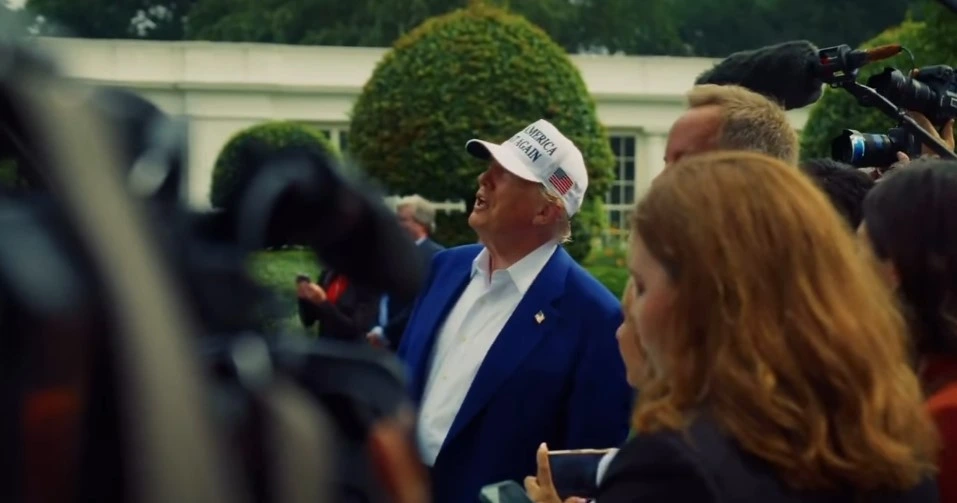
President Donald Trump abruptly ended an interview with NBC's Kristen Welker in Wisconsin on June 7, following a heated exchange over his unsubstantiated claims of election fraud in California's primary contests. This sudden conclusion to the interview, part of NBC's Meet the Press, highlights the ongoing tensions surrounding vote-counting procedures and Trump's interactions with the media. The encounter occurred during Trump's visit to Wisconsin, a key swing state he won in the 2024 presidential election.
The conversation was repeatedly interrupted by weather and marked by contentious exchanges about the integrity of California's voting process. Trump alleged, without evidence, that Republican candidates were losing ground in California due to a "rigged election." Welker countered by outlining California's vote-counting process, which typically takes several days.
California uses a jungle primary system, where all candidates, regardless of party affiliation, compete on a single ballot, with the top two advancing to the general election. This system, in place since 2010, often results in candidates from the same party facing off in the general election, especially in districts with strong Democratic or Republican leanings. The president expressed skepticism about the five-day vote-counting period, questioning its legitimacy.
"Do you know why they're doing that? Because they're cheating on the election," Trump claimed, providing no evidence. His remarks echo broader Republican critiques of California's extended counting process, which election officials attribute to the state's mail-in ballot procedures and stringent verification requirements.
California election officials have consistently stated that no irregularities have been reported in the primary counting process. Despite Trump's claims, the process is designed to ensure accuracy and integrity, with mail ballots and provisional votes undergoing thorough verification before results are certified. Final results in California primaries are typically certified several weeks post-election, following the completion of all verification procedures.
During the interview, Trump also criticized major broadcast networks, including ABC, CBS, and CNN, accusing them of bias. At one point, he appeared to remove his microphone, declaring, "Sorry. Let's call it quits because I've had enough," before walking away from the set.
In the California primary races, Spencer Pratt, a candidate for Los Angeles mayor, and Steve Hilton, a gubernatorial candidate endorsed by Trump, both held second-place standings as of the interview date. These standings are critical as they determine the candidates who advance to the general election under the jungle primary system. Welker traveled to Wisconsin specifically for the interview, which is traditionally filmed in Washington, D.


C. Despite the abrupt conclusion, Trump agreed to a future interview with Welker, as noted in the program's broadcast. This suggests a continued willingness to engage with major networks, despite his frequent criticisms of media bias. Trump's presence in Wisconsin underscores the state's significance in American presidential politics.
His visit comes months after his 2024 victory there, part of a broader electoral strategy that secured his return to the White House. Wisconsin's status as a swing state makes it a frequent focus of presidential campaigns and media coverage. The June 2 California primary contests included significant races for governor, mayor of Los Angeles, and numerous congressional seats.
As counting continued beyond the June 7 broadcast date, Democratic candidates maintained leads in key races, illustrating the competitive nature of California's political field. Meet the Press, a staple of American political discourse since 1947, has a long history of featuring interviews with sitting presidents. Kristen Welker, who became the program's moderator in 2023 and previously served as NBC's White House correspondent, brought her expertise to the interview, having also moderated a presidential debate during the 2020 election cycle.
Trump's criticisms of media outlets have been a consistent theme throughout his political career. In Wisconsin, he reiterated accusations that major networks provide biased coverage of his administration and political activities. These claims resonate with broader Republican concerns about election administration in California, where party officials have called for reforms to expedite the counting process.
Despite the contentious nature of his exchange with Welker, Trump's decision to participate in a subsequent interview implies a strategic engagement with media platforms. His approach reflects a pattern of alternating between criticizing mainstream media and granting interviews to their correspondents, a tactic that has characterized his interaction with the press. As the vote counting in California continues, the political field remains dynamic, with Democratic candidates holding leads in significant races.
The state's election law mandates thorough verification of all ballots, ensuring that the final results, certified weeks after election day, accurately reflect voter intent. This process, while lengthy, is designed to uphold electoral integrity amidst a high volume of mail and provisional ballots. The interview's conclusion, coupled with Trump's ongoing media engagement, highlights the complex interplay between political rhetoric, media coverage, and election processes.
As the nation approaches future electoral contests, these dynamics will likely continue to shape the political narrative.
Comentarii
Fii primul care comentează.
US Weighs Chagos Islands Purchase Amid Trump's Territorial Ambitions

Trump loses Senate backing for ballroom project as poll numbers decline
Bosnian firm with no energy track record secures $1B pipeline deal via Trump lawyers