US strikes Iranian radar sites as armistice talks continue
The US attacked Iranian radar systems and drone command centers following the downing of a US drone. Tensions rise as negotiations continue over Iran's nuclear program and regional stability.


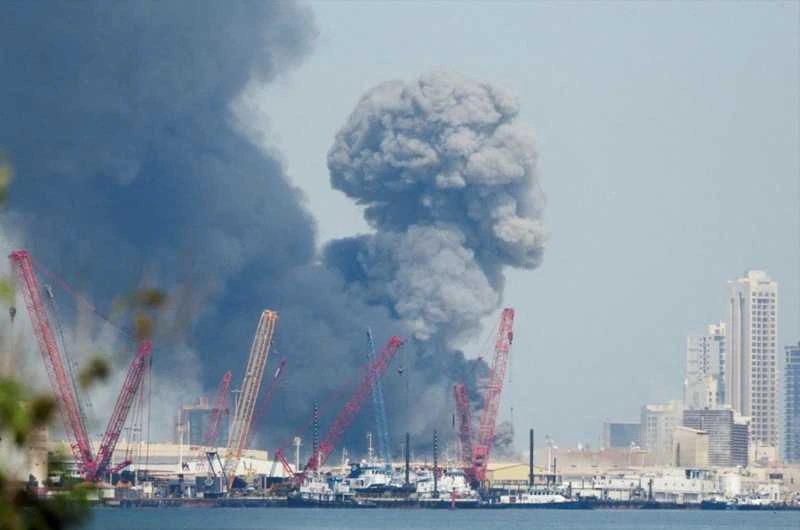
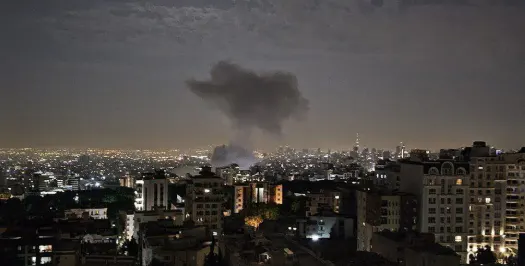
The United States launched targeted strikes on Iranian radar systems and drone command centers in southern Iran over the weekend, marking a sharp escalation even as both countries pursue broader diplomatic agreements. American fighter jets hit targets in the Goruk area and on Qeshm island, according to the US Central Command (CENTCOM), which described the operation as a response to what Washington called Iran's "aggressive actions." The immediate trigger was the downing of a US MQ-1 drone that American officials said was flying in international airspace.
CENTCOM stated the strikes destroyed air defense systems, a ground control center, and two attack drones it identified as threats to maritime traffic in the region. The US military said it would continue to protect its interests and forces in the Middle East, Reuters reported. Iran's Revolutionary Guards claimed they responded to a US attack on telecommunications infrastructure in Sirik, Ormozgan province.
Iranian authorities said they hit the US airbase involved in the operation and destroyed several ground targets. The exchange occurred despite an armistice announced earlier by US President Donald Trump that remains formally in effect between Washington and Tehran. The military confrontation has not halted negotiations.
Washington and Tehran are continuing discussions for a broader agreement, with sources close to the talks suggesting a possible deal could include limiting Iran's uranium enrichment program and reopening trade routes through the Strait of Hormuz, one of the world's most important energy arteries. Trump has reportedly requested more detailed guarantees and commitments regarding Iran's nuclear activities, pressing Tehran for stricter terms than initially discussed. Iran's chief negotiator, Mohammad Bagher Ghalibaf, stated in a video broadcast that Tehran would not approve any deal unless Iran's rights are fully respected, signaling resistance to the revised American framework that The New York Times and Axios reported includes more stringent conditions.

The negotiations face additional complications. Iran insists on the release of twelve billion dollars in blocked assets before engaging in substantial nuclear program discussions, a precondition that has slowed progress. Iranian media dismissed Trump's assertions about destroying its enriched uranium stock as "unfounded," and Tehran demands that Lebanon be included in any agreement, a point of contention given Beirut's accusation that Israel is implementing a "scorched earth policy" in its operations against Hezbollah.
Israel's Defense Minister, Israel Katz, confirmed on Sunday that Israeli troops crossed the Litani river and raised the Israeli flag above the medieval fortress of Beaufort in southern Lebanon, AFP observed. The move marks a significant expansion of Israel's military operations against Hezbollah, which Israel accuses of receiving heavy support from Iran. The Israeli army issued a general evacuation order for areas south of the Zahrani river, north of Litani, warning of intensified military operations.
The development followed a Hezbollah drone attack that killed an Israeli soldier. Lebanese Prime Minister Nawaf Salam accused Israel of implementing "scorched earth policy and collective punishment" as Israel confirmed extending its ground offensive beyond previous boundaries. These military maneuvers occur against the backdrop of an armistice between Israel and Hezbollah that officially began on April 17, following a series of retaliatory rocket launches by Hezbollah.
The rockets came in response to the killing of Iran's supreme leader in US-Israeli attacks, a flashpoint that fueled almost daily airstrikes by Israel in Lebanon. Direct talks between Israel and Lebanon commenced in April, offering a potential path toward de-escalation. A fourth round of discussions is anticipated next week, though the volatile situation underscores the precarious balance in the region.
The intersection of military actions and diplomatic negotiations highlights the complexity of achieving lasting stability in the Middle East, with both military and diplomatic channels fraught with obstacles that could derail progress at any moment. The international community watches closely as these dual conflicts unfold, aware that miscalculation on either front carries the potential for broader implications across the region.
Source: adevarul.ro
Comentarii
Fii primul care comentează.