Four arrested in Cluj County drug trafficking operation, held for 30 days
Four individuals have been arrested in Cluj County on charges related to high-risk drug trafficking and illegal operations involving psychoactive substances. The arrests, following a coordinated operation by DIICOT Cluj and various police units, highlight alleged illegal activities spanning from December 2025 to June 2026.


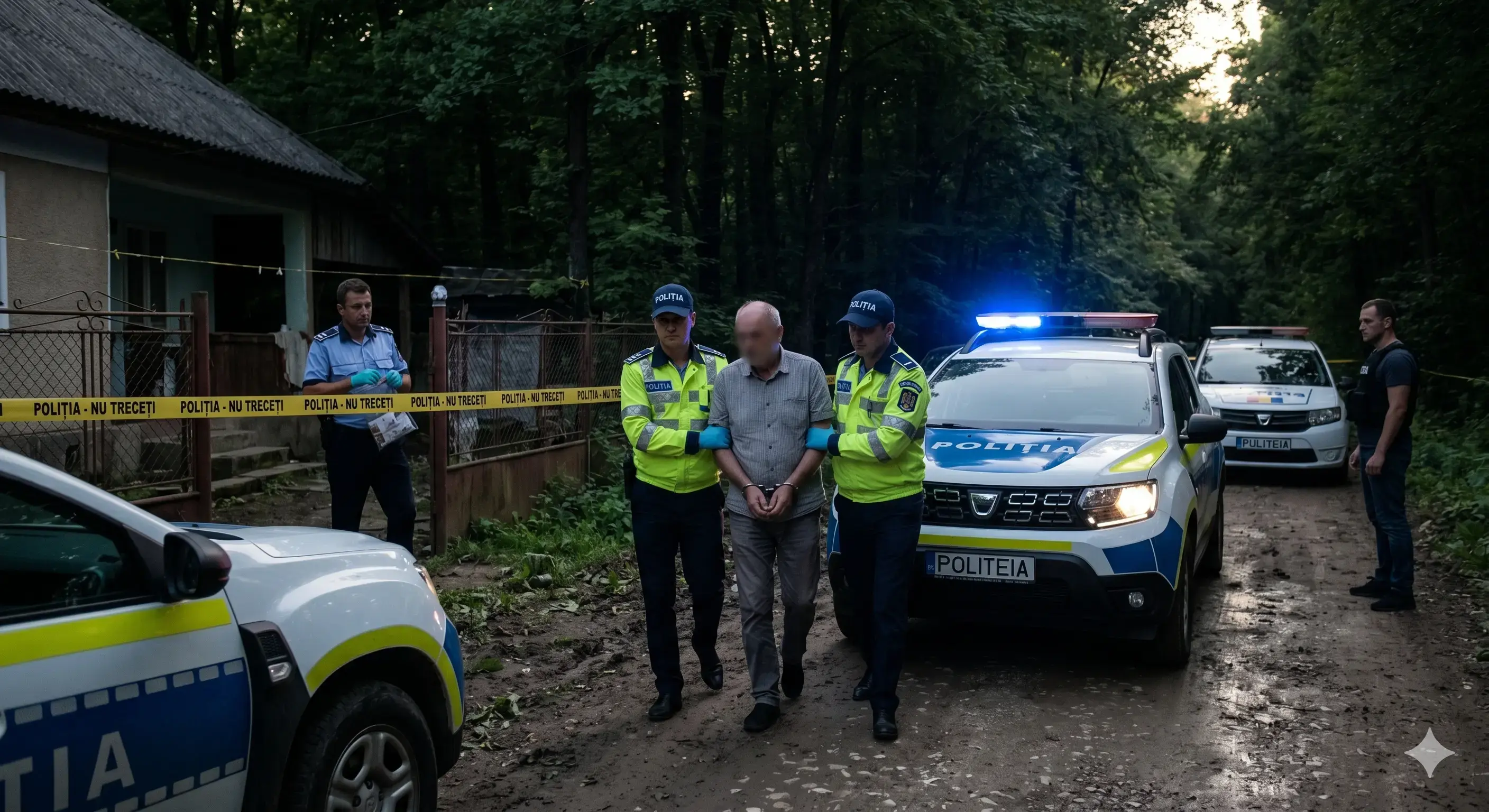
DIICOT Cluj prosecutors and the Cluj-Napoca Organized Crime Brigade arrested four persons on June 4, 2026, on charges of high-risk drug trafficking and illegal psychoactive substance operations. Three men and one woman were detained. A Cluj Tribunal judge approved their preventive arrest on June 5 for 30 days.
The suspects allegedly procured, possessed, manipulated, intermediated, and commercialized 3CMC and 4BMC crystalline substances in Cluj County between December 2025 and June 2026. Both substances are classified as high-risk drugs and psychoactive products. Transaction values ranged from 200 to 3,000 lei, according to prosecutors.
One suspect allegedly used a taxi car for drug deliveries. Domiciliary searches were conducted in Cluj-Napoca, Turda, Câmpia Turzii, and Florești. Police seized 12 bags of powdery substances, objects with substance traces, one grinder, sums of money, and other relevant evidence.
The seized drugs and psychoactive substances are under analysis. The operation was supported by Cluj County Police criminalists, the K9 unit, the Cluj Regional Transport Police, and the Cluj-Napoca Mobile Gendarmerie Group. Each unit contributed to the execution of searches and the collection of evidence across multiple locations.
Preventive arrest allows authorities to detain suspects for a specified period while investigations continue, preventing interference with evidence or witnesses. The 30-day detention period approved by the Cluj Tribunal judge is standard for cases involving organized crime and high-risk drug trafficking. Prosecutors must present their case within this timeframe or request an extension.
The Cluj-Napoca Organized Crime Brigade has handled multiple drug trafficking cases in recent years, focusing on networks operating across Cluj County. The brigade's involvement signals the scale of the alleged operation and the coordination required to dismantle it. DIICOT Cluj, the anti-organized crime prosecution office, has jurisdiction over cases involving drug trafficking networks and psychoactive substance distribution.
3CMC and 4BMC are synthetic cathinones, substances chemically similar to stimulants. Their classification as high-risk drugs reflects their potential for abuse and the health risks they pose. Romanian law prohibits their possession, sale, and distribution.
Penalties for trafficking high-risk drugs include prison sentences ranging from five to 15 years, depending on the quantity and circumstances. The alleged use of a taxi for deliveries suggests a method designed to avoid detection. Taxi vehicles blend into urban traffic, making surveillance more difficult.
Prosecutors will likely examine the suspect's employment records, vehicle logs, and customer communications to establish the extent of this delivery method. Transaction values between 200 and 3,000 lei indicate a customer base with varying purchasing power. Smaller transactions suggest street-level sales, while larger amounts may point to bulk purchases by intermediaries.

Prosecutors will analyze seized communications and financial records to map the distribution network and identify additional suspects. The searches in four municipalities—Cluj-Napoca, Turda, Câmpia Turzii, and Florești—indicate the network's geographic spread. Florești, a suburban area near Cluj-Napoca, has seen population growth in recent years, making it a potential market for illegal substances.
Turda and Câmpia Turzii are smaller cities with industrial economies, where drug trafficking networks have previously operated. The K9 unit's involvement suggests the searches targeted locations where substances were hidden or stored in ways that required canine detection. Dogs trained to detect narcotics can locate substances concealed in walls, vehicles, or containers that might escape visual inspection.
The grinder seized during the searches is consistent with equipment used to process crystalline substances into powder for sale. The Cluj Regional Transport Police's participation indicates the investigation may have involved monitoring suspects' movements on public roads or at transport hubs. Transport police have authority over vehicle inspections and can coordinate with other units to track suspects using cars or taxis for illegal activities.
The Cluj-Napoca Mobile Gendarmerie Group, a unit specializing in public order and tactical operations, likely provided security during the searches and arrests. Gendarmerie units are deployed in cases where resistance or public disturbances are anticipated. DIICOT Cluj stated that the suspects benefit from all legal rights and the presumption of innocence until proven guilty.
The statement is standard in cases involving preventive arrest, where detention precedes trial. Prosecutors must demonstrate to the court that detention is necessary to prevent the suspects from fleeing, tampering with evidence, or continuing their alleged activities. The next procedural step is the preparation of the indictment.
Prosecutors will analyze the seized evidence, including the 12 bags of powdery substances, to determine the exact quantities and chemical composition. Laboratory results will be critical in establishing whether the substances meet the legal definition of high-risk drugs. Financial records and communications seized during the searches will be examined to identify the network's structure, suppliers, and customers.
If the indictment is filed, the case will proceed to trial at the Cluj Tribunal. The court will evaluate the evidence and determine whether the charges are supported. Convictions for high-risk drug trafficking carry mandatory prison sentences, with aggravating factors such as the use of a vehicle for deliveries potentially increasing the penalty.
The four suspects remain in detention at a facility under the jurisdiction of the Cluj Tribunal. Their lawyers may file appeals against the preventive arrest order, arguing that detention is not necessary or that the evidence is insufficient. Such appeals are heard by a higher court, typically within days of the initial detention order.
The operation reflects the ongoing enforcement priority given to synthetic drug networks in Romania. DIICOT has prosecuted multiple cases involving synthetic cathinones in recent years, as these substances have become more prevalent in urban markets. The seizure of 12 bags of powdery substances, if confirmed as 3CMC and 4BMC, represents a significant quantity for a regional network.
Source: www.ziarul21.ro
Comentarii
Fii primul care comentează.