In the oak glade above Vinerea, Cugir decides that beauty requires a little governance
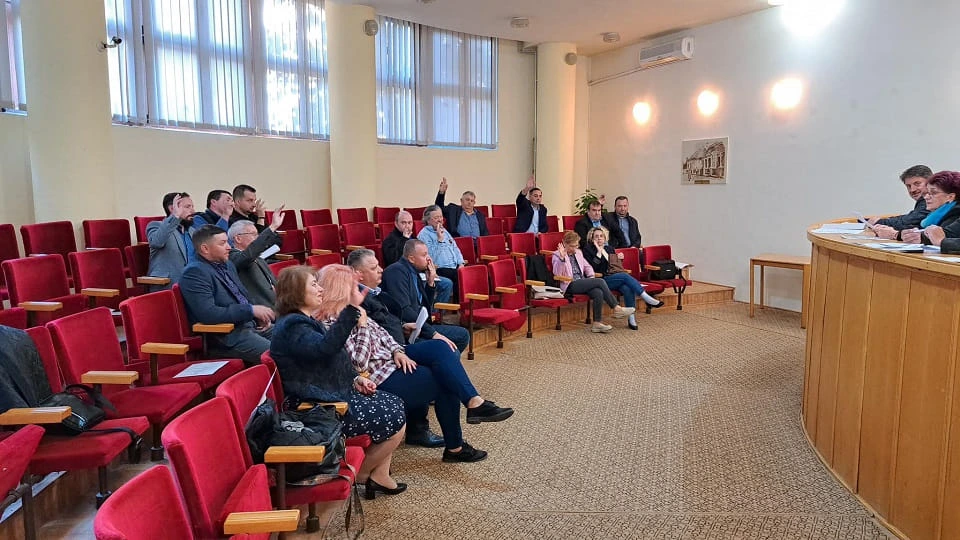
The Cugir Local Council approved new picnic regulations for Poiana cu Goruni on May 27, 2026, in response to increased activities. This aims to preserve the natural area in Vinerea.

Preluare Facebook
There is a particular quality of light that filters through old oak canopy in the late afternoon — something slowed, amber-tinted, the kind that makes people linger longer than they planned. Poiana cu Goruni, the beloved promenade clearing nestled in Vinerea, in Alba County, has always had that quality, and for as long as anyone can remember, it has drawn people out of Cugir and the surrounding settlements with a reliable, unhurried pull. They come with blankets and children, with folding chairs and portable grills, with the particular Romanian conviction that a Sunday spent outdoors is a Sunday spent correctly. The glade has absorbed all of it, season after season, and asked for very little in return.
Until, apparently, now.
On Wednesday, May 27, 2026, during an ordinary session of the Cugir Local Council, the members approved a new regulation governing the conduct of picnic activities in Poiana cu Goruni. The decision was not dramatic in its procedural form — ordinary sessions rarely are — but it carries a weight that anyone who knows the place will feel immediately. The reason cited for the regulation's adoption was straightforward: an increase in the number of activities taking place in the glade. More people, more gatherings, more of everything that makes a public green space simultaneously wonderful and difficult to keep whole.
The regulation itself addresses the practical architecture of shared outdoor life — waste management, noise, the designation of areas for gatherings, the small but consequential rules that determine whether a beloved place remains beloved or slowly becomes something else. None of this is unusual, and in that sense Cugir is following a trajectory visible in municipalities across Romania, where the post-pandemic hunger for open air and natural refuge has collided, sometimes gently and sometimes less so, with the finite capacity of the landscapes people love most.


What makes the Poiana cu Goruni case worth pausing over is the specific texture of the place and its relationship to the community around it. This is not an anonymous park on the edge of a city. It is a glade with a name, a glade that has functioned as a communal gathering site across generations and across the various political and administrative regimes that have shaped life in Alba County. The oaks themselves are old enough to have stood through all of it. The families who spread their tablecloths beneath them on warm weekends carry, often without quite knowing it, a continuity of habit that stretches back well before anyone now living was born.
That continuity is precisely what the council says it wants to protect. An increase in activity, left unmanaged, has a way of consuming the very thing that attracted people in the first place — the quiet, the cleanliness, the sense that the space belongs to everyone and therefore to no one in a way that feels like freedom. Regulation, in this reading, is not the opposite of enjoyment but its precondition, the frame that keeps the picture from unraveling at the edges.
Whether the people of Vinerea and Cugir will receive it that way is, of course, another matter entirely. There is always a gap between the logic of a council chamber and the feeling of being told, for the first time, that your picnic must conform to a set of written rules. That gap is not necessarily adversarial, but it is real, and it tends to surface in the small moments — the family that arrives with a speaker and finds itself in violation, the group that has always gathered in a particular corner and discovers that corner is now designated for something else.
Poiana cu Goruni is, by any measure, a natural and cultural asset of the kind that Alba County cannot afford to lose to its own popularity. The council's decision to regulate rather than simply react — to set terms before the damage becomes irreversible — reflects a seriousness about stewardship that deserves acknowledgment. Whether the regulation is well-crafted enough to actually work, whether it will be enforced with the right balance of firmness and common sense, whether the people who love the glade most will feel consulted or merely governed: these are the questions that will answer themselves slowly, across many seasons, under the same amber light filtering through the same old oaks.
Comentarii
Fii primul care comentează.

Agriculture Committee votes to extend food price cap through December

Anonymous donor places toys on Alba Iulia fortress walls for Children's Day

Woman in Aiud loses 54,704 lei to fraudsters posing as bank officials
