Russian satellite re-entry raises questions about Rassvet program
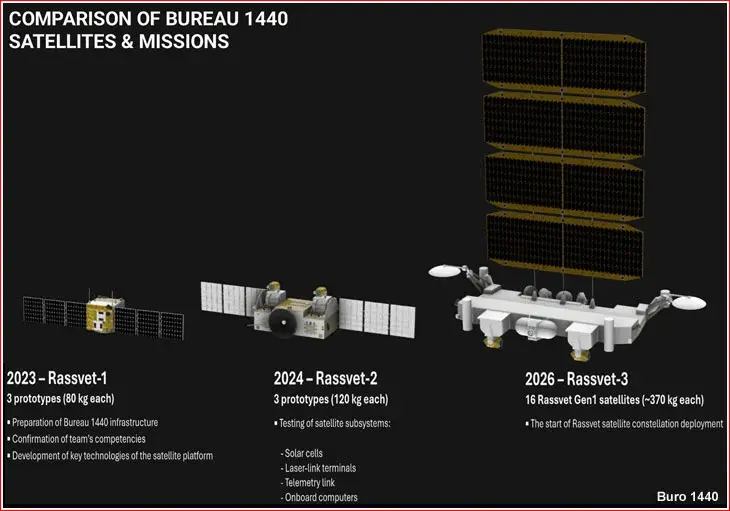
Object 4, part of the Rassvet satellite series, re-entered the atmosphere around June 6. The satellite was launched from Plesetsk Cosmodrome on March 23.
Russian authorities kept the launch secret, according to Anatoly Zak. Object 4 failed its orbit-raising maneuver and decayed naturally.
Bureau 1440 plans to launch a second batch of Rassvet satellites in June.

Credit: russianspaceweb.com
A Rassvet satellite, known as Object 4, re-entered Earth's atmosphere around June 6, according to Anatoly Zak of RussianSpaceWeb. The satellite was part of a batch of 16 launched from Plesetsk Cosmodrome on March 23. The Russian government reportedly kept the launch a secret, a claim made by Zak. Object 4 failed its orbit-raising maneuver, as noted in a report, and decayed from a 288 km by 324 km orbit. It followed a path similar to that used by SpaceX's Starlink for satellite disposal. The Rassvet network, Russia's answer to Starlink, aims to provide broadband services.
The satellite's failure adds to concerns about the Rassvet program's effectiveness. Observations suggest the entire batch might face similar issues. While Object 16 successfully climbed on April 6, Object 4's failure remains unexplained. Possible causes include propulsion system failure or loss of ground control. Bureau 1440, responsible for building the Rassvet satellites, confirmed the mission the morning after launch and released a video showing satellite separation. They claimed the satellites reached initial orbit and were under control.
Bureau 1440, based in Moscow, has limited experience with satellites in orbit but has ambitious plans. They aim to deploy 250 satellites by 2027 and 900 by 2035, supported by $1.26 billion in state funding. Despite these goals, the March launch was not disclosed by Roscosmos or the Russian Defense Ministry. The Rassvet satellites, if unpowered, are expected to deorbit within weeks at altitudes around 300 km.
In contrast, SpaceX's Starlink has moved over 4,000 satellites this year, avoiding potential collisions, such as one with a Chinese spacecraft. Dead Starlink units re-enter the atmosphere quickly due to their lower orbits. The next Rassvet launch is rumored to occur around June 18, though this remains unconfirmed.
Source: www.russianspaceweb.com
Comentarii
Fii primul care comentează.