At Nova PG Arena, Turda gathers its children and remembers what a festival is for
The Famtastic Land Festival at Nova PG Arena in Turda began on May 30, 2026, celebrating International Children's Day with performances, workshops, and a majorette competition. Over 700 participants joined the event, featuring local talents and diverse activities.
Credit: mediacom.ro
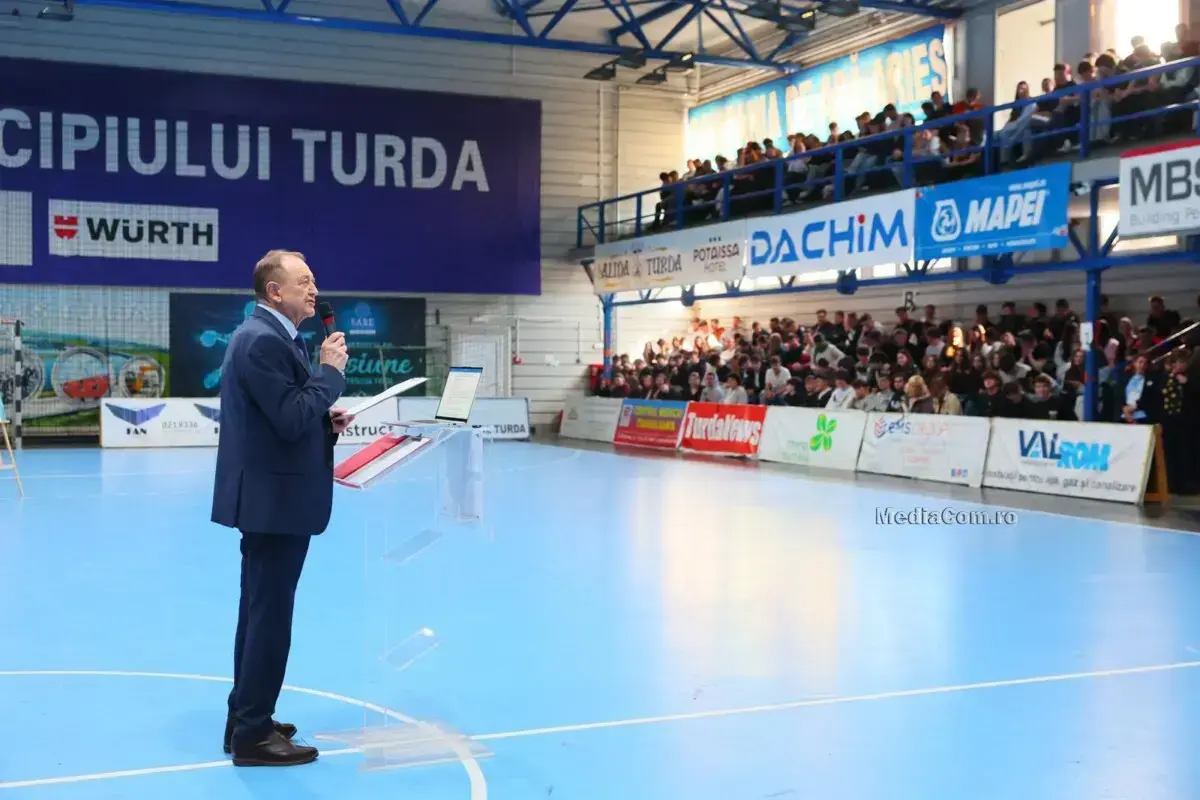
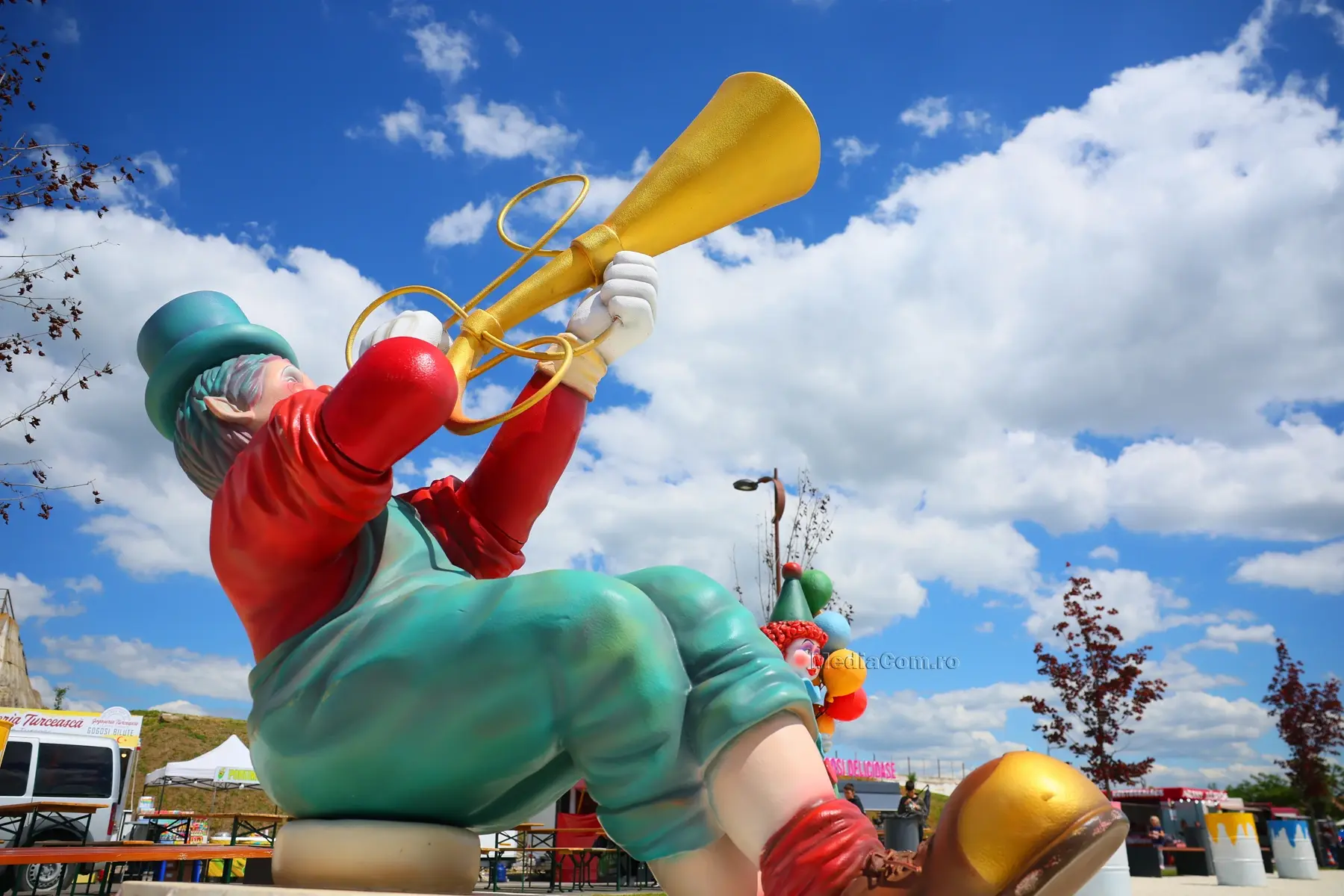
The Nova PG Arena sits at the edge of Turda like a promise kept in concrete and steel, and on Saturday, May 30, 2026, it opened its gates to something the city has always understood better than most: that a festival dedicated to International Children's Day is not decoration but necessity, not spectacle but communion. The Famtastic Land Festival began that afternoon under a sky that held its breath, and what unfolded across the hours was less a program than a kind of collective exhale, families arriving in waves, volunteers moving with the quiet efficiency of those who know their work matters, the air thickening with the smell of popcorn and boiled corn and something sweeter still, the particular anticipation that belongs to children when they sense the world has arranged itself, however briefly, around their joy. The stage became a procession of voices and bodies.
"Voci Zglobii" opened with harmonies that seemed to rise from some older Turda, the one that sang before it built arenas, and Matei Puiu followed with his guitar, then "Folk Junior" with theirs, each act a thread in a fabric the audience could feel taking shape. Irina Călin brought her particular intensity, Teodor Ploscar his warmth, Ingrid Tămaș a precision that made even the smallest gesture land, and then the majorettes "Clik" stormed the stage with routines so synchronized they seemed to argue that chaos is only a failure of rehearsal. From Mihai Viteazu came "Emoția dansului", the dance group trained by Cătălina Mera, and they moved as if the stage were water and they were learning, in real time, how to make it hold their weight.
But the festival was not built for watching alone. The majorette competition drew over 700 participants, a number that sounds abstract until you see them gathered, until you watch the arena floor become a sea of sequins and batons and the particular determination that lives in the shoulders of a child who has practiced something until it became a language. Parents lined the edges, some filming, some simply standing with their arms crossed and their faces doing the work their voices could not, which is to say: bearing witness.
Nearby, the children's workshops hummed with their own logic, face painting transforming cheeks into canvases, small hands choosing colors the way adults choose words, carefully and then all at once. Dana Ștef led a sports hour that pulled no punches, "TaBaTa" demanding the kind of effort that leaves you breathless and grinning, children and adults alike discovering that exercise, when it sheds its grim utility, becomes something closer to dance. And then Ana Bucșa took the stage, a soloist from Turda prepared by prof.
drd. Ioana Felea Popa, and she sang "Epilog", "Cine iubește și lasă", "Omule, deschide ochii", songs that carried the weight of questions the festival could not answer but could, at least, hold in the air long enough for people to feel them. The food stalls formed their own geography, vendors offering chips with tomatoes, juices, ice cream, popcorn still warm in paper cones, langoșe heavy with oil and satisfaction, kurtos kalacs turning on spits and filling the air with a sweetness that made you remember every festival you had ever attended and every one you would.
People moved between stalls the way they move through memory, stopping where something catches them, lingering where the smell or the sight or the simple fact of abundance makes lingering feel like the only reasonable response. Over 40 volunteers worked the festival with the kind of invisible competence that makes an event feel effortless when it is anything but, and among them was Costică Petruș, whose presence reminded those who noticed that Turda's festivals are not imported but homegrown, tended by people who understand that community is not a feeling but a practice. Raluca Gheorghiu and Vali V. Popescu, actors from TNAMT, presented the event with the ease of those who know a crowd is not an audience to be managed but a gathering to be joined, and DJ Sasha worked the decks with the understanding that a festival moves in waves, that energy must be built and released and built again.
When Vescan and Andrei Bănuță took the stage as the day's light began to fail, they found a crowd already opened, already willing, and they closed the first day of the Festivalul familiei-Famtastic Land Turda Arena 2026 not with fireworks but with the thing fireworks are meant to symbolize, which is the feeling that something has happened, that time has been marked, that a city has gathered itself and remembered what it knows. Turda has always been a city that builds things, arenas and salt mines and the infrastructure of survival, but on this Saturday it built something else, something that will not appear on any map but will live in the muscle memory of the children who competed and danced and painted their faces, in the tired satisfaction of the volunteers, in the particular quiet that settles over a place after it has been, for a few hours, exactly what it hoped to be. The festival was not an escape from Turda but a distillation of it, the city at its best and most itself, and as the evening settled and families began their slow migrations home, the arena stood empty again but not unchanged, holding in its concrete and steel the echo of 700 majorettes and countless voices and the laughter of children who, for one day at least, were the reason everything else stopped.
Source: turdanews.net
Comentarii
Fii primul care comentează.