Bulgaria shifts stance, halts arms supply to Ukraine
Bulgaria's new government announced it will no longer supply arms to Ukraine, marking a significant policy shift. Defense Minister Dimitar Stoyanov emphasized that additional military support is not a solution to the conflict, advocating for a negotiated resolution between Kyiv and Moscow. This decision aligns with Prime Minister Rumen Radev's stance, who has previously criticized the effectiveness of sanctions against Russia. The policy change has sparked debate within Bulgaria and among European partners, as Bulgaria has been a key supplier of Soviet-era compatible ammunition to Ukraine.

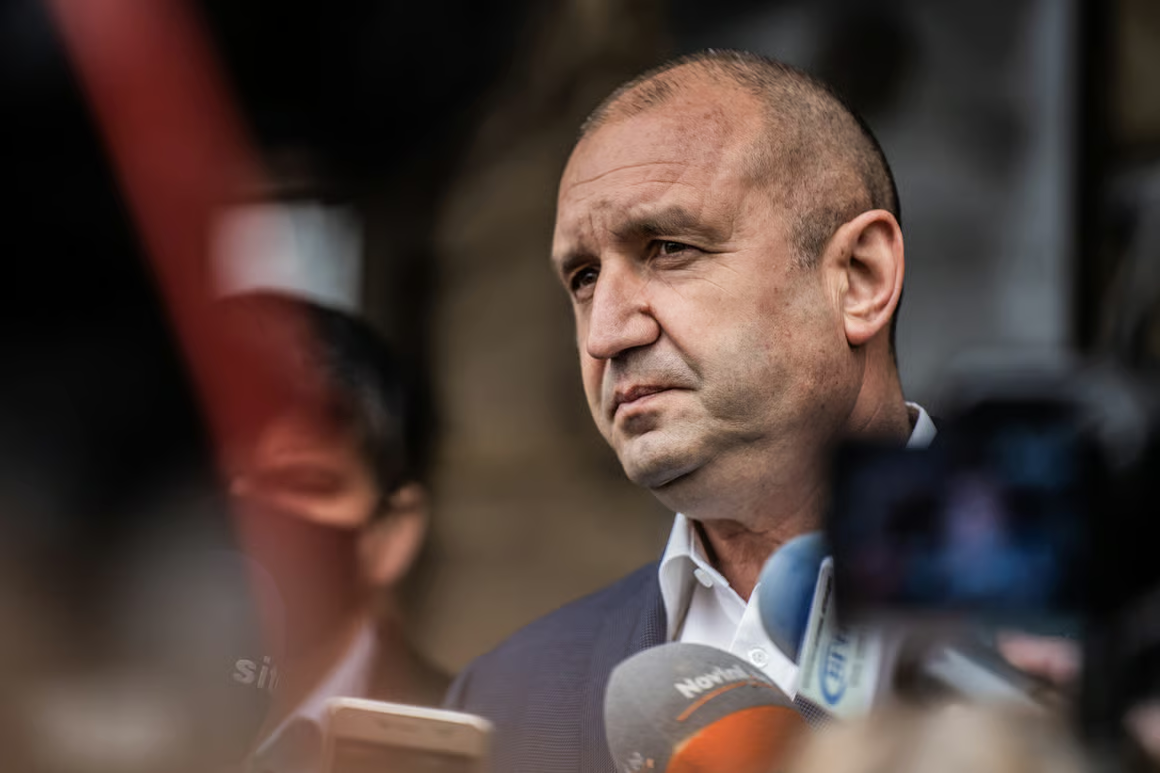
Bulgaria's new government has announced a halt to military supplies to Ukraine, marking a notable shift from previous administrations in Sofia. Defense Minister Dimitar Stoyanov communicated the decision, stating that further military support is not a viable solution to the conflict. Instead, he emphasized the need for international efforts to focus on a negotiated resolution between Kyiv and Moscow. Stoyanov asserted, "Ukraine needs more people, not more weapons," highlighting the government's goal of promoting a "just peace" accepted by both parties involved in the conflict.
This policy change has drawn attention from Bulgaria's European and NATO partners, who are closely observing the situation. Bulgaria has played a key role in the indirect supply of Soviet-era compatible ammunition and equipment to Ukraine, a key element in supporting the Ukrainian army's resistance. Official data from Sofia indicates that multiple military aid packages were approved after the onset of the war, contributing to the collective Western effort.
Prime Minister Rumen Radev, who previously served as President of Bulgaria, has supported this reevaluation of Bulgaria's stance. Radev has been vocal about the ineffectiveness of sanctions against Russia, advocating for a thorough analysis of their impact on European economies. He maintains that negotiations are the only realistic path to ending the conflict, aligning with Stoyanov's recent statements.
The new Bulgarian policy has sparked internal debate and drawn attention across Europe, as most EU member states continue to support sanctions and military aid for Ukraine. Bulgaria's decision could potentially affect the flow of ammunition to Ukraine, a concern expressed by Western allies. Political that Sofia's policy shift may influence broader European discussions on sanctions, energy policy, and long-term support for Ukraine.
Bulgaria, a key European producer of Soviet-caliber ammunition, has historically avoided direct deliveries to Kyiv, instead channeling military products through EU and NATO intermediaries. However, the new government's decision to halt arms supplies marks a significant change, potentially impacting European unity on Ukraine support.
Comentarii
Fii primul care comentează.