Alfie Kohn challenges reward-based education in Bucharest
Alfie Kohn will speak at a Bucharest conference on May 10, criticizing reward-based education systems. His insights challenge traditional disciplinary practices, emphasizing their negative impact on children's motivation and learning.
Redacția Transilvania Times
circa 2 luni în urmă
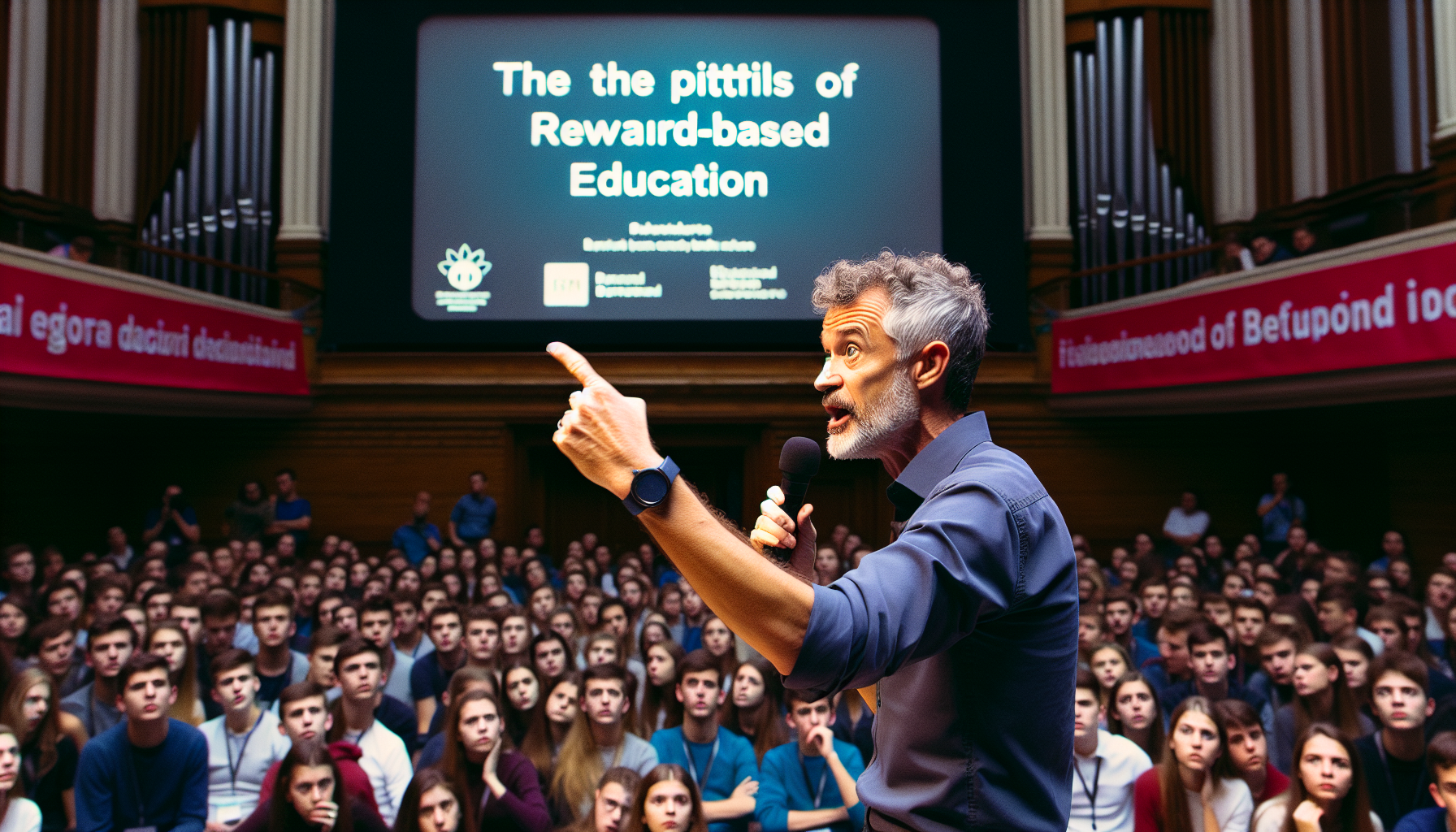
As March 21, 2026, arrives, excitement builds in Bucharest for Alfie Kohn's upcoming visit. On May 10, the noted educator and author of "The Myth of the Spoiled Child" will speak at Sala Palatului. Kohn, famous for critiquing systems based on rewards and punishments, will join the "Conscious Parent – Fulfilled Child" conference. This event, a significant gathering in Europe, centers on awareness and relational transformation.
Kohn's ideas question the traditional educational systems that depend heavily on rewards like grades or material incentives to motivate students. He believes these methods, though popular, harm children's long-term learning and motivation. "Incentives like an iPhone or a special toy," Kohn mentioned in a recent chat, "are rooted in a behaviorist approach that manipulates rather than nurtures children's development."
Also attending the conference are Dr. Shefali Tsabary, Professor Dumitru Constantin Dulcan, and Neale Donald Walsch, each bringing unique views on conscious parenting. The event promises a rich exchange of ideas aimed at changing how parents and educators approach child development.
Kohn's critique includes the growing trend of using gadgets as rewards, which he finds alarming. Studies, he points out, reveal that children who are often rewarded or praised become less generous and empathetic. "Rewards and praise," he argues, "make children more self-centered and less dedicated to the activities for which they were rewarded."
The difference between intrinsic and extrinsic motivation supports much of Kohn's criticism. Intrinsic motivation, where activities are pursued for their own satisfaction, contrasts sharply with extrinsic motivation, driven by external rewards. Kohn argues that extrinsic incentives, like school grades, undermine intrinsic motivation, a claim backed by psychological research.
In Kohn's opinion, the best educational settings provide qualitative feedback without reducing a child's efforts to mere numbers. "A prize," he says, "is an artificially rare reward, turned into a competition. This mentality, where children see others as obstacles to their success, is psychological poison."
Kohn's work with teachers and educators seeks to dismantle these flawed educational structures. By encourageing environments that encourage intrinsic motivation, he aims to nurture a generation of learners who value learning for its own sake.
The conference in Bucharest will offer Kohn a stage to share his insights with a European audience eager for change. As education continues to shift, voices like Kohn's challenge conventional wisdom and push for a more thoughtful, child-centered approach.
Comentarii
Fii primul care comentează.